Fresh herbs are the fastest way to make food taste alive, and the fastest way to waste money when they turn to slime in three days. I used to buy parsley for one recipe and throw away three-quarters of the bunch a week later. The problem wasn’t the herbs; it was my storage.
The best way to store fresh herbs so they last longer depends on the herb type, but the right method keeps most herbs fresh for 2-3 weeks instead of 3-5 days. Here’s exactly what to do.
Best Way to Store Fresh Herbs So They Last Longer: Tender Herbs
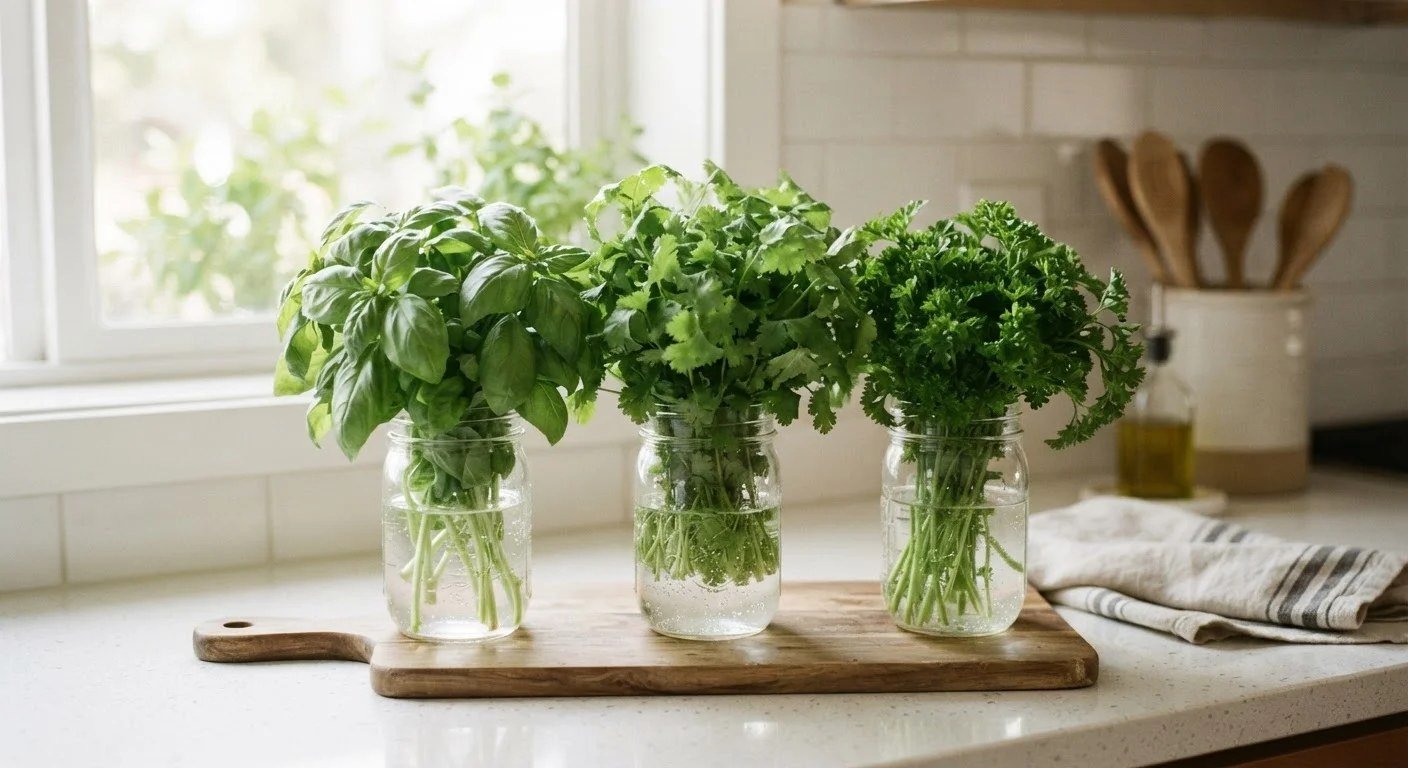
Tender herbs (parsley, cilantro, basil, dill, mint, tarragon) have soft stems and leaves, and they want to be treated like flowers. Trim the stem ends, place them upright in a jar with an inch of water, loosely cover with a plastic bag, and refrigerate. Changed water every few days, parsley and cilantro last 2-3 weeks this way. It’s transformative if you’ve been leaving them in the plastic clamshell.
Basil is the exception: it’s cold-sensitive and hates the fridge. Store basil like flowers at room temperature, away from direct sun, changing the water regularly. Refrigerated basil blackens within days; room-temperature basil lasts 7-10 days. This single distinction saves more basil than any other tip.
- Treat like flowers. Trim stems, jar with an inch of water, loose plastic bag over top, refrigerate. 2-3 weeks for parsley and cilantro.
- Change water regularly. Every 2-3 days. Fresh water prevents the bacterial slime that kills herbs.
- Basil stays at room temp. Cold blackens basil. Countertop jar, indirect light, 7-10 days of freshness.
- Don’t wash until use. Moisture accelerates decay. Wash herbs just before cooking, not before storing.
- Remove damaged leaves. One rotting leaf spreads decay to neighbors. Pick through bunches when you bring them home.
- Use the bag loosely. The plastic tent maintains humidity without trapping condensation against leaves.
Woody Herbs: A Different Approach
Woody herbs (rosemary, thyme, oregano, sage, chives) have sturdier structures and prefer drier storage. Wrap them loosely in a slightly damp paper towel, place in a zip-top bag or container, and refrigerate. The damp towel maintains humidity while the bag prevents dehydration. Stored this way, rosemary and thyme easily last 3 weeks, sometimes a month.
Don’t use the water-jar method for woody herbs; excess moisture rots their stems faster. And for long-term abundance, woody herbs are the best candidates for preservation: they dry beautifully (hang bundles upside down in a dark, airy spot) and freeze well in olive oil in ice cube trays for instant flavor bombs.
- Damp towel + bag. Loosely wrap in slightly damp paper towel, into a bag, refrigerate. 3+ weeks for rosemary and thyme.
- Keep it barely damp. Wet towels rot herbs; dry towels don’t help. Damp, not wet, is the target.
- Dry woody herbs easily. Hang bundles upside down in dark, airy spots. Better flavor retention than tender herbs dried.
- Freeze in oil. Chopped herbs in olive oil, frozen in ice cube trays. Instant flavor for cooking, lasts months.
- Don’t jar woody herbs. The water method suits tender herbs; woody stems rot in standing water.
- Buy or grow smart. A $3 rosemary plant on the windowsill outlasts endless $3 bunches. Perennial herbs are the real savings.
When Fresh Isn’t an Option: Smart Alternatives
Even perfect storage has limits, so plan for the surplus. Tender herbs freeze well chopped in water or oil in ice cube trays; they’re perfect for cooked dishes (not garnishes) for months. Herb butters (softened butter mixed with chopped herbs, rolled and frozen) improve everything from steak to vegetables.
And know when dried herbs are actually better: in long-cooked dishes, dried oregano, thyme, and rosemary often outperform fresh, since their flavors concentrate and infuse. The rule of thumb is fresh for finishing and fresh applications, dried for long simmers. The FDA’s food storage guidance covers safe handling of all fresh produce, herbs included.
- Freeze tender herbs. Chopped in ice cube trays with water or oil. Perfect for cooked dishes for months.
- Make herb butter. Mixed, rolled, frozen. Instant upgrade for meats, vegetables, and bread.
- Use dried for long cooks. Dried oregano, thyme, rosemary excel in simmers where fresh would fade.
- Convert correctly. 1 tablespoon fresh = 1 teaspoon dried. Dried is concentrated; adjust accordingly.
- Grow the workhorses. Basil, rosemary, thyme, mint on a windowsill: endless supply, zero waste.
- Rescue wilting herbs. Ice water bath revives wilted parsley and cilantro remarkably well. Ten minutes, good as new.
Frequently Asked Questions
How long do fresh herbs last in the fridge?
With proper storage (water jar method for tender, damp towel for woody), 2-3 weeks for most herbs. In original packaging, typically 3-5 days.
Why does my basil turn black in the fridge?
Basil is cold-sensitive; refrigeration damages its cells, causing blackening. Store basil at room temperature like cut flowers instead.
Can you freeze fresh herbs?
Yes. Tender herbs freeze well chopped in water or oil in ice cube trays (best for cooking). Woody herbs freeze well whole in bags. Both last months frozen.
Storing and Reheating Leftovers Right
Good food deserves a good second act, and most leftovers fail from storage mistakes, not from the recipe. I’ve rescued countless meals with proper storage technique, and the rules are simpler than most people think.
- Cool within 2 hours. Spread food shallow to cool fast, then refrigerate. The danger zone (40-140°F) is where bacteria thrive.
- Use airtight containers. Glass with locking lids keeps food fresher longer and reheats without staining or odors.
- Label with dates. Masking tape and marker. Three-day-old mystery containers get tossed; labeled ones get eaten.
- Reheat to steaming. 165°F throughout, with a splash of water for grains and pastas to restore moisture.
The bottom line: Storing fresh herbs longer is about matching method to type: tender herbs (parsley, cilantro) in water jars refrigerated like flowers, basil at room temperature, woody herbs (rosemary, thyme) in damp towels in bags. These simple methods stretch 3-day herbs to 3-week herbs, ending the slimy-bunch cycle for good.