Every year, two organizations put new cars through automotive hell — crashing them, swerving them, braking them — so you do not have to learn about safety the hard way. The Insurance Institute for Highway Safety (IIHS) and the National Highway Traffic Safety Administration (NHTSA) publish the ratings that separate genuinely safe vehicles from merely adequate ones. Spotting the safest new cars of the year means understanding what those ratings actually measure, why the tests keep getting tougher, and which vehicles earned top honors.
The stakes are not abstract: motor vehicle crashes remain a leading cause of death for Americans, and the difference between a top-rated vehicle and an average one is measured in lives. Safety is the rare car-buying criterion where the data is clear, independent, and free.
How safety ratings actually work
NHTSA’s 5-Star Safety Ratings (the stars on every new car’s window sticker) evaluate crashworthiness through frontal, side, and rollover tests, plus since recent updates, advanced driver-assistance features. IIHS goes further: its ratings (Good, Acceptable, Marginal, Poor) cover a battery of crash tests including the demanding small-overlap frontal test, roof strength, head restraints — and crucially, crash prevention: automatic emergency braking performance in day and night pedestrian scenarios, headlight quality, and the effectiveness of driver-assistance systems.
The awards that matter: IIHS Top Safety Pick and Top Safety Pick+ — the latter requiring the highest ratings across crashworthiness, crash prevention, and headlights. These are not participation trophies; in any given year, only a fraction of models qualify, and the criteria tighten regularly. The NHTSA’s official ratings site lets you look up any vehicle’s stars, while the IIHS ratings pages provide the detailed test-by-test breakdowns.
Why tests keep getting tougher
Safety testing is an arms race against complacency. As automakers engineer to the test, testers raise the bar: rear-seat crash protection (long neglected while front seats improved), nighttime pedestrian detection, better headlights (a shockingly common weakness), and updated side-impact tests reflecting today’s heavier vehicles. Each tougher test initially drops pass rates — then manufacturers adapt, and the fleet gets safer. The ratchet only moves one direction, which is why a five-star car from a decade ago would not earn five stars today.
What the safest cars have in common
Patterns emerge among top performers. Size and weight help — physics favors the heavier vehicle in multi-car crashes, which is why larger vehicles dominate top-safety lists (with the caveat that they pose more danger to others). Advanced driver-assistance done well matters enormously: automatic emergency braking, blind-spot intervention, and good headlights prevent crashes rather than just surviving them. Structural engineering — the invisible cage of high-strength steel — separates the excellent from the adequate. And price is not destiny: several affordable models earn top ratings every year, proving safety is engineering priority, not luxury.
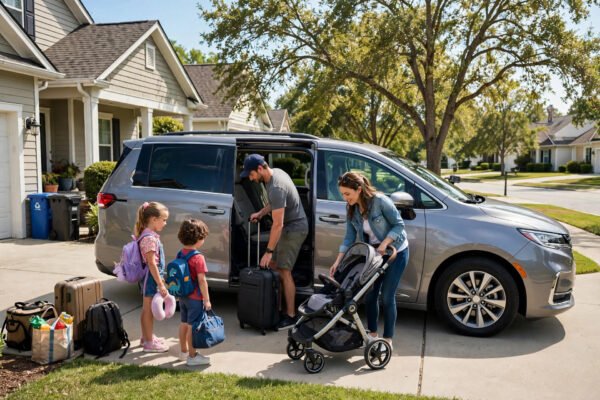
Vehicle type trends are worth noting. The safest lists skew toward SUVs and larger sedans — but the gap is narrowing as small cars improve structurally. Electric vehicles perform notably well in crash tests: their low center of gravity (heavy battery in the floor) resists rollovers, and the absence of an engine block allows optimized front crumple zones. For families evaluating options, cross-reference safety ratings with real-world needs — a top-rated vehicle you cannot afford helps no one, and the safest car is partly the one whose driver-assistance features you will actually use. Those considering long-distance driving should also think about trip planning: planning a road trip with an electric car now includes safety-tech considerations, and what to know before renting a car in another country covers safety checks for unfamiliar vehicles.
Used-car safety: the overlooked opportunity
Most Americans buy used, and safety ratings matter even more there — because the safety gap between model years is enormous. A five-year-old Top Safety Pick+ often protects better than a brand-new budget car with mediocre ratings, and it costs half as much. When shopping used, look up the specific model year’s ratings (they change yearly as tests evolve), prioritize vehicles with automatic emergency braking (increasingly standard since the late 2010s), and remember that a well-maintained older safe car beats a neglected newer one — tires, brakes, and headlight condition determine real-world safety as much as the original rating. The used market is where safety knowledge pays its highest dividends.
Beyond the ratings: the safety features that matter most
If ratings are the report card, features are the curriculum — and some matter far more than others. Automatic emergency braking with pedestrian detection is the single most impactful technology, preventing or mitigating the most common serious crashes. Blind-spot monitoring and rear cross-traffic alert address the crashes mirrors miss. Good headlights — actively rated by IIHS — are criminally underrated; a huge share of fatal crashes happen at night on unlit roads. Lane-keeping assist and adaptive cruise control reduce fatigue-related crashes on highways.
Just as important: the features to be skeptical of. Semi-autonomous driving aids are assistance, not autonomy — every fatal misuse case involved a driver who treated them as self-driving. Touchscreen-everything interfaces increase distraction versus physical controls. And no technology compensates for the fundamentals: seatbelts, sober driving, speed discipline, and attention. The Consumer Reports’ car safety evaluations add owner-satisfaction and reliability data to the official ratings picture.
How to use ratings when buying
The practical workflow: shortlist vehicles that fit your needs and budget, check both NHTSA stars and IIHS ratings (they measure different things — check both), prioritize Top Safety Pick+ winners within your shortlist, verify the specific trim (safety equipment varies by trim level — the base model may lack the features that earned the rating), and test the driver-assistance features yourself on a test drive. Do not assume: the rating applies to the tested configuration, and options matter.
Spotting the safest new cars of the year is ultimately about respecting the data over marketing. Every automaker claims safety; only the independent tests verify it. Check the ratings, prioritize crash prevention as well as crashworthiness, and remember that the safest car is the one driven attentively — technology assists, but the driver decides.
Frequently Asked Questions
What is the difference between IIHS and NHTSA ratings?
NHTSA’s 5-Star ratings (on window stickers) test frontal, side, and rollover crashworthiness plus some driver-assist features. IIHS ratings (Good to Poor) include tougher crash tests plus detailed crash-prevention testing — automatic braking, pedestrian detection, and headlights. Check both.
What does IIHS Top Safety Pick+ mean?
The institute’s highest award, requiring top ratings across crashworthiness tests, crash-prevention systems, and headlights. Only a fraction of models qualify each year, and criteria tighten regularly.
Are bigger cars always safer?
In multi-vehicle crashes, physics favors heavier vehicles — but bigger vehicles are more dangerous to others, harder to maneuver, and the safety gap narrows as small cars improve. The best-rated vehicle in your needed size class beats a poorly-rated larger one.
Do safety ratings apply to all trims?
Not necessarily — ratings are earned by tested configurations, and driver-assistance features often vary by trim. Verify that the specific trim you are buying includes the safety equipment behind the rating.
What is the most important safety feature?
Automatic emergency braking with pedestrian detection prevents the most common serious crashes. Good headlights, blind-spot monitoring, and the fundamentals (seatbelts, attention, sobriety) complete the picture.