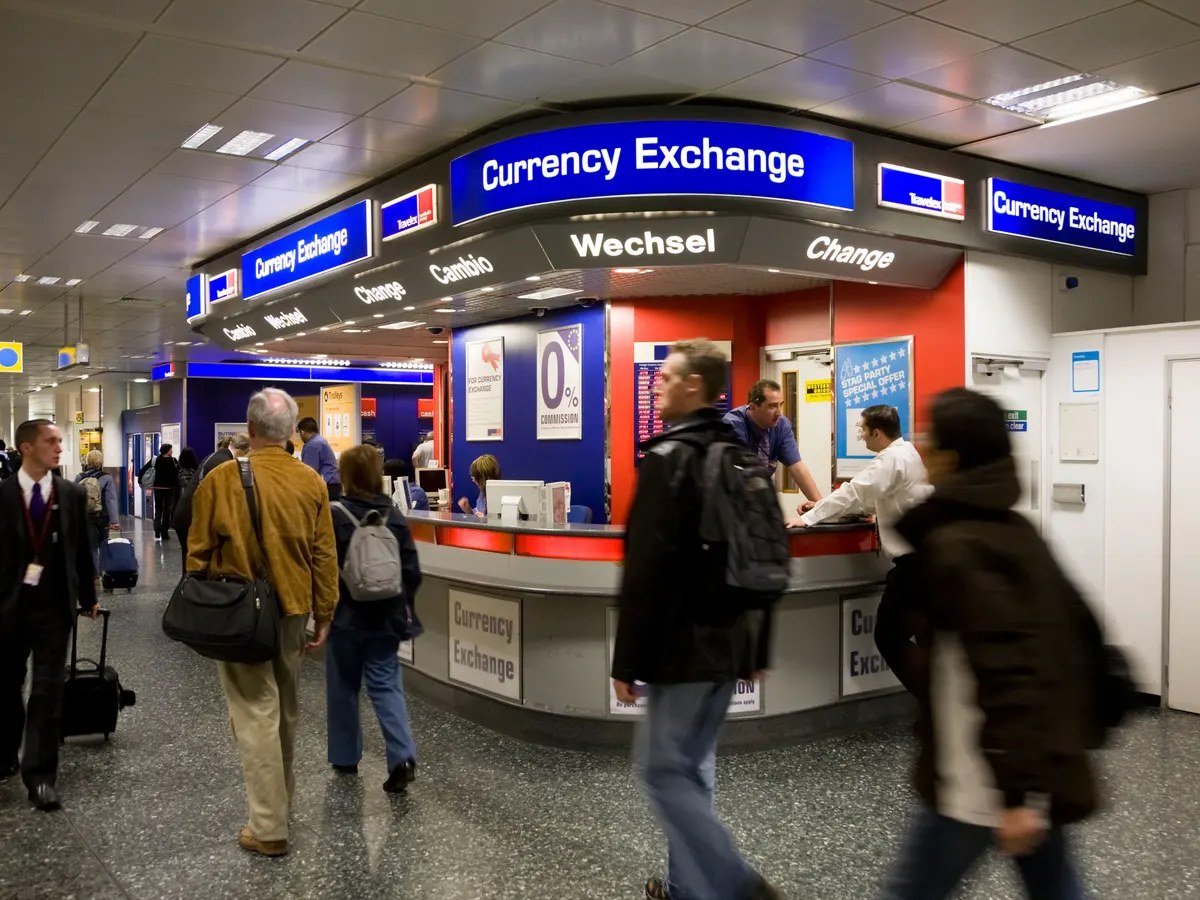
The worst exchange rate of your trip is the one glowing at the airport kiosk — and the frantic traveler who just landed pays it. The best way to exchange currency when traveling abroad isn’t a single trick; it’s a hierarchy: use the right cards for 95% of spending, get cash cheaply from the right ATMs for the rest, and never, ever use the airport exchange counter unless it’s an emergency. Here’s the full breakdown, with the math.
What Is the Best Way to Exchange Currency When Traveling Abroad? The Hierarchy
Tier 1: A no-foreign-transaction-fee credit card. This handles 90–95% of your spending in most developed destinations — and you get the wholesale interbank exchange rate, the best rate available to consumers, period. No fees, no markup, no thinking. If you don’t have one, get one before the trip; the savings dwarf any annual fee. The right best travel credit cards with no annual fee often includes this as a baseline feature.
Tier 2: A debit card with no foreign ATM fees, used at bank ATMs. For cash needs (markets, tips, small towns, countries that run on cash), withdraw from real bank ATMs — not the generic “ATM” boxes in tourist areas, which add their own fees. Decline the ATM’s “conversion” offer every time — “pay in local currency” / “without conversion” gets you the interbank rate; accepting their conversion adds 3–7% pure profit for them. This is the single most expensive button in travel finance, and it’s designed to look helpful.
Tier 3: Cash exchanged at a reputable local exchange. In some countries (parts of Southeast Asia, Latin America, the Middle East), licensed money changers in cities offer excellent rates — sometimes beating ATMs. Compare 2–3 shops; rates are posted and negotiable for larger amounts. Avoid anyone approaching you with a deal — legitimate changers have storefronts.
Tier 4 (emergency only): Airport kiosks and hotel desks. Rates 7–15% worse than interbank, plus flat fees. If you must, exchange the minimum to reach town ($50–100), then use Tier 1–2 from there.
The Traps, Ranked by How Much They Cost You
- Dynamic currency conversion (DCC). The “pay in USD?” offer at ATMs and card terminals. Always choose local currency. DCC adds 3–8% invisibly — the most expensive trap because it’s everywhere and looks convenient.
- Airport exchange counters. 7–15% worse rates. The business model is desperation; don’t fund it.
- Your home bank’s “travel currency” service. Ordering foreign cash before departure sounds smart but typically costs 5–10% over interbank. Only worth it if you’re heading somewhere with no ATM access on arrival.
- Traveler’s checks. Effectively dead. Don’t.
- Exchanging twice. USD → Euro → Swiss Franc bleeds on every conversion. Plan currency needs per country and minimize hops.
Before You Go: The 30-Minute Setup
Get the right cards. One no-foreign-fee credit card (primary spending) + one debit card with ATM fee rebates (Charles Schwab’s famous for this — unlimited global ATM fee rebates) + one backup card from a different network (Visa + Mastercard, in case one network has issues). Three cards, two networks, carried in two separate places.
Notify banks of travel. Most now detect travel automatically, but a 2-minute notification prevents the “card declined at a Paris café” embarrassment. Set travel alerts in each bank’s app.
Know your PINs. Some countries’ ATMs and terminals require chip-and-PIN (not signature). Know your debit PIN; consider setting a PIN on your credit card as backup. Four digits — longer PINs sometimes fail abroad.
Carry a small cash reserve. $100–200 USD in clean, unmarked small bills as the universal emergency fund. USD is accepted or exchangeable almost everywhere in a pinch — it’s the world’s backup currency. Keep it separate from your daily wallet.
Cash-Heavy Destinations: Special Planning
Some places still run on cash: Japan (though cards are spreading), much of Southeast Asia, parts of Latin America, rural areas everywhere. For these, plan ATM stops strategically — withdraw larger amounts less often (fewer flat fees), use bank ATMs in daylight, and keep daily cash in a separate wallet so you’re not flashing your full stash. Research tipping norms too — cash tipping cultures need small bills constantly, so break large notes at hotels or banks early in the trip.
The the Consumer Financial Protection Bureau’s international money tips has solid primers on international money management if you want the official guidance. And remember the broader trip budget: currency strategy is one piece of find cheap flights without using sketchy websites done right, and the savings compound — 5% saved on every transaction across a two-week trip is real money. For the full door-to-door math on getting there cheaply in the first place, the cheapest way to travel between US cities comparison keeps the whole journey economical.
Cash Cheat Sheet by Region
Western Europe: cards everywhere; cash for markets, small cafés, and tips. €100–200 in small bills covers a week. ATMs plentiful — no need to arrive with euros.
Japan: more cash-dependent than you’d expect — many restaurants and temples are cash-only. Withdraw ¥20,000–30,000 at airport 7-Eleven ATMs (they accept foreign cards reliably) on arrival.
Southeast Asia: cash is king in markets and street food; cards fine in malls and hotels. Licensed changers in cities often beat ATMs — compare rates. Carry small denominations; breaking large bills is a constant chore.
Latin America: mixed — cards in cities, cash elsewhere. ATMs sometimes run dry on weekends in small towns; withdraw Thursday/Friday. Blue-dollar style parallel rates exist in some countries (Argentina famously) — research before you go, as the official rate can be half the street rate.
Middle East & Africa: cash-heavy outside major hotels. USD or euros in small clean bills are widely accepted as backup. ATMs in airports and malls are safest.
Everywhere: the card-first, ATM-second, kiosk-never hierarchy holds. Regional tweaks are about how much cash, not whether the strategy works.
The Practical Takeaway
Get a no-foreign-fee credit card and a fee-free debit card before you go. Abroad: pay by card in local currency whenever possible, withdraw cash from bank ATMs (declining conversion), and never use airport kiosks except in emergencies. That’s the entire system — three cards, one rule (always local currency), and you’ll keep 5–10% more of your money on every trip without thinking about it again.





One thought on “The Best Way to Exchange Currency When Traveling Abroad”