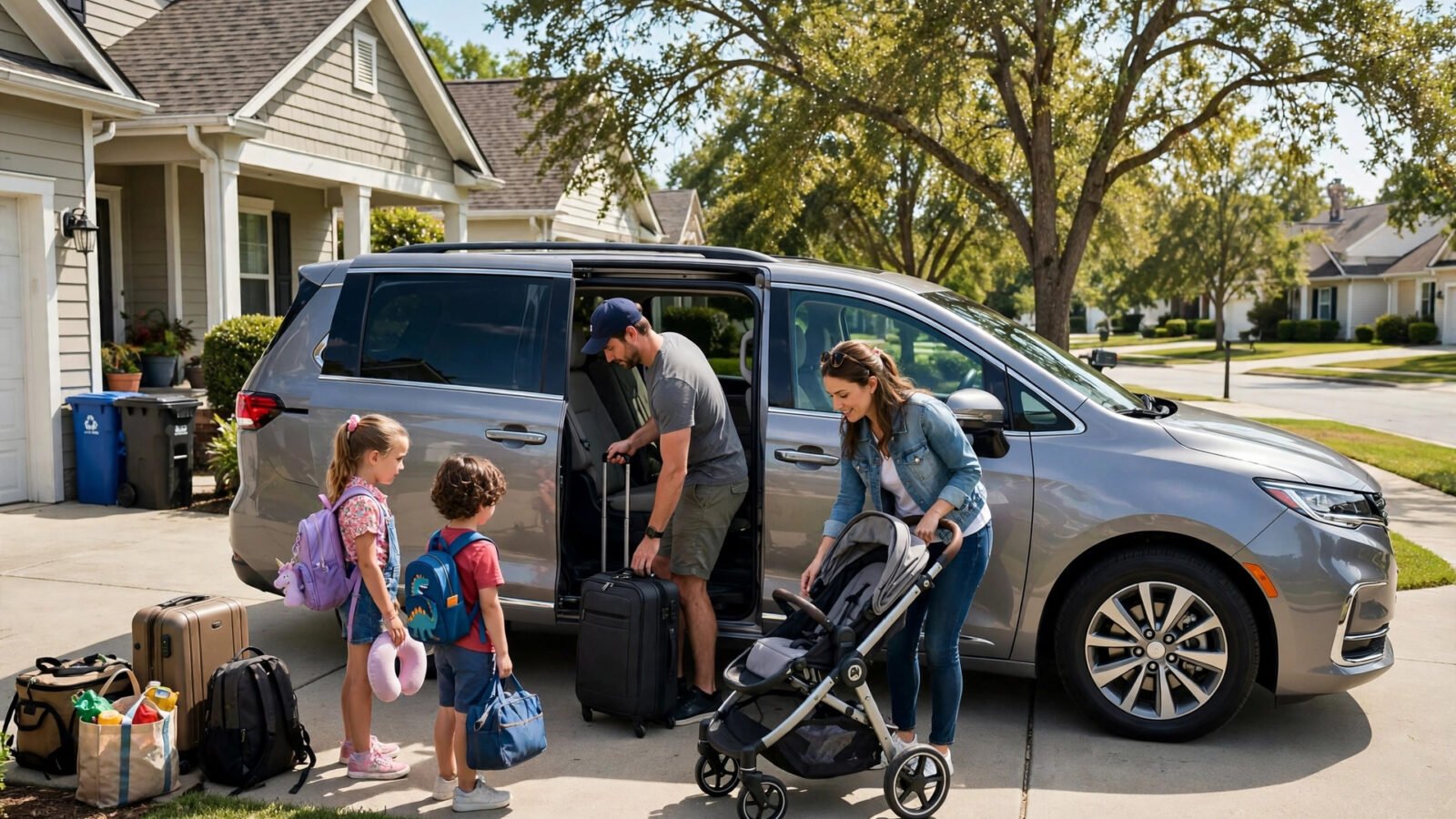
The minivan was supposed to be dead — killed by the SUV, buried by stigma, mourned by no one. Instead, something funny happened on the way to the funeral: the minivan is making a quiet comeback. Sales stabilized and then grew, waitlists formed for hybrid models, and a funny thing appeared in school pickup lines — young parents choosing the sliding doors deliberately, even proudly. The most uncool vehicle in America is having a moment, and the reasons reveal as much about modern family life as about cars.
The comeback’s engine is practicality’s revenge. After two decades of SUV dominance, families rediscovered what minivan owners never forgot: nothing hauls people and cargo like a minivan. Not crossovers, not three-row SUVs — vehicles that look adventurous but surrender interior space to styling. The minivan’s boxy honesty turns out to be a feature, not a bug.
Why the minivan wins on merit
The case is overwhelming on paper. Interior volume: minivans offer more passenger and cargo space than any three-row SUV, with lower load floors and wider openings. Access: sliding doors in tight parking lots, low step-in height for toddlers and grandparents — the daily ergonomics of family life favor the van enormously. Versatility: stow-and-go or removable seats convert from eight-passenger hauler to cargo van in minutes, a flexibility SUVs cannot match. Fuel economy: hybrid minivans deliver 35+ MPG combined, embarrassing body-on-frame SUVs. Price: comparably equipped minivans typically undercut three-row SUVs by thousands.
The NHTSA safety ratings and Consumer Reports’ reliability data consistently show minivans among the safest, most reliable family vehicles — the low center of gravity aids handling, and the segment’s maturity means proven powertrains. For the rational buyer, the minivan was always the answer; the market just needed to stop punishing rationality with stigma.
The stigma collapse
The stigma was always the minivan’s real competitor, and it is fading for generational reasons. Millennial and Gen Z parents — raised in minivans themselves, with fond memories of DVD players and road trips — feel nostalgia rather than shame. Social media recast the minivan ironically, then sincerely: “minivan mom” went from insult to identity, complete with merchandise. Practicality became a flex — in an era of $90,000 luxury SUVs, the parent who chose the $45,000 hybrid van and banked the difference reads as savvy, not defeated. The culture caught up to the engineering.
The hybrid factor
Technology sealed the comeback. Hybrid powertrains — now standard or available across the segment — transformed the minivan’s economics: 35+ MPG in a vehicle that seats seven or eight demolishes the fuel-cost argument for smaller vehicles. The efficiency also answers the environmental conscience of younger buyers who want space without the carbon guilt of a V8 SUV. Plug-in hybrid variants add meaningful electric-only range for daily driving, making the minivan arguably the greenest way to move a large family.
Feature content kept pace: rear entertainment, vacuum cleaners, intercom systems, hands-free sliding doors, all-wheel drive — the modern minivan is a technology showcase wearing sensible shoes. Resale values, long the segment’s weakness, stabilized as demand recovered. And the driving experience surprised converts: lower center of gravity than SUVs means minivans handle better than their image suggests — the “uncool” vehicle is secretly the better-driving one. Families planning long hauls can map them on the best road trip routes through the American Southwest — the minivan’s natural habitat — and keep the whole crew comfortable with budget-friendly childproofing strategies adapted to the chaos of family travel.
The dad van renaissance in pop culture
Culture follows commerce, and the minivan’s image rehabilitation is now self-sustaining. Parenting influencers showcase organized minivan interiors with genuine enthusiasm; comedians mine the “I swore I’d never” genre to huge audiences; automakers’ marketing leans into the confidence of the choice rather than apologizing for it. The vehicle’s honesty became its brand: in an age of authenticity signaling, choosing the uncool-but-perfect tool reads as the ultimate quiet luxury. Kids raised in the comeback era will remember minivans the way their parents remember station wagons — fondly, and without a trace of irony.
What to look for when buying
Minivan shopping rewards focus on the family-specific details: sliding door operation (power, hands-free, and how they behave in tight garages), second-row configurability (captain’s chairs versus bench, ease of removal), cargo volume with all seats up (the real-world test — strollers plus groceries), infotainment for rear passengers on long trips, and the hybrid system’s real-world economy. Test-drive with your actual car seats installed — LATCH anchor accessibility varies enormously and determines daily sanity. Check the spare tire situation (run-flats versus real spares matter on family road trips), and compare warranty coverage on the hybrid components specifically. The segment is small enough that every model has been thoroughly reviewed; read the long-term tests, not just the launch coverage.
Minivan vs. three-row SUV: the honest comparison
The SUV’s advantages are real: all-wheel-drive capability (though minivans offer AWD too), towing capacity, ground clearance, rugged image, and — for some buyers — the styling they simply prefer. Off-roaders and towers should buy SUVs. But for the suburban family use case — school runs, grocery hauls, road trips, sports equipment — the minivan wins on space, access, efficiency, price, and ease of use. The SUV’s victory was aesthetic and cultural; the minivan’s revenge is functional.
The market is responding: automakers are investing in the segment again, new entries and redesigns signal confidence, and the conversation shifted from “who still buys these?” to genuine cross-shopping. The EPA’s fuel economy data quantifies the efficiency gap that underpins the rational case.
The verdict
The minivan’s quiet comeback is the market correcting a decades-long triumph of image over substance. Families tried the SUV era, paid the premium in money, fuel, and convenience — and a growing number are coming home to the sliding door. Uncool was always a marketing problem, never an engineering one. The engineering was right all along, and the families who never left knew it first. The rest of us are just catching up — one sliding door at a time, happily ever after indeed.
Frequently Asked Questions
Why are minivans becoming popular again?
Superior practicality (space, access, versatility), hybrid fuel economy (35+ MPG), lower prices than three-row SUVs, strong safety and reliability ratings, and fading stigma — younger parents view minivans with nostalgia and pride rather than shame.
Are minivans safer than SUVs?
Minivans consistently earn excellent safety ratings, with low centers of gravity aiding stability and handling. They perform very well in crash tests — comparable to or better than many SUVs in their class.
How fuel-efficient are modern minivans?
Hybrid minivans achieve 35+ MPG combined — dramatically better than most three-row SUVs. Plug-in hybrid variants offer meaningful electric-only range for daily driving.
Minivan vs. three-row SUV: which should I buy?
Minivans win on interior space, access (sliding doors, low step-in), fuel economy, price, and versatility. SUVs win on towing, ground clearance, off-road capability, and styling preference. For typical family duty, the minivan is functionally superior.
Do minivans hold their value?
Resale values stabilized as demand recovered — hybrids in particular hold value well. They still typically depreciate slightly faster than the most popular SUVs, but the purchase-price advantage usually outweighs this.