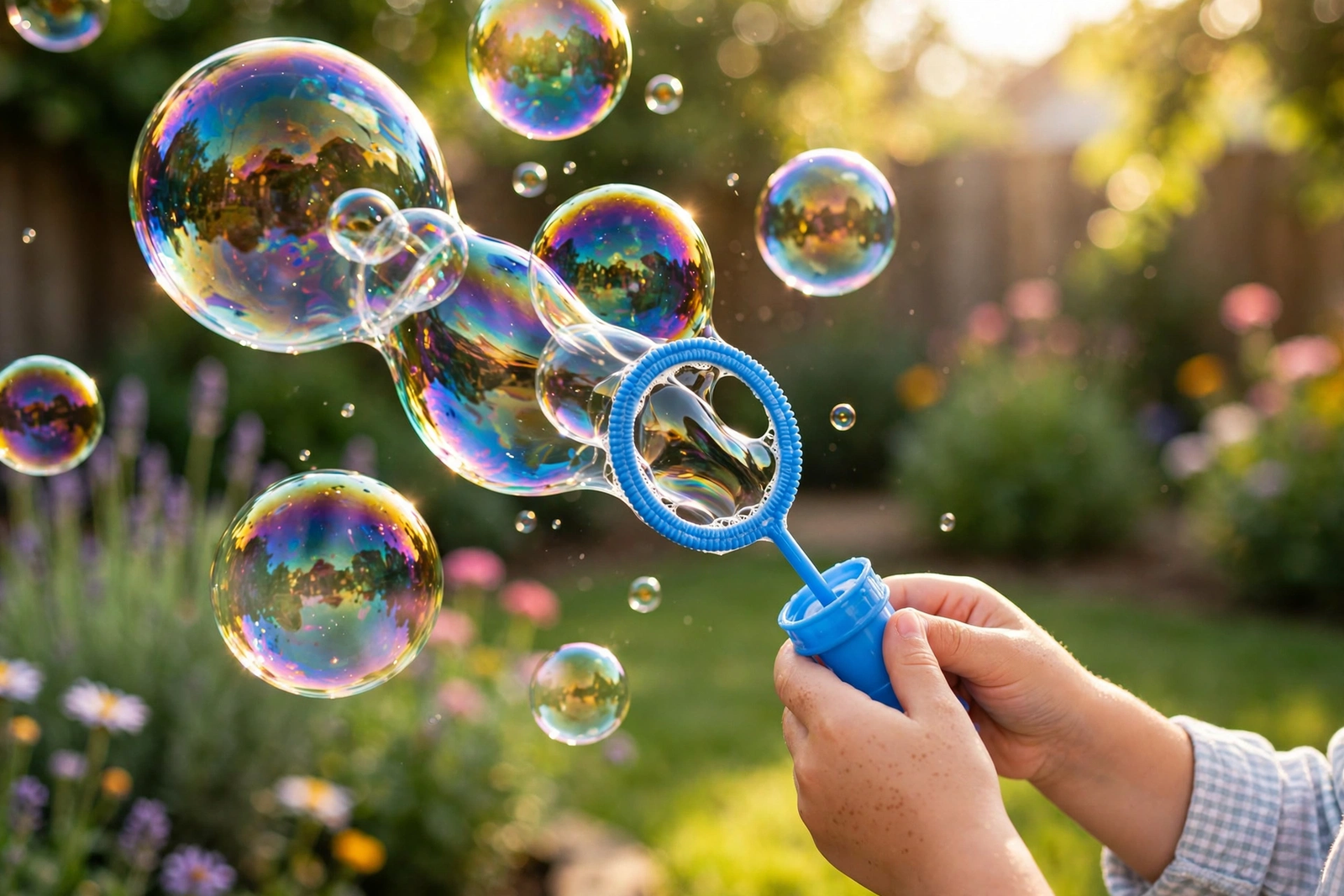
The classic homemade bubble solution is simple: 6 cups of water, 1 cup of dish soap, and 1/4 cup of corn syrup (or 2 tablespoons of glycerin). Stir gently — never shake — let it rest for at least an hour (overnight is even better), and you will have bubbles that rival store-bought solution at a fraction of the cost.
Every parent learns this eventually: the little bottle of bubbles from the party favor bag runs out in about four minutes, and the kids are staring at you. The good news is that homemade bubble solution is one of the easiest DIY projects there is — three ingredients, five minutes of work, and results that are genuinely better than most commercial mixes. The secret is not the soap. It is the third ingredient, the one most people skip.
The Best Basic Bubble Solution Recipe
Here is the recipe that consistently outperforms the rest in side-by-side tests:
- 6 cups (1.5 liters) of distilled or tap water — distilled works slightly better, especially if your tap water is hard, but tap water is fine for most purposes.
- 1 cup of dish soap — plain Dawn or Fairy (the classic blue kind) is the gold standard. Avoid “ultra” antibacterial or lotion-added varieties, which make weaker bubbles.
- 1/4 cup of corn syrup OR 2 tablespoons of glycerin — this is the magic ingredient. Glycerin (available at pharmacies and craft stores) makes slightly stronger bubbles; corn syrup is cheaper and easier to find.
That is it. No cooking, no special equipment. The ratio matters more than precision — roughly 12 parts water to 2 parts soap to 1 part corn syrup — so you can scale it up for a bucket or down for a single wand refill.
Step-by-Step Instructions
- Pour the water into a large bowl, pitcher, or bucket. If you have time, use distilled water or let tap water sit out for a few hours; dissolved minerals in hard water can weaken bubbles.
- Add the corn syrup or glycerin and stir until fully dissolved. It helps to stir the syrup into a little warm water first if it is being stubborn.
- Add the dish soap last. Pour it in slowly and stir gently with a spoon. This is the step everyone gets wrong: shaking or whisking creates foam, and foam is the enemy of good bubbles. You want the soap fully mixed with as little foam as possible.
- Skim off any foam that formed on the surface with a spoon.
- Let it rest. Cover the container and leave it for at least an hour; overnight is ideal. Resting lets the ingredients fully integrate and any remaining foam settle out. Old bubble solution — a day or two old — almost always blows better than fresh.
- Dip and blow. Dip your wand, lift it slowly, and blow gently and steadily. Big, slow breaths make big bubbles; short puffs make lots of small ones.
Why Glycerin or Corn Syrup Matters: The Science
A soap bubble is a thin film of water sandwiched between two layers of soap molecules. The problem is evaporation: the water in the film evaporates within seconds, the film thins, and pop — the bubble dies. Glycerin and corn syrup are hygroscopic, meaning they attract and hold water molecules. Mixed into the solution, they slow evaporation dramatically, keeping the bubble film flexible and intact much longer.
Glycerin — chemically known as glycerol — is the more effective of the two, which is why professional bubble performers use it. Corn syrup works on the same principle and costs pennies. Sugar can substitute in a pinch (dissolve 1/4 cup in warm water first), but it makes a slightly stickier solution.
Humidity matters too, which is why bubbles always seem better on a damp, overcast day than in dry midday heat. If you want to geek out on the physics, the Exploratorium’s bubble science resources are a wonderful rabbit hole.
Giant Bubble Recipe
For the huge, shimmering bubbles that make kids (and adults) gasp, you need a slightly different formula and a bigger wand:
- 12 cups of water
- 1 cup of dish soap (Dawn or Fairy)
- 1/2 cup of corn syrup
- 2 tablespoons of glycerin (optional but recommended)
- 1 packet (about 1 tablespoon) of guar gum — dissolved in a little rubbing alcohol first, then stirred in. This is the professional secret; it makes the film stretchy enough to form bubbles several feet across.
Pour the mix into a shallow tray or kiddie pool. For the wand, thread a cotton string through two sticks or dowels to make a large loop — the string wicks up far more solution than a plastic wand. Dip the whole loop, lift it slowly, and walk backward or wave it gently. On a calm, humid day, you will make bubbles the size of beach balls.
DIY Bubble Wands
You do not need to buy wands. Some of the best ones are homemade:
- Pipe cleaners: twist into any shape — stars and hearts make shaped bubbles (well, mostly round bubbles, but kids love them anyway).
- Plastic berry baskets: the mesh creates dozens of bubbles at once.
- Fly swatters and kitchen whisks: surprisingly effective multi-bubble blowers.
- String-and-stick loops: for giant bubbles, as described above.
- Your hands: make a circle with thumb and forefinger, dip, and blow. The original wand.
Troubleshooting: When Bubbles Won’t Cooperate
- Bubbles pop instantly: the usual culprit is too much foam or fresh, unrested solution. Let it sit overnight and skim the foam. Adding a touch more glycerin helps too.
- No bubbles at all, just foam: you stirred too vigorously or used the wrong soap. Antibacterial and “ultra” soaps with lotion additives are bubble killers. Switch to plain Dawn or Fairy.
- Bubbles are small and weak: increase the soap slightly, or try distilled water — hard tap water really does make a difference.
- Solution worked yesterday but not today: hot, dry, windy weather is brutal on bubbles. Blow in the shade, in the early morning or evening when humidity is higher.
- Sticky residue everywhere: that is the corn syrup. It washes off with water, but keep the solution away from nice clothes and car interiors.
Storage and Safety
Homemade solution keeps for weeks in a sealed container at room temperature — it often improves with age. Label it clearly (it looks like nothing so much as a drink someone should not have), and keep it out of reach of small children who might sip it. The ingredients are non-toxic in small amounts, but dish soap will upset a stomach. If solution gets in eyes, rinse with clean water. And one practical warning: spilled bubble solution makes hard floors spectacularly slippery — blow bubbles on grass, not the patio.
Love a good hands-on project? Our step-by-step necklace untangling guide is another satisfying DIY fix, and our explainer on how water fountains work covers the science of moving water.
Frequently Asked Questions
What is the best homemade bubble solution recipe?
6 cups water, 1 cup plain dish soap (Dawn or Fairy), and 1/4 cup corn syrup or 2 tablespoons glycerin. Stir gently, skim the foam, and rest overnight for best results.
Can I make bubble solution without glycerin?
Yes — corn syrup is an excellent substitute (1/4 cup per 6 cups water). Dissolved sugar also works in a pinch. Glycerin makes slightly stronger bubbles, but the difference is small for casual play.
Why do my homemade bubbles keep popping?
Usually too much foam, fresh unrested solution, the wrong soap, or dry windy weather. Let the mix rest overnight, skim foam, use plain dish soap, and blow in humid shade.
How long does homemade bubble solution last?
Weeks in a sealed container at room temperature. It often blows better after a day or two of resting than when freshly mixed.
What dish soap is best for bubbles?
Plain Dawn (blue) or Fairy are the tried-and-true favorites. Avoid antibacterial, lotion-added, or “ultra” concentrated varieties, which produce weaker films.
How do you make giant bubbles?
Use the giant recipe above (with guar gum for stretch), a large string-loop wand, and a shallow tray. Dip fully, lift slowly, and walk backward on a calm, humid day.