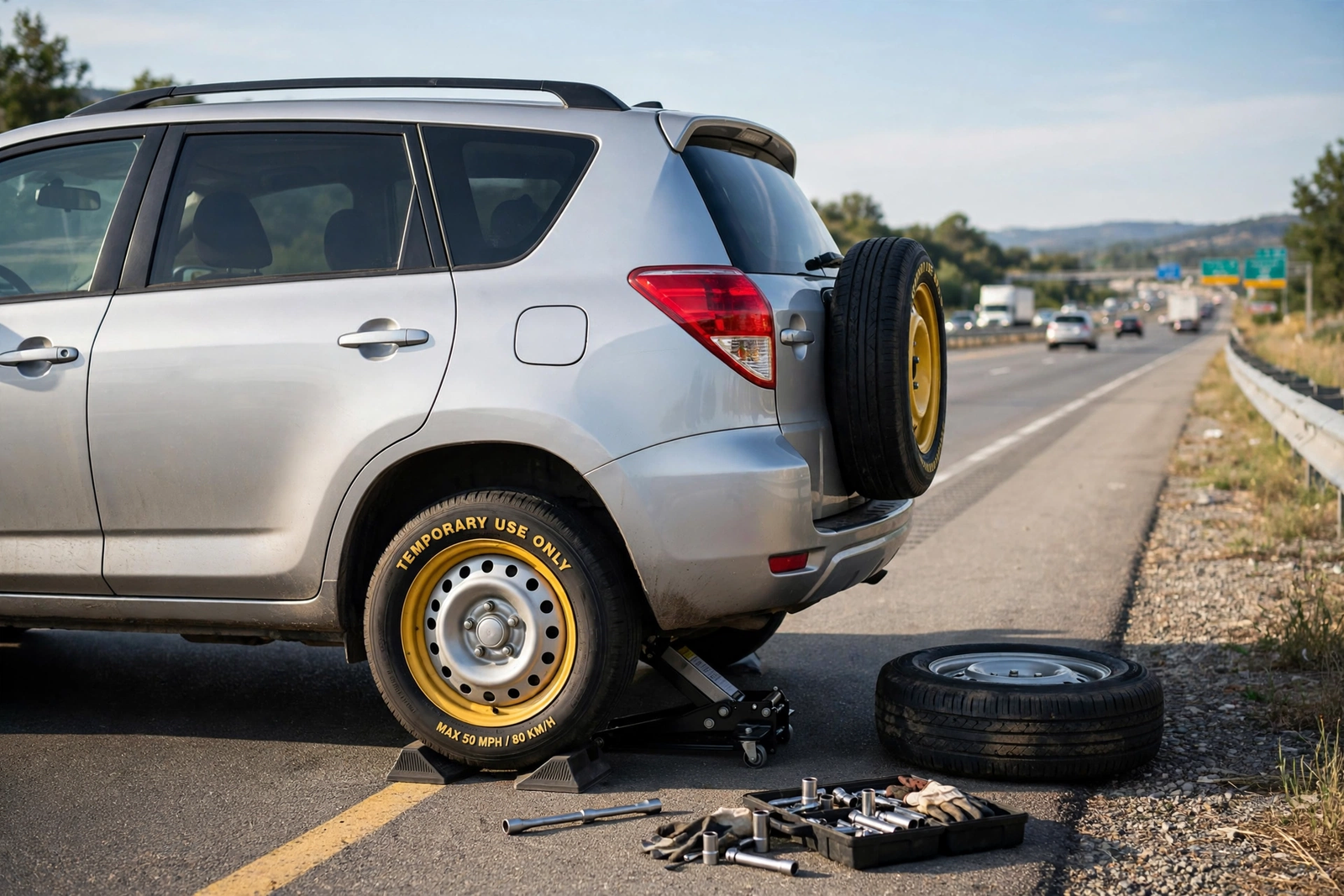
You’re on the highway, the tire goes flat, and you bolt on that skinny little spare from the trunk. Now what — can you finish your 200-mile trip, or do you need the nearest tire shop immediately? The answer could save your rim, your differential, or worse.
Donut Spare vs. Full-Size Spare: Know Which You Have
- Compact temporary (donut): Narrow, lightweight, stamped with “TEMPORARY USE ONLY” and speed/distance limits. Standard on most sedans and crossovers.
- Full-size spare: A normal wheel and tire, often mounted under trucks and SUVs. Drive normally, but check its age — rubber degrades even unused.
- Run-flat tires: No spare at all; reinforced sidewalls let you drive ~50 miles at 50 mph after a puncture.
- Tire repair kit: A can of sealant plus a compressor — handles small punctures only, useless for blowouts or sidewall damage.
Why Donuts Have Such Strict Limits
Donut spares are smaller in diameter than your regular tires, which creates real mechanical problems. The size mismatch forces your differential to work overtime compensating for wheels turning at different speeds — prolonged driving can overheat and damage it, a repair costing $1,500+. The narrow contact patch also means less grip, longer braking distances, and twitchy handling, especially in rain. And the lightweight construction simply isn’t built for sustained heat and stress. The 50-mile/50-mph rule isn’t a suggestion; it’s the engineering envelope.
What Happens If You Exceed the Limits
- Differential damage from prolonged size mismatch — worst on AWD vehicles, where manufacturers warn against donuts entirely or require specific placement.
- Blowout of the spare itself — overheated donut rubber fails catastrophically, potentially at speed.
- Brake imbalance — different tire diameters confuse ABS and stability control.
- Rim damage — donuts have minimal sidewall; potholes that a normal tire shrugs off can crack the spare’s rim.
The National Highway Traffic Safety Administration (NHTSA) emphasizes that temporary spares demand reduced speeds and prompt replacement.
AWD Vehicles: Special Warning
If you drive an all-wheel-drive vehicle, check your owner’s manual before using a donut. Many AWD systems (notably Subaru’s) are extremely sensitive to tire diameter differences — some manuals forbid donuts outright, others require the spare on the rear axle only, and some include a fuse to disable AWD temporarily. Ignoring this can fry a center differential costing $2,000+. When in doubt, call roadside assistance instead.
What to Do Right After Mounting the Spare
- Drive directly to the nearest tire shop — don’t “see how it goes.”
- Stay under 50 mph and avoid highways if possible.
- Turn off cruise control and increase following distance.
- Get the flat repaired or replaced the same day; don’t let the donut become semi-permanent.
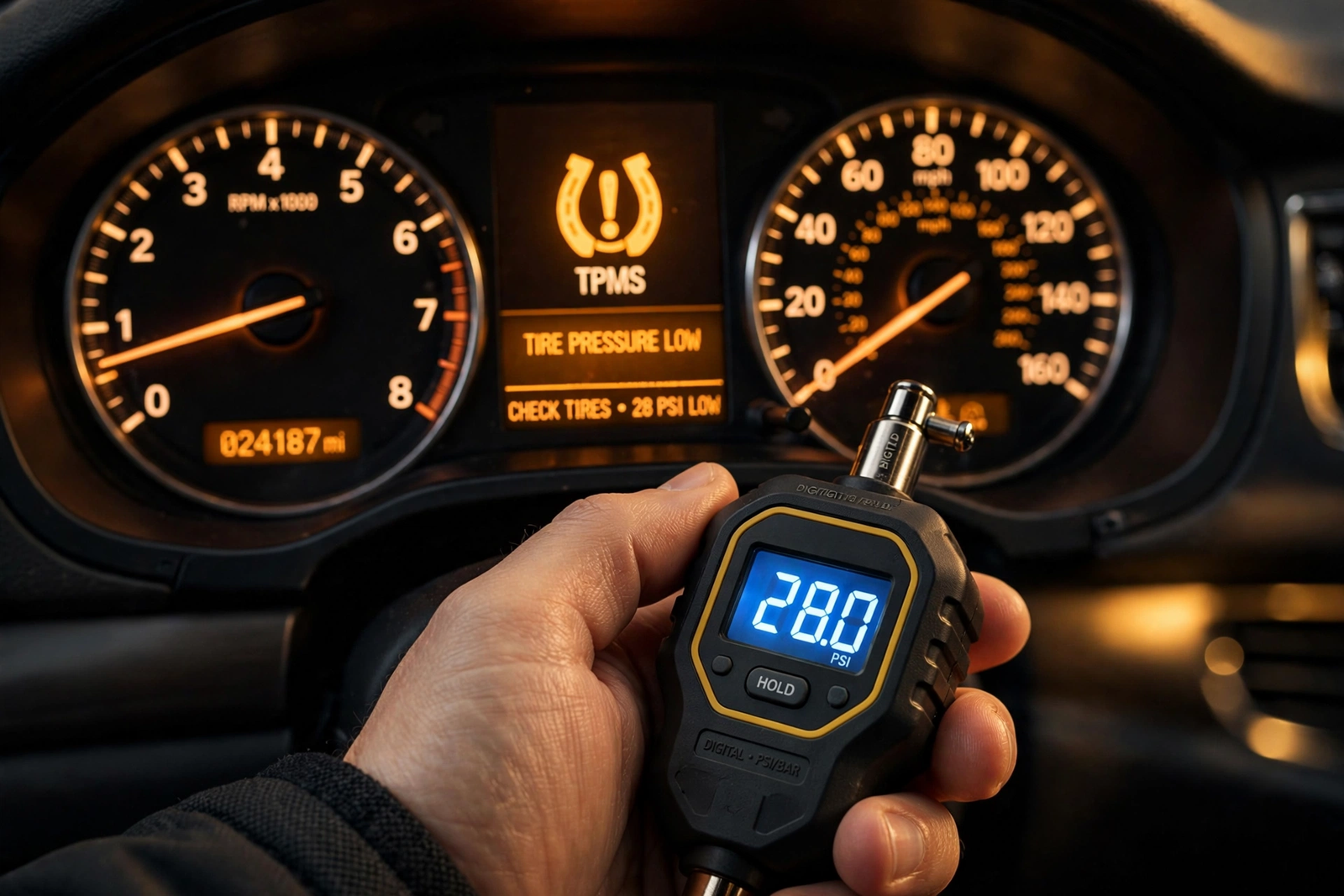
Proper tire maintenance prevents most flats in the first place — see how often to rotate your tires“>how often to rotate your tires and how to reset the tire pressure light“>how to reset the tire pressure light. AAA’s tire resources cover emergency tire care in more depth.
How to Change a Tire Safely: Step by Step
If you’ve never done it, here’s the process. 1. Pull fully off the road onto flat, solid ground and engage the parking brake. 2. Turn on hazard lights and set out a warning triangle if you have one. 3. Loosen the lug nuts slightly before jacking (a quarter turn each, in a star pattern). 4. Jack the car at the manufacturer-designated jack point — your owner’s manual shows exactly where. 5. Remove lug nuts, swap the wheel, hand-tighten nuts in a star pattern. 6. Lower the car, then torque the nuts properly in the star pattern. 7. Stow everything and head for a tire shop. Practice once in your driveway and a roadside flat becomes a 15-minute inconvenience instead of a crisis.
Run-Flats and Repair Kits: The No-Spare Alternatives
Many modern cars skip the spare entirely to save weight and space. Run-flat tires have reinforced sidewalls that support the car for ~50 miles at 50 mph after losing pressure — but they’re pricier to replace ($200–$400 each), ride harsher, and can’t be repaired after being driven flat. Sealant kits (a compressor plus latex goo) handle nail punctures in the tread but fail on sidewall damage, blowouts, or large gashes — and the sealant often ruins the tire pressure sensor, adding $50–$100 to the eventual repair. Know which system your car has before you’re stranded.
Preventing Flats in the First Place
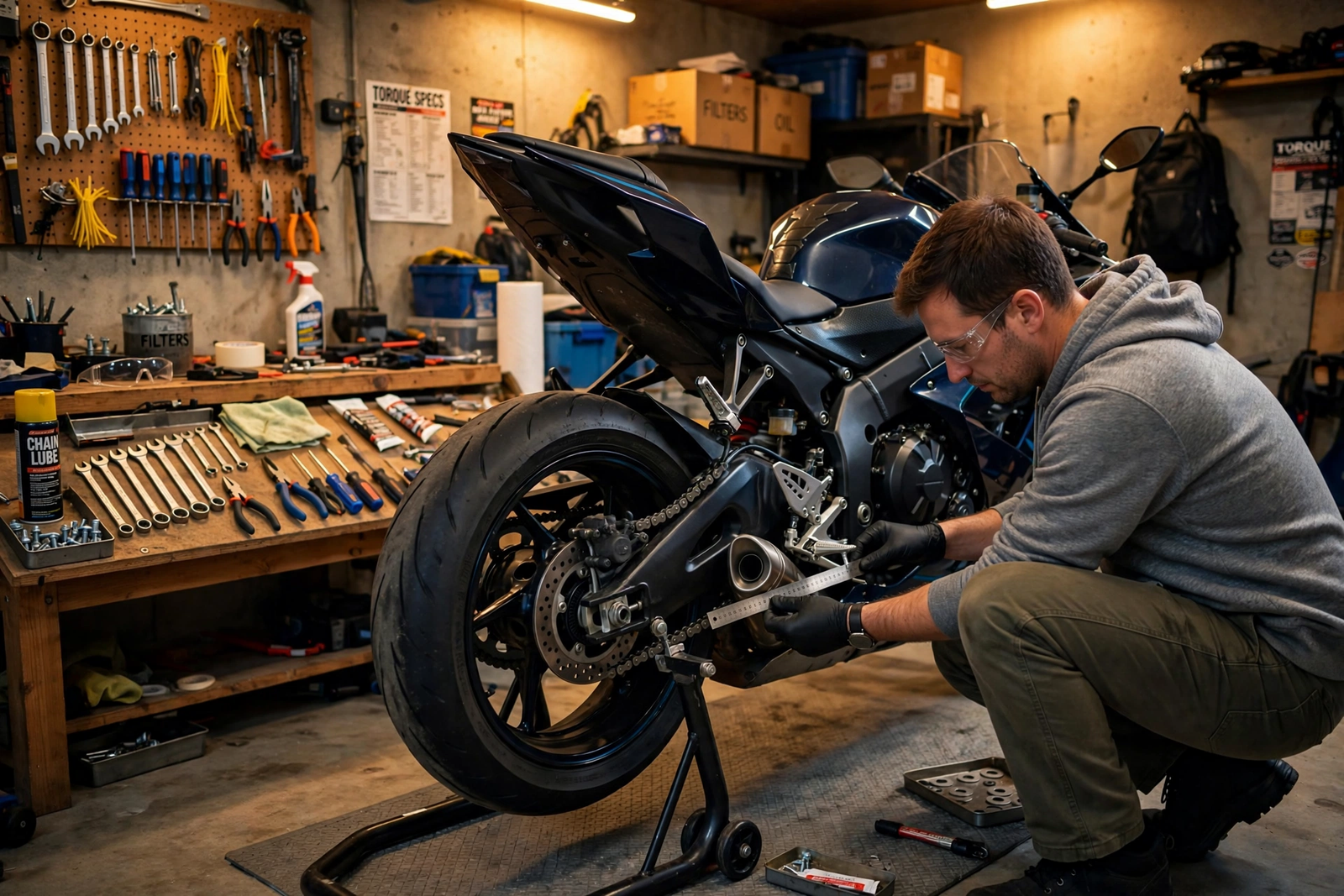
Most flats are preventable. Check tire pressure monthly (underinflation causes heat buildup and blowouts), inspect tread for embedded nails during washes, rotate tires on schedule, and replace tires at 4/32″ tread depth — not at the legal-minimum 2/32″, when wet grip has already collapsed. Avoiding potholes and debris sounds obvious, but scanning the road ahead is a genuine driving skill that saves tires, rims, and alignments alike.
Frequently Asked Questions
Can I drive on a donut spare for a week?
No. Donuts are rated for about 50–70 miles total. A week of commuting will destroy the spare and risk differential damage.
Can I put a donut on the front?
It’s safer on the rear — steering and most braking happen up front. If the flat is on a front wheel, swap a good rear tire forward and put the donut on the rear.
How fast can you drive on a full-size spare?
Normal speeds — it’s a regular tire. Just check its pressure and age first.
Do donut spares expire?
Yes. Rubber degrades over 6–10 years even unused. Check the DOT date code on your spare; an ancient donut is a blowout waiting to happen.
What PSI should a donut spare be?
Usually 60 PSI — much higher than normal tires. Check the sidewall stamp and inflate before you need it.


One thought on “How Far can You Drive on a Spare Tire? Complete Answer”