Duolingo’s owl has guilt-tripped millions of people into learning Spanish. But the language-learning world has changed dramatically: AI-powered apps now hold actual conversations with you, correct your pronunciation in real time, and adapt lessons to your exact weak spots. The best AI apps for learning a new language in 2026 are less like textbooks and more like patient native-speaking tutors who never sleep and never judge your accent.
I have dabbled in three languages across a dozen apps over the years, and the difference between the old flashcard grind and modern AI conversation practice is night and day. Here is what is actually worth your time.
The Best AI Apps for Learning a New Language
Different apps serve different goals — casual travel phrases versus genuine fluency — so I have matched each pick to the learner it fits.
Best for Real Conversation Practice
- Speak. Built around AI conversation: you talk, it responds like a tutor, corrects you in real time, and drills your weak points. The closest thing to immersion without a plane ticket. Especially strong for English, Spanish, and French learners.
- ChatGPT / Claude / Gemini (free tiers). Underrated language tutors. Ask for role-plays (“pretend you’re a waiter in Madrid, correct my Spanish”), graded explanations, or custom quizzes on exactly what you got wrong yesterday. Free, infinitely patient, available in virtually every language.
- LanguaTalk / similar AI tutors. A growing category of apps offering structured AI conversation with corrections tuned to your level.
The key insight: conversation is where fluency is built, and AI finally makes daily conversation practice free and unlimited. Fifteen minutes of AI chat beats an hour of flashcards for speaking ability.
Best for Structured Courses
- Duolingo (free tier). Still the best on-ramp: gamified, bite-sized, and genuinely fun for the first few months. Its AI features now include role-play conversations and personalized review. The free tier is enough to find out if you will stick with it.
- Busuu. More serious grammar progression than Duolingo, with AI-personalized review schedules and community corrections from native speakers.
- Babbel. Strong for practical conversation skills, with speech recognition and well-designed lesson arcs. Paid, but focused — good for learners who want efficiency over games.
Best for Pronunciation
- Elsa Speak. AI specifically trained on accent analysis — it pinpoints exactly which sounds you mispronounce and drills them. If people keep asking you to repeat yourself, start here.
- Speechling. Record yourself, get feedback (AI plus optional human coaches on paid tiers). Unsexy interface, excellent results.
Best for Vocabulary That Sticks
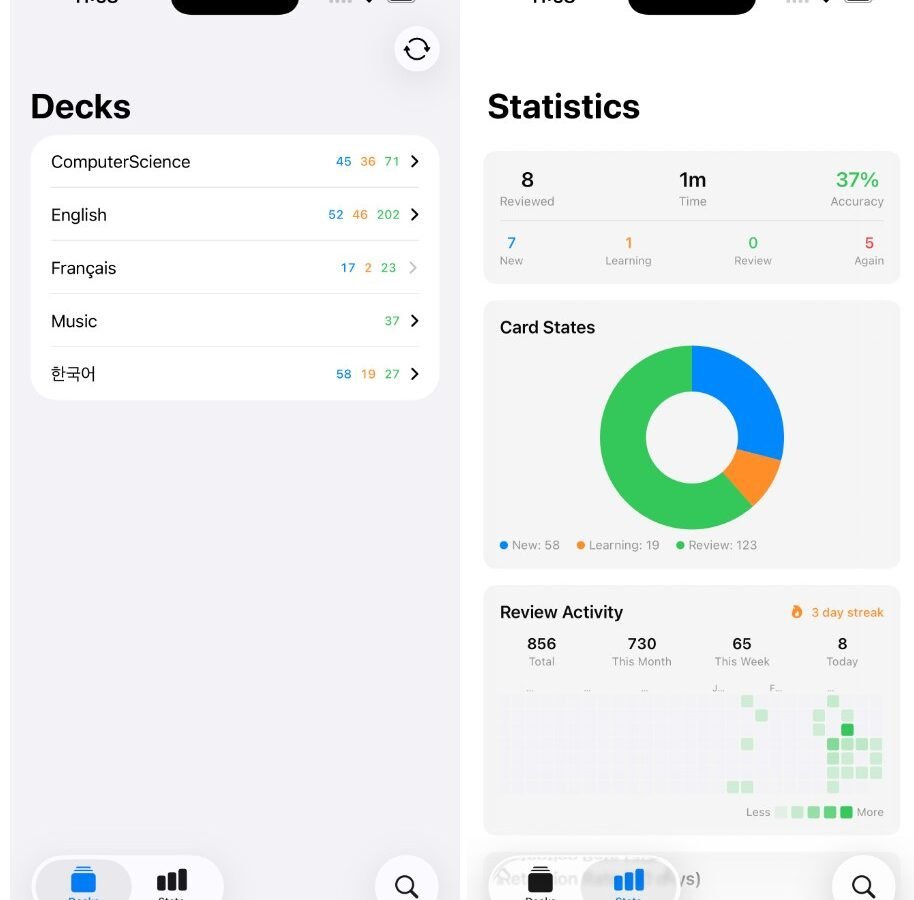
- Anki (free). Not AI-hyped, but the spaced-repetition algorithm is the most evidence-backed vocabulary method in existence. Pair it with AI-generated example sentences and mnemonics for your weak words.
- Memrise. AI-personalized review plus video clips of native speakers, so you learn words in real mouths, not robotic audio.
The Method That Actually Works
Apps do not teach languages; consistent practice does. Here is the weekly structure that produces real progress:
- Daily micro-habit (15–20 min): one structured lesson (Duolingo/Busuu) plus five minutes of AI conversation on what you just learned. Same time every day — habit beats motivation.
- Weekly deep session (45 min): a longer AI role-play on a real scenario (job interview, doctor visit, arguing about football), then review corrections.
- Input every day: a podcast, show, or songs in the target language, even passively. Your ear needs hours; apps alone do not provide them.
- Monthly reality check: record yourself speaking for two minutes on a topic, then compare to last month. Progress feels invisible day to day and obvious month to month.
And here is the uncomfortable truth the app stores will not tell you: most people quit around week six, when novelty fades and the language gets hard. The fix is not a better app — it is a smaller daily commitment you can keep on your worst day, plus a reason that matters (a trip, a person, a job). Tie your learning to a date on the calendar.
Using general AI as your free tutor
Do not overlook the chatbots you already have. Some of the most effective prompts: “Correct this paragraph and explain each correction simply”; “Quiz me on 20 restaurant words, increasing difficulty”; “Explain the subjunctive using only cooking metaphors”; “Role-play a landlord negotiating repairs — stay in character and correct me afterward.” This is also a great way to practice writing better AI prompts, since precise instructions produce dramatically better tutoring.
What AI Cannot Do for You
AI tutors are patient, but they are not people. Real conversation includes interruption, slang, mumbling, cultural context, and the social courage to sound stupid in front of another human — none of which an app provides. Plan from the start to graduate to human practice: language-exchange partners (free via apps like Tandem), community classes, or a monthly session with an affordable tutor on platforms like italki. AI gets you to the conversation; humans make you fluent.
For younger learners, the same tools apply with supervision — see what parents should know about kids using AI chatbots before handing a child an open-ended AI tutor.
Staying Motivated Past Week Six
The app does not matter if you quit. Nearly every language learner hits the wall around week six: novelty gone, difficulty rising, progress invisible. Here is what gets people through: shrink the commitment — on bad days, five minutes counts; the streak survives, and starting is the whole battle. Make it social — a learning buddy, a weekly exchange call, even posting progress publicly; accountability outperforms willpower. Chase a milestone, not fluency — “order food in Spanish on our trip” is achievable and motivating; “become fluent” is paralyzing.
Consume media you actually enjoy in the target language — the show you would watch anyway, the music you would stream anyway. Pleasure sustains where discipline fails. And measure monthly, not daily: record that two-minute speaking sample and compare across months, because day-to-day progress is invisible and month-to-month is dramatic. Finally, forgive the broken streaks. Missing a week does not erase five good ones; quitting because you missed a week erases everything. The official Duolingo blog and similar resources publish motivation research and learner stories that help normalize the struggle — you are not uniquely bad at this, you are experiencing the universal week-six wall, and millions have climbed it.
The Practical Takeaway
Start free: Duolingo for structure plus a chatbot for conversation practice. Add Elsa Speak if pronunciation is your blocker, Anki if vocabulary will not stick. Practice 15–20 minutes daily at a fixed time, do one longer role-play weekly, and feed your ears with real target-language media. Graduate to human conversation partners within a few months. The best AI language app is the one you will open tomorrow — so pick the one that feels like play, and let the streak do the rest.




One thought on “The Best AI Apps for Learning a New Language”