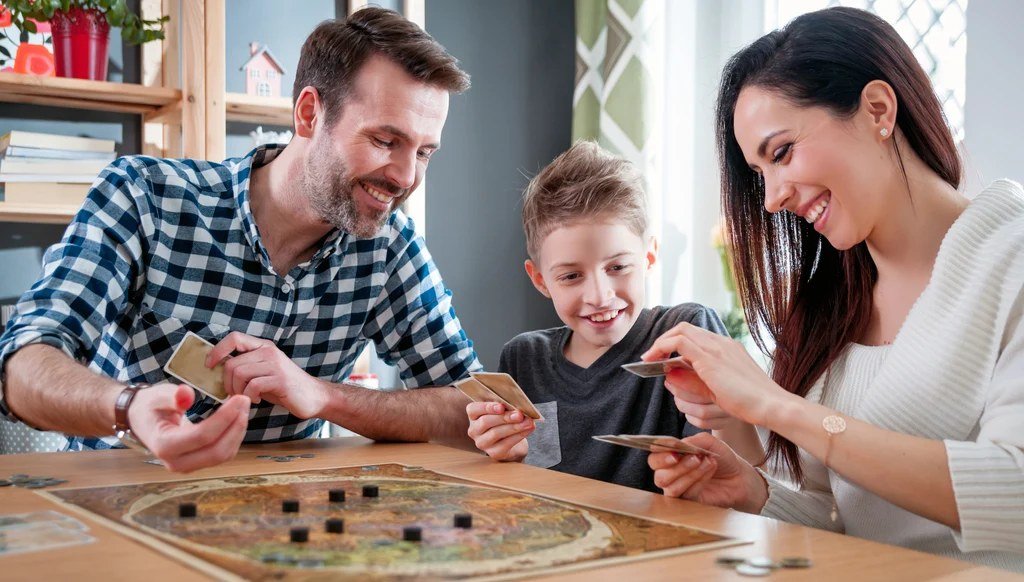
Family game night has one deadly enemy: the wrong game. Too long and the kids melt down. Too babyish and the teens check out. Too cutthroat and someone’s crying by 8 PM (sometimes an adult). The best board games for a family game night hit the sweet spot — easy to learn in ten minutes, fun for ages 8 to 80, done in under an hour, and just competitive enough to be exciting without ruining dinner.
I’ve organized this by what your family actually needs, because “best” depends entirely on your crew.
What Are the Best Board Games for a Family Game Night? Start With These Crowd-Pleasers
Ticket to Ride. The ultimate family gateway game. Collect cards, claim train routes across the map, block your siblings just enough to cause delightful outrage. Simple rules, gorgeous board, plays in 45–60 minutes. If your family only owns one modern board game, make it this one.
Codenames. The best party game ever made, full stop. One-word clues, team guessing, hilarious misfires. Works with 4–10+ players, takes 20 minutes, and the “how did you get THAT from THAT clue?!” moments become family lore.
Sushi Go Party! Adorable sushi cards, pick-and-pass drafting, 20 minutes flat. Kids love the art, adults love the strategy hiding underneath. Perfect opener while dinner settles.
King of Tokyo. You’re giant monsters punching each other for Tokyo. Dice-chucking, power cards, player elimination that’s quick and painless. Kids adore it; adults get surprisingly into the push-your-luck decisions.
Wavelength. A telepathy party game: where does “hot-cold” fall on the spectrum between “freezing” and “lava”? Sparks the funniest debates of any game on this list. Brilliant for families who love to argue (affectionately).
For Families With Young Kids (Ages 5–9)
Outfoxed! A cooperative whodunit — work together to find the pie thief before time runs out. No losers, just teamwork, and kids feel like real detectives.
Rhino Hero. Stack cards into a wobbly 3D tower while moving a wooden rhino up it. Five minutes to learn, endless giggles when it collapses. The perfect “one more round” game.
Sleeping Queens. Designed by a six-year-old, genuinely fun for adults. Card-driven, 20 minutes, and the king cards’ personalities crack everyone up.
Draftosaurus. Draft dinosaur meeples into your park, 15 minutes, zero reading required. The dino meeples alone are worth the price.
For Teens and Competitive Families
Catan. The classic for a reason — trading, building, and the exquisite pain of having your road blocked. Takes 60–90 minutes; best with teens and up who can handle the negotiation (and the betrayal).
Azul. Deceptively simple tile-laying that’s secretly a knife fight. Beautiful, tactile, 30–45 minutes. The rare game that’s both relaxing and ruthless.
The Crew. A cooperative trick-taking game in space — you win or lose together, which eliminates sore losers entirely. 50 missions of escalating difficulty give it incredible longevity.
Just One. Cooperative party game: everyone writes a one-word clue, duplicates get erased, the guesser guesses. The erased-clue mechanic creates amazing “we were SO close” moments.
Skyjo. The sleeper hit — a simple card game with surprising depth, 30 minutes, and the kind of luck-strategy mix that keeps everyone engaged to the final card flip.
Cooperative Games (Nobody Cries)
If your family has a sore loser (every family has one), go cooperative — everyone wins or loses together:
- Pandemic. Save the world from diseases as a team. Tense, thematic, and losing together is somehow fun.
- Forbidden Island. The gentler gateway co-op — collect treasures from a sinking island. Great with younger kids.
- Horrified. Fight classic movie monsters cooperatively. The theme hooks teens who’d never touch “a family game.”
- 5-Minute Dungeon. Real-time cooperative chaos — beat the dungeon before the timer runs out. Loud, frantic, hilarious.
How to Run a Game Night People Actually Come Back To
Keep it to 90 minutes max. End while everyone’s still having fun — that’s what creates the “when’s the next one?” energy. Two short games beat one marathon.
Snacks are non-optional. Finger food that doesn’t grease up cards (popcorn in bowls, pretzels, not Cheetos — learn from my mistakes). Drinks for the adults.
Rotate who picks. Let a different family member choose each week, kids included. Ownership kills the “this is boring” complaints.
Teach fast, start faster. Explain the goal and one turn, then start playing — teach the rest as it comes up. Nothing kills enthusiasm like a 20-minute rules lecture.
Check BoardGameGeek’s family game rankings for ratings and reviews before buying — the community rankings are brutally honest about which games hold up. And game night isn’t just for families: the same format works for a plan a birthday party for adults, a low-key host a dinner party when I can’t cook well, or a stay-in celebrate an anniversary at home. Once the habit exists, it becomes the easiest entertaining you ever do.
Building Your Family’s Game Shelf on a Budget
You don’t need twenty games. Five well-chosen ones cover every game night for years:
The gateway: Ticket to Ride or Catan — the anchor game for full-family nights.
The party game: Codenames or Wavelength — for groups, holidays, and mixed ages.
The quick filler: Sushi Go Party or Skyjo — 20 minutes, plays while dinner settles.
The co-op: Forbidden Island or The Crew — for when someone’s had a rough day and nobody needs competition.
The kids’ pick: whatever your youngest loves — Outfoxed, Rhino Hero, Draftosaurus. Their enthusiasm is the engine of game night.
Buy smart: thrift stores and Facebook Marketplace are goldmines (sanitize the pieces, check completeness against online component lists). Board game cafes let you try before you buy. And the library — many now lend games free. A five-game shelf built secondhand often costs less than one new big-box game, and played games beat shelf trophies every time.
The Practical Takeaway
Start with one gateway game — Ticket to Ride or Codenames — and schedule the first game night for this weekend, 90 minutes, snacks ready. Rotate the picker weekly. In a month, you’ll have a family tradition that everyone actually looks forward to, a shelf of games that get played, and stories you’ll retell for years. That’s a better ROI than any streaming subscription.


