A decade ago, the typical college counseling center was a small office with a few therapists, a two-week waitlist, and a mandate focused mostly on crisis response. Today, that same center might offer 24/7 teletherapy, peer-support programs, wellness apps, embedded counselors in dorms, and proactive outreach to entire freshman classes. Student mental health support hasn’t just expanded — it’s been fundamentally reimagined.
The transformation was forced by a genuine crisis: soaring rates of anxiety, depression, and loneliness among students, amplified by the pandemic and still elevated years later. But what emerged from the emergency is something more interesting than just bigger counseling centers — a new, layered model of campus mental health. Here’s how it evolved and where it’s going.
The Crisis That Forced the Change
The data tells a stark story. Through the 2010s and into the 2020s, surveys of college students showed steady, alarming increases in anxiety, depression, self-harm, and suicidal ideation — trends that the pandemic sharply accelerated. High schoolers showed parallel patterns. By the early 2020s, campus counseling directors were describing demand as a tidal wave: appointment requests doubling or tripling, waitlists stretching for weeks, staff burning out.
The old model — one-on-one therapy for whoever sought it, with everyone else on their own — simply couldn’t scale. Centers faced an impossible math: hiring enough therapists for surging demand was financially and logistically unfeasible, and the students most in need were often the least likely to walk through the door. Something structural had to change.
The Stepped-Care Revolution
The most important innovation is the stepped-care model, borrowed from public-health approaches: match the intensity of support to the intensity of need, reserving scarce one-on-one therapy for those who need it most while serving everyone else through lighter-touch options. In practice, this means a tiered system.
Tier 1 — universal wellness: programming for all students — resilience workshops, sleep and stress-management education, wellness apps, peer-support networks. The goal is prevention and early skill-building, reaching students long before crisis. Many campuses now embed well-being modules into first-year orientation and even into academic courses.
Tier 2 — guided support: group therapy, structured peer-support programs, single-session consultations, and digital CBT (cognitive behavioral therapy) programs with light coaching. These serve the large middle — students struggling but not in crisis — far more efficiently than individual therapy.
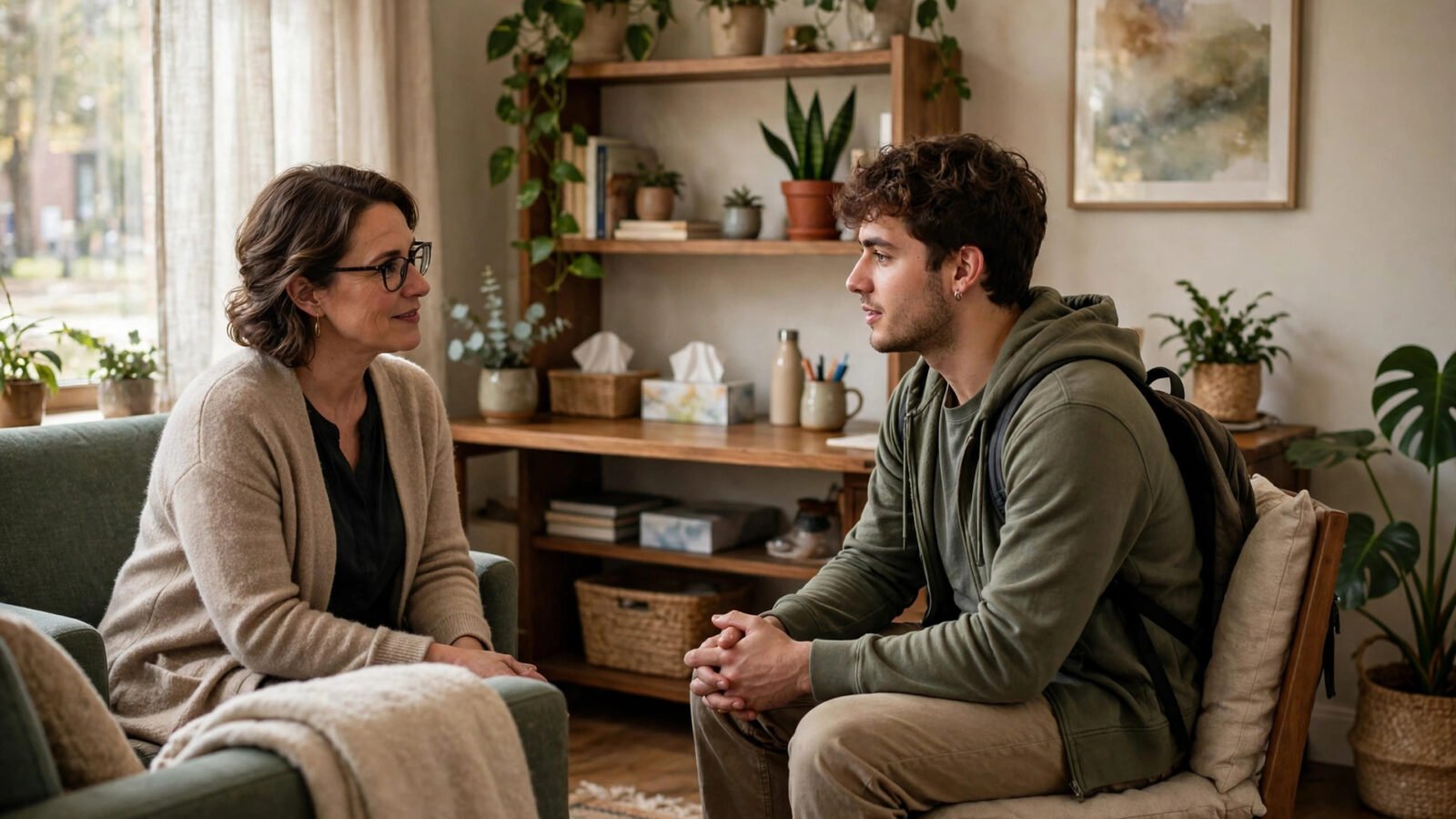
Tier 3 — clinical care: traditional individual therapy, psychiatric services, and crisis intervention, now reserved for and readily available to students with significant needs. Teletherapy partnerships have massively expanded capacity here — campuses contract with national providers for after-hours and overflow coverage, effectively ending the era when help stopped at 5 p.m.
The American Psychological Association has highlighted stepped care as the emerging best practice, and early outcome data is encouraging: more students served, shorter waits for high-need cases, better matching of support to need.
Teletherapy: The Access Breakthrough
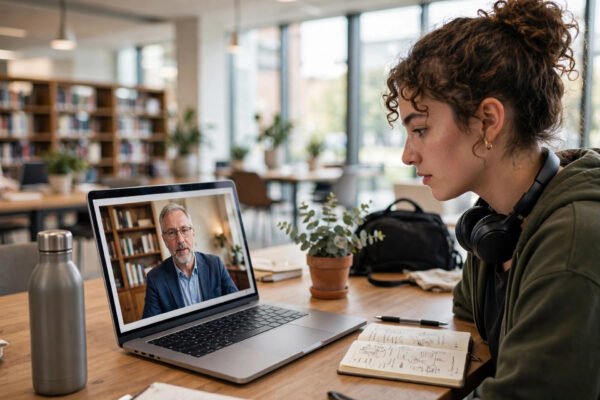
If one innovation did the most to expand access, it’s teletherapy. The pandemic forced counseling centers online overnight — and then nobody wanted to go back. Students prefer the convenience and privacy; centers gain scheduling flexibility and access to providers beyond their local hiring market; partnerships with teletherapy companies provide 24/7 coverage that no campus staff could.
The equity effects are significant. Students who’d never visit a campus counseling center — international students worried about stigma, working students without free daytime hours, students in rural areas — engage readily with phone-based support. Utilization data consistently shows teletherapy reaching populations traditional services missed. The remaining challenges are real but solvable: licensing across state lines, crisis protocols for remote students, and ensuring digital options supplement rather than replace in-person care for those who need it.
Peers and Prevention: The Culture Shift
Perhaps the most encouraging evolution is cultural: help-seeking has been substantially destigmatized among students. Peer-support programs — trained students supporting fellow students — have exploded, and they work partly because the barrier to telling a peer “I’m struggling” is so much lower than booking a clinical appointment. Programs like these also build the supporters’ own resilience and leadership.
Prevention programming has professionalized alongside. The old “stress less during finals” poster campaign has been replaced by evidence-based curricula: CBT skills workshops, mindfulness programs with real outcome data, sleep-education initiatives (sleep being the highest-leverage mental-health intervention nobody talks about enough), and belonging interventions for first-generation and underrepresented students.
Students are also building personal toolkits — practices like journaling for mental clarity and structured stress-reduction routines that complement formal support. Recognizing warning signs matters too — knowing anxiety symptoms people often ignore helps students seek help earlier, when lighter-touch support works best.
The K-12 Parallel Track
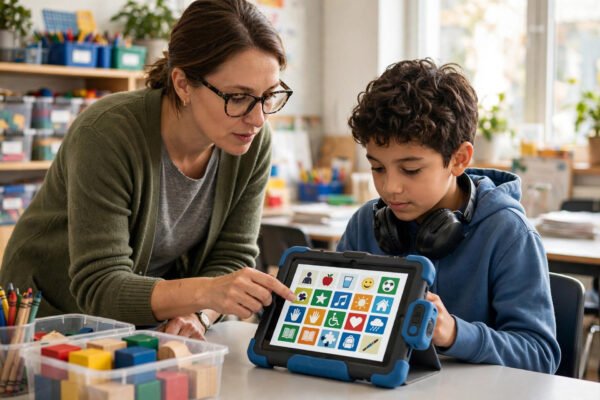
Colleges get the headlines, but K-12 schools are building parallel systems under arguably harder constraints. Federal pandemic-relief funds seeded an unprecedented expansion of school-based mental-health staffing — counselors, social workers, psychologists — though the funding cliff as those dollars expire threatens the gains. Schools are experimenting with universal screening (identifying struggling students proactively rather than waiting for referrals), social-emotional learning curricula, and partnerships with community providers for teletherapy.
The K-12 challenges are distinct: younger students need developmentally appropriate approaches, parental involvement is essential and complicated, and the workforce shortage of child psychologists is even more severe than in adult care. But the direction matches higher ed: layered, proactive, destigmatized.
What’s Still Broken
Honest assessment requires acknowledging what the new model hasn’t fixed. Workforce shortages persist — there simply aren’t enough trained providers, and campus salaries can’t always compete. Students of color, LGBTQ+ students, and other marginalized groups still report gaps in culturally competent care, though targeted hiring and training are improving this. The funding model remains precarious, dependent on tuition revenue and expiring federal dollars rather than stable investment.
And the deepest question remains unanswered: are campuses treating symptoms of a deeper pathology? If the drivers of student distress include academic pressure culture, social-media dynamics, economic precarity, and loneliness epidemics, then even perfect counseling centers are bailing water. The most forward-thinking institutions are starting to address root causes — rethinking grading pressure, building genuine community, designing for belonging — but this work is in its infancy.
The Future: Predictive, Personalized, Integrated
Looking ahead, the frontier is integration and early identification. Early-warning systems (used carefully, with strong privacy guardrails) can flag students showing patterns associated with emerging distress — declining engagement, missed classes, changes in campus-card usage — triggering proactive outreach rather than waiting for crisis. AI-assisted triage can match students to the right support tier faster. And the fullest vision merges mental health with primary care, academic advising, and residential life into genuinely holistic student support.
The evolution of student mental-health support reflects a maturing understanding: mental health isn’t a specialty service for the struggling few but infrastructure for everyone — like libraries, like Wi-Fi. The campuses getting this right aren’t just hiring more therapists (though they are). They’re building cultures where struggling is normal, help is easy, and well-being is designed in rather than bolted on. That’s not just better mental-health care. It’s better education.
For crisis resources and treatment locators, SAMHSA’s national helpline and directories remain the front door for students and families seeking help.
Frequently Asked Questions
Why is student mental health getting worse?
Researchers point to multiple converging factors: academic and economic pressure, social-media dynamics, pandemic disruption, loneliness, and reduced stigma leading to more honest reporting. It’s likely a mix of genuinely rising distress and greater willingness to report it.
What is stepped care in campus mental health?
A tiered model matching support intensity to need: universal wellness programming for all students, guided/group support for moderate needs, and individual clinical care reserved for significant needs — serving far more students than one-on-one therapy alone could.
Do colleges offer free therapy?
Most colleges include a number of free counseling sessions in student fees, increasingly supplemented by 24/7 teletherapy partnerships. Availability and session limits vary widely by institution.
How can parents support a struggling college student?
Normalize help-seeking, know the campus resources (counseling center, crisis line, dean of students), stay connected without hovering, take warning signs seriously, and understand FERPA limits on what schools can share with parents of adult students.