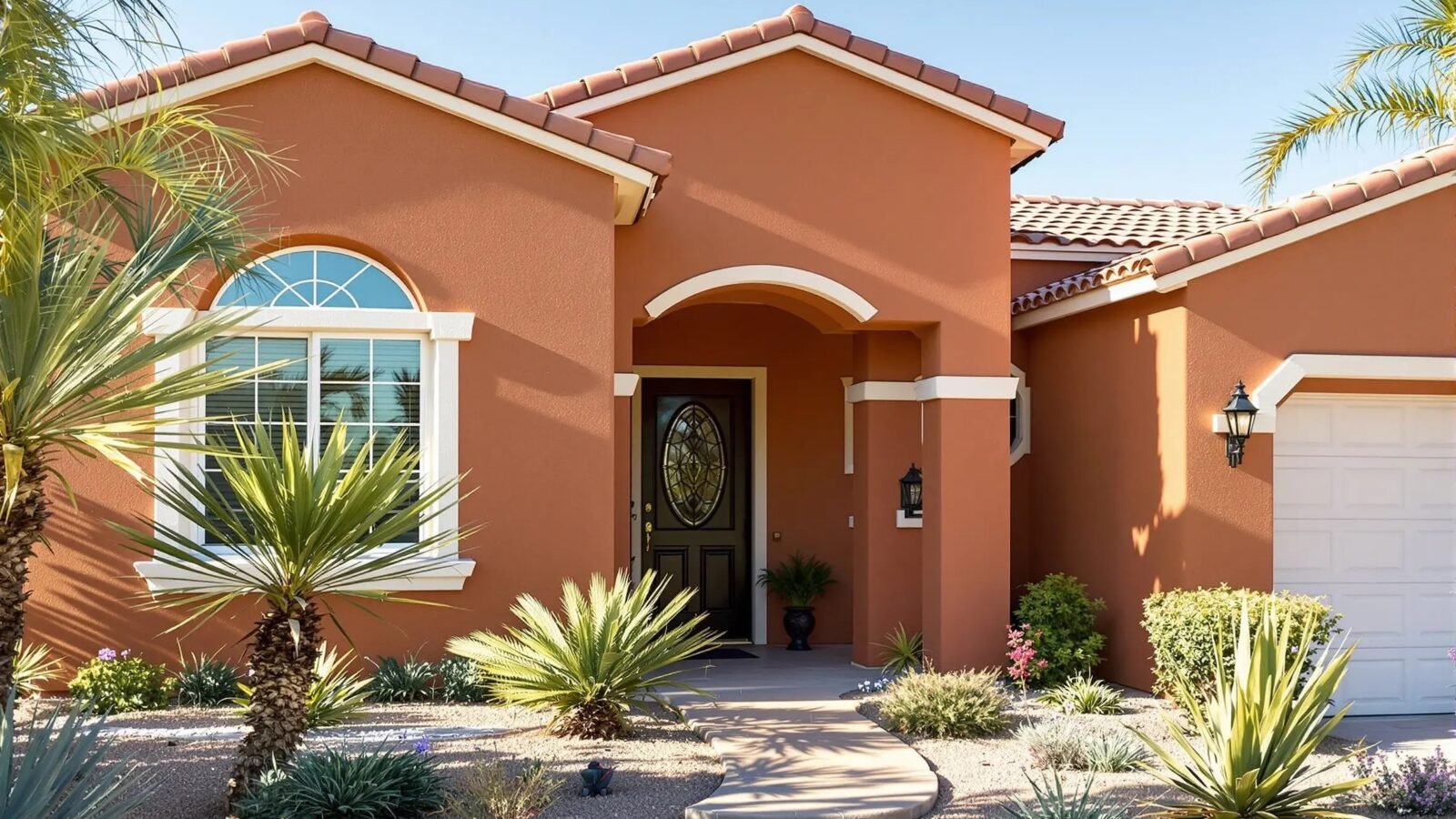
Painting a house in a hot climate is a different sport. The relentless sun bleaches color, the heat bakes paint until it cracks, and UV radiation breaks down binders that would last decades in milder weather. I’ve seen cheap paint fail in three years in the desert Southwest while quality paint in the same neighborhood looked fresh at ten.
The best exterior paint for a house in a hot climate isn’t just about brand; it’s about formulation, color choice, and prep. Here’s how to pick paint that survives the sun instead of surrendering to it.
Best Exterior Paint for a House in a Hot Climate: What to Buy
Look for 100% acrylic latex exterior paint with explicit UV resistance and fade protection. Acrylic resins flex with temperature swings instead of cracking, and quality formulations include UV blockers that protect both color and binder. The premium lines from major manufacturers ($50-$70 per gallon) genuinely outperform the mid-tier in hot climates; this is the place to buy the good stuff.
Elastomeric coatings deserve mention for stucco and masonry in extreme heat. These thick, flexible coatings bridge hairline cracks and reflect more heat, though they’re overkill for wood siding. For most homes, a top-tier acrylic with heat-reflective technology is the sweet spot.
- Buy 100% acrylic latex. Superior flexibility and UV resistance versus vinyl-acrylic blends. Non-negotiable in hot climates.
- Choose fade-resistant formulas. Look for explicit UV/fade protection on the label. Premium lines ($50-$70/gal) earn their price here.
- Consider heat-reflective paint. Some formulas reflect infrared radiation, keeping surfaces cooler and extending paint life.
- Elastomeric for stucco/masonry. Thick, flexible, crack-bridging. Excellent for extreme heat on masonry, overkill for wood.
- Don’t skimp on primer. A quality exterior primer ($30-$40/gal) bonds paint to the surface and prevents peeling in heat cycling.
- Check the warranty. Lifetime warranties on premium paints are meaningful in hot climates; they signal UV confidence.
Color Strategy: Your Biggest Heat Decision
Color choice affects paint longevity more than most people realize. Dark colors absorb dramatically more heat: a black wall in Phoenix can hit 190°F while a white wall stays under 140°F. That heat cycling stresses the paint film and the siding beneath it, shortening paint life by years.
This doesn’t mean every hot-climate house must be white, but it does mean choosing lighter and more reflective colors within your palette. Light grays, tans, soft whites, and pale pastels reflect heat and resist fading far better than dark browns, navies, or blacks. If you love dark colors, use them as accents (doors, shutters) where repainting is cheap, not on full walls.
- Go lighter. Light colors reflect heat and UV, lasting years longer than dark colors in intense sun.
- Use LRV as a guide. Light Reflectance Value (on paint chips): higher numbers reflect more heat. Aim for 55+ on sun-blasted walls.
- Save dark colors for accents. Front doors and shutters in bold dark colors give drama without the full-wall heat penalty.
- Consider the sun exposure. South and west walls take the worst beating. Prioritize your best paint and lightest colors there.
- Test in real sun. Paint large test swatches and observe at midday. Colors look dramatically different in harsh sunlight.
- Remember resale. Light neutrals photograph better and appeal to more buyers in hot markets.
Prep and Application for Maximum Life
In hot climates, prep determines whether premium paint lasts 12 years or 5. Power wash thoroughly; chalky oxidation must come off or new paint bonds to dust instead of siding. Scrape all loose paint, sand glossy areas, and spot-prime bare wood. Caulk every gap: heat-driven expansion opens cracks that admit moisture, and moisture under paint in heat equals peeling.
Time your painting for mild weather. Don’t paint in direct sun over 90°F; paint skins over before bonding, leading to premature failure. Start on the shaded side in the morning and follow the shade around the house. Two full coats are mandatory; the second coat is what delivers the warranty-level protection.
- Power wash first. Remove chalking, dirt, and mildew. Paint bonds to clean surfaces, not dusty ones.
- Scrape and sand thoroughly. Every loose flake removed now is a failure prevented later.
- Caulk all gaps. Heat cycling opens joints; quality exterior caulk keeps moisture out.
- Paint in mild conditions. 50-85°F, out of direct sun. Follow the shade around the house through the day.
- Apply two full coats. The second coat delivers the UV protection and film thickness the warranty assumes.
- Maintain annually. A yearly wash and touch-up of caulk extends any paint job by years in harsh sun.
Frequently Asked Questions
How long does exterior paint last in hot climates?
Quality acrylic paint properly applied lasts 8-12 years in hot climates, versus 3-5 for cheap paint. Light colors and good prep push toward the high end.
Should I use oil-based or latex paint in hot weather?
Latex (acrylic). It flexes with temperature swings, resists UV better, and doesn’t become brittle like oil-based paint does in sustained heat.
What is the best paint color for a house in Arizona or Texas?
Light, heat-reflective colors: whites, light tans, soft grays. They keep the house cooler, resist fading, and last significantly longer than dark colors under intense sun.
Beginner Mistakes That Cost Time and Money
Every DIYer pays tuition in mistakes; the goal is to learn from other people’s instead of your own. These are the errors I see beginners make repeatedly, and each one is completely avoidable once you know to watch for it.
- Skipping prep. The unglamorous preparation (cleaning, masking, measuring) determines 80% of the final quality. Rushing it is the classic false economy.
- Buying the cheapest materials. Bargain supplies fail faster and work worse, costing more in redos than quality materials cost upfront.
- Not measuring twice. The old saying survives because it’s true. Five minutes with a tape measure prevents hours of rework.
- Starting late in the day. Begin projects in the morning. Running out of daylight mid-project forces rushed, sloppy finishing.
- Go deeper: The DOE guide to heat-reflective coatings for authoritative detail on this topic.
The bottom line: The best exterior paint for a house in a hot climate is a premium 100% acrylic with UV protection, in the lightest color you can love, applied over meticulous prep in mild weather. The paint costs more per gallon but lasts twice as long, making it cheaper per year than the bargain stuff that surrenders to the sun.



One thought on “The Best Exterior Paint for a House in a Hot Climate”