Windowless rooms have a reputation problem: they feel like caves, dungeons, or afterthoughts. Basements, interior bathrooms, home offices carved from closets: without natural light, these spaces can feel gloomy no matter how nicely you decorate. I turned a windowless basement room into my favorite home office, and lighting was 90% of the transformation.
Here’s how to improve lighting in a room with no windows. The secret isn’t one bright light; it’s layers of light at different heights, plus reflective surfaces that bounce it around.
Improve Lighting in a Room With No Windows: Layer It
The biggest mistake in windowless rooms is relying on a single overhead light. One ceiling fixture creates harsh downward light with dark corners, which reads as ‘basement.’ Instead, aim for three layers: ambient (general illumination), task (focused light where you work or read), and accent (decorative light that adds warmth and depth).
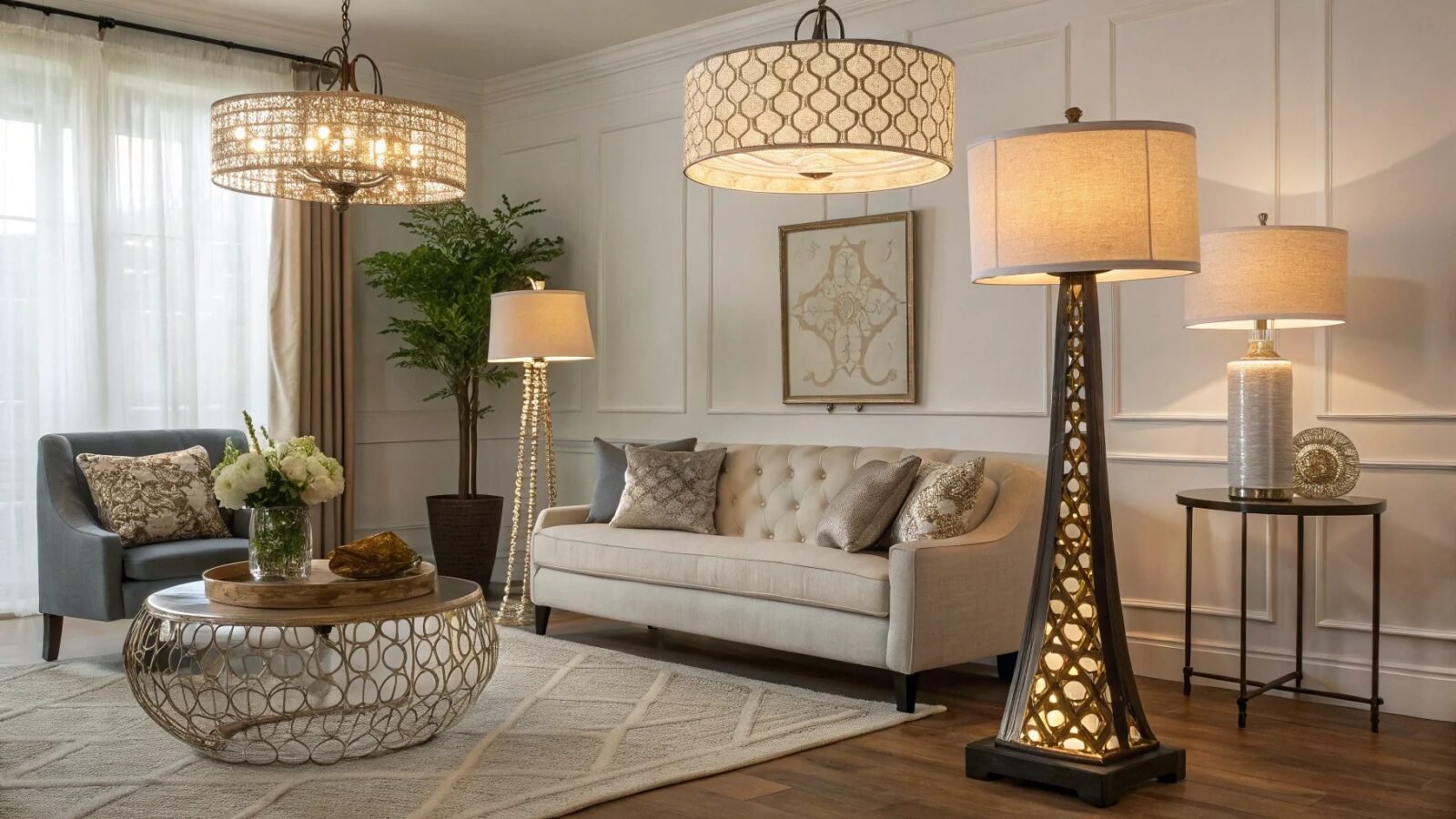
Start with ambient: a bright ceiling fixture or, better, several recessed or flush-mount lights spread across the ceiling. Then add task lighting: a desk lamp, reading lamp, or under-cabinet lights wherever activities happen. Finally, accent: LED strip lights behind shelves or TVs, a small lamp in a dark corner, picture lights. Each layer on its own is modest; together they eliminate the cave feeling.
- Add multiple ceiling lights. Several spread fixtures beat one central light. No existing wiring? Battery or plug-in options exist.
- Use floor and table lamps. Light at eye level and below feels natural and fills the mid-room darkness overheads miss.
- Install LED strip lights. $15-$30. Behind TVs, under shelves, along coves: hidden strips add gorgeous ambient glow.
- Light the corners. Dark corners shrink rooms. A small lamp or uplight in each corner opens the space dramatically.
- Choose the right color temperature. 3000K-4000K (warm to neutral white) feels like daylight without being clinical. Avoid 5000K+ ‘daylight’ bulbs indoors.
- Put lights on dimmers. $15 dimmer switches or smart bulbs. Adjustable brightness adapts the room from work to relaxation.
Bounce and Reflect: Multiply Your Light
In a windowless room, every photon counts twice if you let it. Light-colored walls, ceilings, and floors reflect light around the room instead of absorbing it. Painting a dark windowless room white or pale cream is the single highest-impact change: it can effectively double the perceived brightness.
Mirrors are the other multiplier. A large mirror opposite your brightest light source bounces illumination deep into the room and creates the illusion of depth. Glossy and satin finishes reflect more than flat; metallic accents, glass decor, and light-colored furniture all contribute. Think of the room as a light box you’re trying to make more reflective.
- Paint everything light. White or pale walls and ceiling reflect the most light. The biggest single brightness upgrade.
- Add a large mirror. Opposite the main light source. Doubles perceived light and adds visual depth.
- Choose glossy accents. Satin paint, glass tables, metallic frames: reflective surfaces bounce light around.
- Light-colored flooring or rugs. Dark floors absorb light. A pale area rug brightens the whole room’s feel.
- Keep it uncluttered. Clutter blocks light paths and creates shadows. Clear surfaces let light travel.
- Use sheer, light textiles. Heavy dark curtains (where there are none needed) and dark upholstery absorb precious light.
Faking Natural Light (Yes, Really)
When all else fails, fake it convincingly. Light therapy boxes and ‘natural light’ floor lamps ($40-$100) produce full-spectrum light that genuinely improves mood in dark spaces; I run one on my desk through winter. Some homeowners install backlit panels or ‘virtual windows’: framed LED panels with nature scenes that mimic daylight remarkably well.
Smart bulbs programmed to shift color temperature through the day (cool bright mornings, warm dim evenings) replicate the natural light cycle your body expects. It’s a subtle effect, but windowless room dwellers consistently report feeling better with circadian-mimicking light.
- Try a light therapy lamp. $40-$100. Full-spectrum light on your desk improves mood and energy in dark rooms.
- Install a ‘virtual window’. Backlit framed panels with sky or nature images. Surprisingly convincing daylight illusion.
- Use circadian smart bulbs. Programmed to shift from cool-bright to warm-dim through the day, mimicking natural cycles.
- Add plants (real or good fake). Greenery signals ‘daylight’ to your brain. Low-light plants like pothos thrive; quality fakes work too.
- Paint a ‘sky’ ceiling. Pale blue-white ceilings feel like sky. It sounds silly; it works psychologically.
- Keep lights on timers. Automated schedules mean you never walk into a dark cave; the room greets you lit.
Frequently Asked Questions
How do you make a room with no windows feel less dark?
Layer multiple light sources at different heights, paint everything light and reflective, add mirrors, and use 3000K-4000K bulbs. The combination eliminates the cave feeling.
What color temperature is best for windowless rooms?
3000K to 4000K: warm-to-neutral white that feels like natural daylight without the harsh blue of 5000K+ bulbs. Smart bulbs that shift through the day are ideal.
Can you put a bedroom in a room with no windows?
Building codes generally require bedrooms to have an egress window for fire safety, so a truly windowless room usually can’t legally be a bedroom. Check local codes; it may work as an office, den, or media room instead.
Knowing When to DIY and When to Call a Pro
I’m a committed DIYer, but the smartest DIY skill is knowing your limits. Some jobs reward doing them yourself enormously; others punish overconfidence with costs far exceeding the pro’s quote. Here’s how I decide.
- DIY when mistakes are cheap. Painting, patching, basic installs: worst case is redoing it. The learning is worth it.
- Call a pro for safety systems. Electrical panels, gas lines, structural work, major plumbing: mistakes here endanger people, not just aesthetics.
- Consider your time honestly. A pro’s 4-hour job might take you 16. If those 16 hours matter more elsewhere, hiring out is the smart move.
- Get three quotes. For any hired work, three quotes reveal the fair price and the outliers. Never accept the first number.
- Go deeper: The DOE lighting choices guide for authoritative detail on this topic.
The bottom line: Improving lighting in a room with no windows is about layers (ceiling, lamps, accent strips), reflection (light paint, mirrors, glossy surfaces), and faking daylight convincingly (full-spectrum lamps, circadian bulbs). No single fix does it, but the combination transforms caves into rooms people actually want to spend time in.