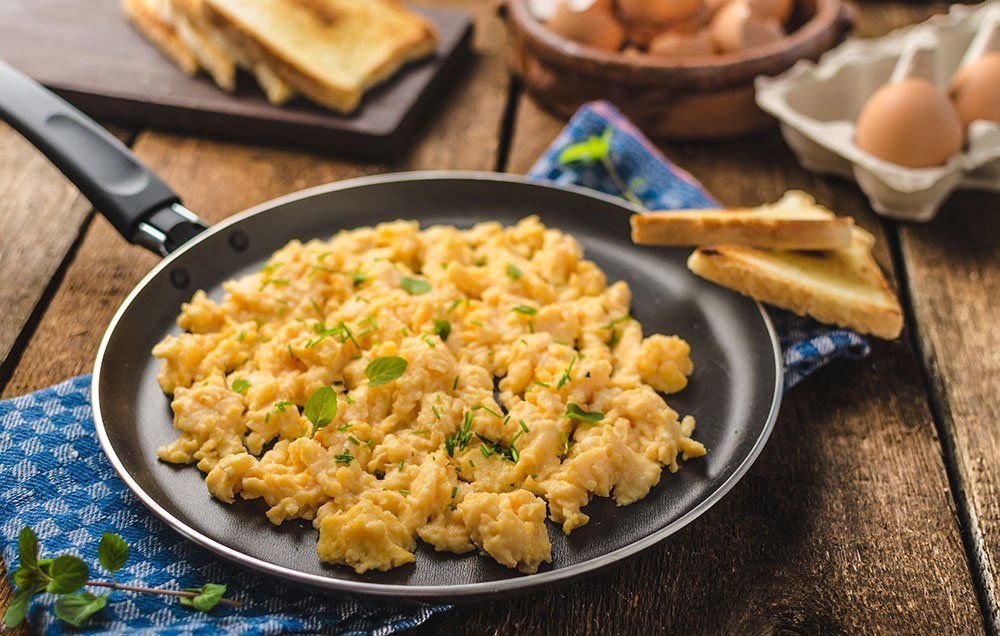
Restaurant scrambled eggs have a texture home cooks rarely achieve: big, soft curds, custardy but fully set, rich without being greasy. Meanwhile home versions tend toward one of two failures — rubbery brown bits or a sad wet scramble. Learning how to make fluffy scrambled eggs like a restaurant isn’t about secret ingredients. It’s about heat control, timing, and taking them off before you think they’re done.
I’ve worked brunch shifts and cooked thousands of eggs. Here’s the method, the science, and every mistake to avoid.
The Core Method
Ingredients (per 2 servings)
- 4 large eggs
- 2 tablespoons whole milk, half-and-half, or cream
- ¾ teaspoon kosher salt
- Fresh black pepper
- 1 tablespoon butter (plus a little more for the pan)
Steps
- Whisk thoroughly — more than you think. Beat the eggs, dairy, and salt until completely uniform with no streaks of white remaining, about 30–45 seconds. Streaky whites become streaky rubbery bits. Some chefs strain through a sieve for ultimate silkiness; whisking well gets you 90% there.
- Salt now, not later. Salting 10–15 minutes ahead (or right before cooking) dissolves the salt evenly and actually produces more tender curds — the salt breaks down proteins slightly. This contradicts old advice; the old advice was wrong.
- Low heat, butter foaming. Melt butter in a nonstick skillet over low heat until it foams but doesn’t brown. Low heat is the entire game — high heat seizes proteins into rubber.
- Pour and wait. Add the eggs and let them sit undisturbed 20–30 seconds until the edges just begin to set.
- Push, don’t stir. With a silicone spatula, gently push cooked edges toward the center, tilting the pan so uncooked egg flows to the hot surface. Slow, lazy folds — not frantic scrambling. Big folds make big, fluffy curds; constant stirring makes small, dense ones.
- Take them off early. Remove from heat when they’re about 90% set — still slightly glossy and a touch wet-looking. Carryover heat finishes them on the plate in under a minute. This is the number-one restaurant secret: every overcooked scramble was left on the heat 60 seconds too long.
- Finish off heat. A small knob of cold butter stirred in at the end (the French monter au beurre) adds gloss and richness. Fresh herbs, chives, or a grating of parmesan go on now.
How to Make Fluffy Scrambled Eggs Like a Restaurant: The Details
Dairy: does it matter?
A tablespoon of dairy per two eggs adds steam and richness. Cream makes the richest eggs; milk is lighter; crème fraîche stirred in at the end is the luxury move. Water — yes, water — actually makes fluffier eggs than milk because it turns to steam, though they’re less rich. Skip dairy entirely for a denser, more intensely eggy scramble (the diner style).
The pan
Nonstick or well-seasoned carbon steel. Cast iron works if the seasoning is excellent; if it’s not, eggs will stick and you’ll hate everything. Use a pan that matches your egg volume — too big a pan spreads eggs thin and overcooks them.
Butter vs. oil
Butter for flavor, always, in a restaurant-style scramble. Add it to a cool-ish pan and let it melt gently — browned butter is delicious but changes the dish. A mix of butter and a drop of neutral oil prevents the butter from browning if your heat runs hot.
Common Mistakes
- Heat too high. The cause of 90% of bad scrambles. If your eggs are done in 60 seconds, your heat was too high. Low and slow: 3–4 minutes total.
- Walking away. Eggs go from perfect to overdone in under a minute. Stay at the stove.
- Adding cold fillings to the pan. Cheese, vegetables, and meats go in near the end, warmed. Cold additions cool the eggs and release water.
- Seasoning only at the table. Salt in the eggs, pepper at the end (pepper cooked in can turn bitter and looks speckled — some like it, but restaurants usually finish with it).
- The microwave. Just don’t. Not for this.
For egg safety basics like proper storage times and cooking temperatures, the American Egg Board’s egg safety resources are the authoritative reference.
Variations Worth Trying
- French-style (ultra-creamy): cook over the lowest possible heat, stirring constantly, 8–10 minutes, finish with crème fraîche. Almost a sauce — serve on toast.
- Diner-style (firm, hearty): medium heat, bigger curds, fully set. The breakfast burrito filling standard.
- Loaded: fold in sautéed mushrooms, spinach (squeezed dry), goat cheese, or smoked salmon and chives at the end.
- Tamago-inspired: a pinch of sugar and a splash of dashi in the eggs, cooked in layers — a fun weekend project.
Egg Science: Why This All Works
Understanding the why makes the technique stick. Here is what is actually happening in the pan:
Protein coagulation
Egg proteins (mostly ovalbumin) are tightly folded bundles floating in water. Heat unfolds them; unfolded proteins bond to each other, forming a network that traps water – that is the set curd. Gentle heat forms a loose, tender network (creamy eggs). High heat forms a tight, squeezed network that wrings out water (rubbery eggs, weeping liquid). Low heat is not a preference; it is physics. The difference between 250°F and 350°F pan temperature is the difference between custard and rubber.
Why salt early works
Salt dissolves into the beaten eggs and slightly breaks down protein structures before cooking – the result is a more tender, more evenly seasoned curd. The old advice (salt after, or it makes eggs watery) came from a misunderstanding: salt draws moisture from intact structures over long times, but in beaten eggs cooked within minutes, it just seasons and tenderizes. Fifteen minutes of salted rest is ideal; even salting right before the pan beats salting at the table.
The dairy debate, settled
Milk, cream, water, or nothing – each does something specific. Dairy adds fat (richness) and dilutes proteins slightly (tenderness). Water turns to steam (fluffiness) but adds no richness. Nothing gives the purest egg flavor and densest texture. There is no best – only what you want today. The restaurant standard is a splash of cream for richness; the fluffiest possible uses water; the purist uses nothing. Try all three across a week and pick your fighter.
The Takeaway
Whisk completely, salt early, low heat, push don’t stir, off the heat at 90%, finish with butter. That’s fluffy scrambled eggs like a restaurant — five minutes, one pan, no special equipment. Once the timing clicks, you’ll make them on autopilot, and weekend breakfast will never be the same.