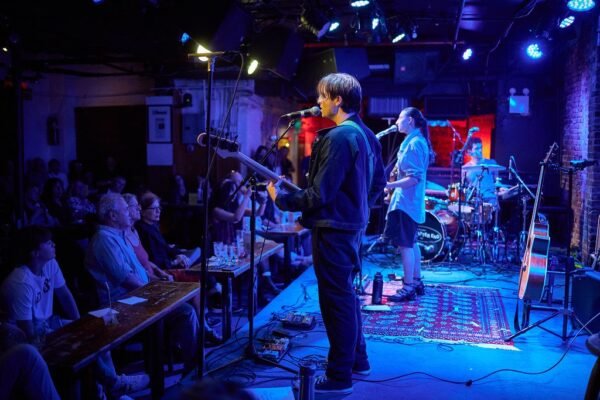
Every comedian you have ever loved once did five terrifying minutes in front of twelve people in a bar basement. Open mics are where comedy happens – raw, unpolished, and open to anyone brave enough to sign up. Here is how to find open mic nights for amateur comedians, how they work, and how to survive your first set.
How to Find Open Mic Nights for Amateur Comedians
Where to find open mics
- Comedy club websites: most clubs run weekly open mics (often weeknights). Check the calendars of every club within driving distance – the mic is usually listed alongside pro shows.
- BadSlava and similar aggregators: sites that list open mics by city, with details on sign-up procedures. Search “[your city] comedy open mic list” – most major cities have a maintained list or Facebook group.
- Facebook groups: “[City] Comedy Open Mics” groups are the real nerve center – comics post about new mics, cancellations, and list swaps. Join and lurk before posting.
- Bars and breweries: many run their own mics independent of clubs. Ask bartenders at venues with live entertainment – they know the schedule.
- Reddit: r/standupcomedy has city-specific threads; your city’s subreddit often has entertainment roundups.
- Just show up: go to a local comedy show and ask the comics after. The scene is small and welcoming to newcomers who show genuine interest.
How Open Mics Work (The Unwritten Rules)
- Sign-up: usually a physical list at the venue, first-come-first-served, opening 30-60 minutes before showtime. Popular mics fill fast – arrive early. Some use online lotteries; read the listing carefully.
- Stage time: typically 3-5 minutes for newcomers. The light (a phone flashlight or literal light) means wrap up – going over time is the cardinal sin. Respect the light and you will be invited back.
- Bringers: some mics (especially in NYC and LA) require you to bring audience members to get stage time. It is pay-to-play-adjacent and controversial, but it is the reality in big markets. Suburban and smaller-city mics rarely do this.
- Order: newcomers often go early or late. Both have advantages: early means a fresher crowd, late means a looser one.
- Stay for the whole mic. Leaving after your set is rude and noticed. Watch everyone, laugh genuinely, and you become part of the scene fast.
Preparing Your First 5 Minutes
- Write 5 minutes, prepare 7. You will talk faster on stage from nerves. Time yourself at home – out loud, standing up, with a timer.
- Start with your second-best joke. Open strong to win the room, close with your best to be remembered. Never open with crowd work as a beginner – it requires skills you are still building.
- Memorize, do not read. Notes are fine for your first mic (everyone understands), but the goal is memorized material. Reading kills timing.
- Record every set. Audio is enough. Listen back the next day – you will hear which jokes actually landed versus which felt like they did. This is how material improves.
- Write daily. Even 10 minutes of joke-writing a day compounds. Carry a notes app; funny observations evaporate within hours.
What to Expect (Honest Version)
Your first set will probably go okay-to-bad, and that is normal. The audience at open mics is mostly other comics – a tough, distracted crowd that has heard every premise. Bombing is not failure; it is data. Every comic bombs; the ones who make it are the ones who came back next week. Go weekly if you can – stage time is the only real teacher. After 10 mics you will feel different on stage. After 50, you will be a different performer.
For more on this topic, see lifestyle tips.
Scene etiquette
- Do not steal jokes. Ever. The scene polices this ruthlessly.
- Do not heckle other comics’ sets, even badly.
- Buy a drink at bar mics – you are using their stage.
- Thank the host. Hosts remember who is gracious.
Beyond the Mic: Growing as a Comic
- Watch great stand-up constantly. Study structure, not just jokes – how specials are built, how callbacks work. Our comedy streaming guide points to the current best.
- Take a class after 5-10 mics. Beginner stand-up classes at local clubs give you fundamentals and stage time in a supportive room. Worth it once you know you want to continue.
- Try bringer shows and showcases when hosts start offering spots – it means you are progressing.
- Consider starting a podcast – many comics use podcasting to develop voice and build audience between stage sets.
Your First Month: The Action Plan
Knowledge without action is trivia. Here is your first month, week by week:
Week 1: recon
Find your city’s open mic list (search “[city] comedy open mic” – the list exists). Pick three mics to visit as an audience member. Go, watch, take notes: how does sign-up work, how long are sets, what is the vibe? Introduce yourself to the host after – “I am thinking of trying this” opens every door. Buy the drink. Stay for the whole show.
Week 2: write
Write every day for 10 minutes – observations, premises, one-liners, no judgment. By week’s end, identify your 5 strongest minutes. Time them out loud. Cut the weakest 90 seconds (killing darlings is the job). Memorize the set – not word-perfect, but beat-perfect: know the order and the punchlines cold.
Week 3: debut
Sign up for your first mic. Arrive early. Bring a friend if it helps (moral support matters). Do your 5 minutes. Whatever happens – and it will be something – record it, thank the host, stay for the show. You are now a comedian. The title is earned by doing, not by succeeding.
Week 4: review and repeat
Listen to the recording. Note what got laughs (keep), what got silence (cut or rewrite), and what surprised you. Write new material informed by the stage experience – stage time teaches what desk writing cannot. Book next week’s mic before the weekend ends. The second set is where the real learning starts, because the terror is familiar now and the craft can begin.
The Takeaway
Find the city mic list, arrive early to sign up, prepare 5 tight minutes, respect the light, record everything, and come back next week. Open mic nights for amateur comedians are the least gatekept stage in entertainment – the only admission requirement is courage. Everyone bombs; the comics are the ones who kept showing up.