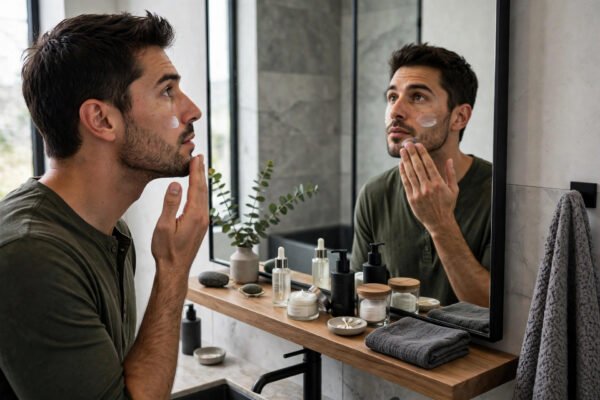
K-beauty was supposed to be a fad. A decade ago, Western analysts predicted the 10-step routine would collapse under its own weight — and in a sense, they were right. What they missed is what came next: Korean beauty did not disappear, it evolved. The story of how K-beauty trends evolved for 2026 is the story of an industry that listened to criticism, absorbed it, and came back smarter, simpler, and more influential than ever.
From 10 Steps to Skinimalism, Seoul Style
The most visible evolution is the great simplification. The fabled multi-step routine has been streamlined into what Korean brands now call “skip-care”: fewer products, each doing more. A typical 2026 K-beauty routine is four to five steps — oil or balm cleanse, water-based cleanse, treatment essence, moisturizer, SPF — built around hybrid formulas that combine what used to be three separate bottles.
This was not surrender to Western minimalism; it was a response to Korean consumers themselves, who grew tired of bathroom-shelf sprawl and increasingly skeptical of layering twelve actives. The innovation moved inside the bottle: essences that pair vitamin C with barrier-supporting ceramides, sleeping masks that function as moisturizer-serum hybrids, and sunscreens so elegant they replaced both moisturizer and primer for millions of users.
The FDA’s cosmetics safety resources are worth bookmarking as you explore imported products — US and Korean regulatory frameworks differ, and knowing what to check on a label keeps the experimentation safe.
The Ingredients That Define 2026
Every K-beauty era has its hero ingredients, and 2026’s lineup reflects a maturing science. The standouts:
- PDRN (salmon DNA): The buzziest ingredient of the moment, marketed for repair and elasticity. The evidence is early but intriguing — dermatologists advise cautious optimism rather than miracle expectations.
- Tranexamic acid: Moved from prescription-only obscurity to mainstream brightening serums, prized for tackling melasma and post-inflammatory hyperpigmentation.
- Heartleaf and mugwort: Traditional Korean botanicals, now standardized and clinically tested for calming sensitive, redness-prone skin.
- Bifida and galactomyces ferments: The probiotic-ferment category keeps expanding, with better research backing barrier-support claims than the first generation had.
- Low-molecular hyaluronic acid: Multi-weight HA formulations that hydrate at different skin depths, replacing the one-note hyaluronic serums of years past.
The through-line is barrier-first thinking. Where early K-beauty chased the “glass skin” glow with aggressive exfoliation, 2026’s formulations protect the moisture barrier as job one — a philosophy the American Academy of Dermatology’s skincare advice has long endorsed.
Tech and Texture: The Sensory Revolution
Korean brands remain the world’s best at product texture — the jelly essences, bouncy creams, and weightless sunscreens that made converts of skeptics. In 2026, that sensory expertise merged with genuine tech: AI-assisted shade and formula matching tuned on Asian skin-tone datasets (then expanded globally), and “smart” packaging that tracks product freshness.
Sunscreen deserves special mention because K-beauty sunscreens remain categorically superior in wearability to most Western equivalents — no white cast, no grease, makeup-friendly. Regulatory differences explain the gap (certain UV filters approved in Korea are still pending in the US), which is why savvy shoppers buy from reputable importers rather than random marketplaces.
Pairing great products with a fast routine multiplies the benefit — see our guide to looking put-together in five minutes on busy mornings for the application side.
What K-Beauty Got Right That the West Missed
Three lessons from the 2026 K-beauty playbook deserve wider adoption. First, sun protection as a non-negotiable daily step, not a beach-day afterthought — Korea’s sunscreen culture is arguably its greatest beauty export. Second, gentleness as a strategy: the barrier-first approach produces better long-term results than the aggressive exfoliation cycles Western routines cycled through. Third, affordability without apology — K-beauty’s mid-tier pricing proved that effective skincare does not require luxury markups.
Sun protection extends beyond the face, of course — and when you do get too much sun, our guide to treating a sunburn at home covers the recovery.
The Dupes Debate: Inspiration vs. Imitation
No 2026 K-beauty discussion is complete without the dupes economy — the vast ecosystem of affordable products explicitly modeled on bestsellers. K-beauty sits at the center of this storm because its mid-tier pricing made it both the most duped and the most dupe-capable category: Korean labs can reverse-engineer a luxury formula and sell it for a tenth of the price within months.
The 2026 conversation has grown more sophisticated than “dupes good” or “dupes bad.” Skincare chemists point out an uncomfortable truth: most formulas cannot be patented, so “dupes” are often just the same commodity ingredients in similar concentrations — the luxury markup was paying for marketing, not molecules. On the other hand, formulators note that texture, stability, and preservative systems — the invisible engineering that makes a product elegant and safe — are where cheap copies cut corners, sometimes with real consequences for sensitive skin.
The practical guidance for 2026: dupe the simple stuff (a basic hyaluronic serum is hard to get wrong), but buy the original when the formula’s complexity matters — sunscreens, vitamin C serums prone to oxidation, and anything with a patented delivery system. And when a dupe causes irritation that the original did not, the preservative system is usually the culprit.
The Road Ahead
K-beauty’s 2026 evolution carries a broader lesson for the beauty industry: listen to your harshest critics, simplify ruthlessly, and let the science lead. The 10-step routine is gone, and good riddance — what replaced it is better in every way that matters. Glass skin was never the point. Healthy skin was, and on that front, Seoul is still teaching the master class.
Frequently Asked Questions
Is the 10-step Korean routine still recommended in 2026?
No — even Korean brands have moved on. The 2026 consensus is a streamlined 4–5 step routine (double cleanse, treatment, moisturizer, SPF) using multi-tasking formulas. More steps do not mean better skin; the right ingredients in the right order do.
Are K-beauty sunscreens better than American ones?
In wearability, generally yes — Korean sunscreens use UV filters not yet approved in the US, resulting in lighter, less greasy formulas with no white cast. Buy from reputable importers to ensure authentic products, and check that the SPF rating is legitimate.
What is PDRN and does it work?
PDRN (polydeoxyribonucleotide, derived from salmon DNA) is marketed for skin repair and elasticity. Early studies are promising but limited — dermatologists suggest cautious optimism. It appears safe for most users, but it is not the miracle ingredient some marketing claims suggest.
How do I know if an imported K-beauty product is authentic?
Buy from established retailers (official brand stores, major beauty retailers, reputable K-beauty importers) rather than unknown marketplace sellers. Check for sealed packaging, batch numbers, and consistent labeling — and be wary of prices dramatically below market rate.
Can I mix K-beauty products with my Western skincare?
Absolutely — the best 2026 routines are hybrids. A common winning combo: Western prescription-strength treatments (like tretinoin) layered with K-beauty hydrating toners and barrier creams that buffer irritation. Just introduce one new product at a time and watch for interactions between strong actives.
One caution when building a mixed routine: keep your exfoliating acids and retinoids to one step each. K-beauty’s gentleness philosophy pairs poorly with stacking multiple strong Western actives — the barrier-first approach works best when you let each active do its job without competition.