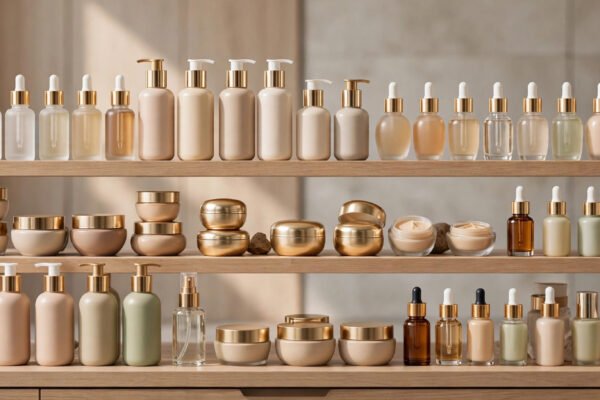
The fastest-growing aisle in beauty isn’t targeting women anymore. Men’s skincare — once a single dusty shelf of “3-in-1” body wash — has become a multi-billion-dollar global market growing at roughly double the rate of the overall beauty industry, with dedicated brands, dermatologist lines, and retail shelf space to prove it. The stigma didn’t just fade; it inverted. In 2026, a skincare routine is as normal a part of a man’s grooming as a haircut.
What’s driving the boom, who’s actually buying, and where is the market heading? The men’s skincare story is really a story about how masculinity, marketing, and dermatology collided — and what happens next.
By the numbers: a market coming of age
Global men’s skincare is now firmly a multi-billion-dollar market, with analysts projecting continued high-single-digit annual growth through the decade — well ahead of the broader beauty market. The US is the largest single market, and the growth is broad-based: cleansers, moisturizers, and sunscreen lead, but serums, eye creams, and anti-aging treatments are the fastest-growing subsegments.
The demographic surprise: it’s not just Gen Z. Men in their 30s and 40s — with more disposable income and the first visible signs of aging — are the highest-value segment, while younger men drive volume and trend velocity. Forbes’ market coverage has tracked how the category’s growth consistently beats analyst forecasts, a sign of demand that’s structural rather than cyclical.
Why now: the stigma collapse
The single biggest driver is cultural permission. A decade of grooming influencers, athlete skincare lines, and matter-of-fact dermatologist content normalized what was once mocked. The pandemic accelerated it — months of video calls made men confront their faces daily, and “Zoom dysmorphia” drove first-time skincare purchases across genders.
Marketing evolved in parallel. The old playbook — black packaging, “extreme” and “tactical” branding, the implication that skincare needed to be disguised as something manlier — gave way to straightforward, science-forward positioning. The winning brands talk about ingredients and results, not masculinity. Turns out men, like everyone else, respond to products that work and marketing that respects their intelligence.
The K-beauty influence matters too: Korean men’s grooming culture, where multi-step routines have long been unremarkable, provided both product innovation and cultural proof that skincare and masculinity coexist comfortably.
What men are actually buying
The purchase pattern differs from women’s in instructive ways. Men overwhelmingly prefer simplicity: the best-selling men’s routines are three steps (cleanse, treat, moisturize + SPF), and “routine in a kit” bundles dramatically outsell individual products. Fragrance-free and fast-absorbing are the two most-requested attributes — nobody wants to smell like a candle or wait ten minutes before dressing.
Category-wise, the hierarchy is: moisturizer with SPF (the gateway product), cleanser, then serums — vitamin C and niacinamide lead, retinol is growing as education improves. Eye creams over-index relative to women’s, driven by the universal male concern of looking tired. And shaving-adjacent care (ingrown prevention, post-shave repair) remains a distinctively male subsegment with loyal buyers.
The American Academy of Dermatology’s men’s skincare guidance is refreshingly blunt: the basics are the same regardless of gender — the differences are in preferences and specific concerns (shaving irritation, thicker oilier skin on average), not in some separate male skin biology requiring entirely different science.
The dermatologist’s take: what men get wrong
Dermatologists who treat male patients report a consistent pattern of errors. The big three: using bar soap or body wash on the face (too harsh, disrupts barrier), skipping sunscreen entirely (men’s lifetime UV exposure runs high through sports and outdoor work, and skin cancer doesn’t care about your routine’s simplicity), and treating shaving irritation with more aggressive shaving rather than better prep.
The fixes are unglamorous: a gentle cleanser, a moisturizer, and daily SPF — the same skinimalist core winning everywhere else. For the style-conscious, skincare now sits alongside the other grooming upgrades: the man researching how to dress well without spending a fortune is the same customer buying the $18 moisturizer, and brands increasingly market across that whole “look sharp affordably” mindset — right down to affordable watches that look classy as the finishing touch.
Where the growth goes next
Three frontiers look hottest. First, personalization: quizzes and AI skin analysis driving customized routines, reducing the paradox of choice that still deters male beginners. Second, the clinic crossover: Botox, laser, and “tweakment” normalization among men is following the skincare adoption curve with a lag — the med-spa industry reports male clientele growing steadily. Third, body and scalp: the scalp-care boom and body-care premiumization are pulling men along, with scalp serums and body treatments posting strong male purchase rates.
Market researchers at firms like Grand View Research flag Asia-Pacific as the fastest-growing region, but the US remains where the cultural action is — celebrity and athlete lines keep launching, retail keeps expanding shelf space, and the category keeps beating expectations.
The skeptics’ corner
Not everyone buys the boom narrative. Critics note that much “growth” is premiumization — the same routine at higher prices — rather than new users; that the gendered pink-tax-in-reverse (charging men more for smaller “for men” lines) is alive and well; and that the environmental cost of another consumption category deserves scrutiny.
Fair points, all — but they describe a maturing market, not a fake one. The test of a trend is what survives the hype cycle, and men’s skincare has survived multiple cycles now. The guys buying moisturizer in 2026 aren’t experimenting; they’re restocking.
Conclusion
Men’s skincare grew up because the barriers were cultural, not practical — and culture moved. What was a punchline became a routine, what was a niche became a multi-billion-dollar market, and what was marketed with tactical cosplay is now sold on ingredients and results.
The deeper story is democratization: good skin stopped being gendered. The three-step routine on a man’s sink and the three-step routine on a woman’s sink are converging on the same science — cleanse, treat, protect — because skin is skin. The market figured that out. The culture finally caught up.
Frequently Asked Questions
What is a good basic skincare routine for men?
Cleanser, moisturizer, and sunscreen in the morning; cleanser and moisturizer at night. Add one treatment (vitamin C serum in the morning or retinol at night) once the basics are habitual. That’s the complete routine for most men.
Do men need different skincare products than women?
Not really — skin biology doesn’t differ enough to require separate science. Men tend to have oilier, thicker skin on average and specific concerns like shaving irritation, so products marketed to men optimize for those preferences (lighter textures, fragrance-free, simpler routines), but the active ingredients are the same.
At what age should men start using anti-aging products?
Sunscreen is the anti-aging product, and it matters from youth — UV damage is cumulative. Targeted anti-aging (retinoids, vitamin C) becomes relevant in the late 20s to 30s as collagen production slows. Starting earlier than needed mostly wastes money.
Why is men’s skincare more expensive?
Often it isn’t — compare cost per ounce, not sticker price, since “for men” packaging is frequently smaller. When it is pricier, you’re paying for gendered marketing. Gender-neutral or women’s lines with the same actives are chemically equivalent; buy on ingredients, not aisle.