Gaming in 2026 is unrecognizable from the hobby of even five years ago — and not just because the graphics got better. The business models flipped, the audience broadened past every old stereotype, and the line between playing games and everything else (socializing, creating, even working) dissolved. These are the gaming trends on the radar for 2026 that actually matter, whether you play daily or just wonder what the kids are doing on those headsets.
Subscriptions Ate the Industry
The biggest structural shift: gaming completed its transition to a subscription-first business. The major platform holders’ game libraries — hundreds of titles for a monthly fee — are now the default way people play, and the economics reshaped what gets made. Developers increasingly design for “subscription value”: games that hook quickly, update constantly, and keep players in the ecosystem.
The effects are double-edged. Players get extraordinary value — a month’s fee buys access to libraries that would have cost thousands at retail. But the industry analysis at IGN notes the creative cost: mid-budget experimental games struggle hardest in a world where players default to the subscription buffet rather than buying individual titles. The indie hits that break through do so on distinctiveness — the weirder and more personal, the better.
For players watching their wallets, the subscription math deserves the same scrutiny as any other recurring bill — our guide to getting better at video games without spending money covers maximizing skill (and fun) regardless of budget.
The $70 Question Got Answered
Remember the great debate over $70 games? In 2026 it is effectively settled — not by argument but by market reality. Premium single-player blockbusters still launch at full price and still sell, but they are increasingly the exception: timed exclusives that hit subscriptions within months, deluxe editions that segment the price-sensitive, and a thriving market of excellent $20–$40 titles that made the whole debate feel quaint.
Our deep dive on the death of the $70 game debate traces how players won this one — through patience, backlogs, and the quiet power of waiting for the sale.
Handhelds and Hybrids Won the Hardware War
The surprise hardware story of 2026 is the triumph of portable play. Handheld gaming PCs matured from enthusiast toys into legitimate platforms, the hybrid console model proved its staying power, and even phones — with controller attachments and cloud streaming — became serious gaming devices for genres once thought to need a desk.
The design consequence is profound: developers now build for interruptible, pick-up-and-put-down sessions as the default. The forty-hour epic still exists, but the fastest-growing designs respect fragmented time — roguelikes, cozy games, and session-based multiplayer that fits between life’s obligations.
Gaming as Social Infrastructure
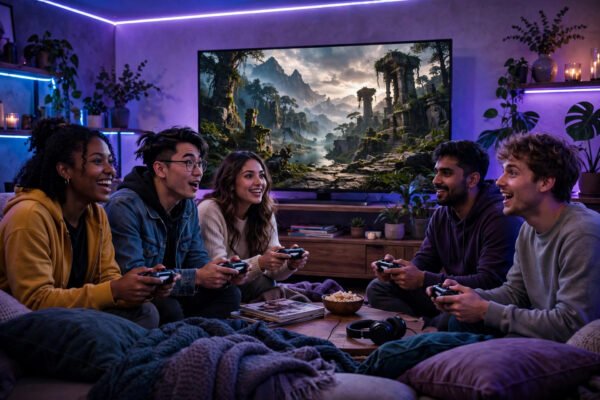
For younger players especially, games are not entertainment — they are where social life happens. The 2026 data on teen socializing is unambiguous: the squad chat, the shared world, the post-game lobby debrief have replaced the mall and the landline. Parents who understand this stop asking “why are you still on that game” and start asking “who are you playing with” — a much better question.
The industry noticed. Social features — cross-play, shared progression, in-game events timed like concerts — are now designed first, not bolted on. And the coverage at GameSpot tracks how live-service games evolved from exploitative grind into genuine social spaces, with the best ones functioning as persistent hangouts that happen to include gameplay.
The social side extends offline too — game nights remain undefeated, and our roundup of the best snacks for a game night party handles the essential fuel logistics.
The Cozy Games Counter-Revolution
Against the blockbuster arms race, 2026’s most culturally interesting trend is the cozy-games boom: low-stakes, beautiful games about farming, decorating, exploring, and befriending. What started as a niche has become a genuine market force, with cozy titles regularly outselling expectations and drawing in players — disproportionately women and older adults — who never identified as gamers.
The design philosophy is the point. Cozy games reject fail states, time pressure, and competition in favor of creativity and calm — and their success is forcing the industry to reconsider what “engagement” means. It turns out millions of people want games that lower their blood pressure, not raise it. Developers who dismissed the genre as casual are now studying its retention numbers with envy.
The ripple effects reach beyond the genre: accessibility options, difficulty customization, and “no-fail” modes are appearing in mainstream releases, driven partly by the cozy audience’s expectations. Gaming is growing up by growing gentler — and the medium is better for it.
What Is Fading
Every trend has a shadow. The casualties of 2026’s gaming landscape: the mid-tier retail release (squeezed between subscriptions and indies), the always-online single-player game (players revolted, publishers listened), and the cynical live-service cash grab (the market developed antibodies — players can smell the design spreadsheet now).
What is replacing them is healthier: games designed to respect your time and wallet tend to earn loyalty that outlasts any monetization scheme. The industry learned, slowly and expensively, that trust compounds.
The through-line of every 2026 gaming trend is democratization: cheaper access through subscriptions, gentler on-ramps through cozy design, play anywhere through handhelds, and social connection as the core product. Gaming stopped being a hobby for a demographic and became infrastructure for play itself — something closer to music or film, a medium with room for everyone. The radar for the rest of the decade points the same direction: more players, more ways to play, and games that meet you where you are.
Frequently Asked Questions
Is gaming still expensive in 2026?
It is cheaper than ever per hour of entertainment, thanks to subscriptions and deep-discount sales — but easier than ever to overspend through microtransactions and multiple subscriptions. Set a monthly gaming budget, audit your subscriptions quarterly, and remember the backlog: you already own great unplayed games. The golden rule of 2026 gaming economics is simple — finish what you own before buying what is new.
What is the best way to get into gaming in 2026?
Start with a subscription service on hardware you already own — most phones, PCs, and tablets now play serious games. Try genres broadly before committing: cozy games, roguelikes, and narrative adventures are welcoming entry points that do not demand twitch reflexes.
Are single-player games dying?
No — the acclaimed single-player releases of 2026 prove the format is thriving creatively. What died is the mid-budget retail single-player game; the market now supports prestige blockbusters and indie gems, with less in between. Subscription services actually helped by funding risky single-player projects.
How much time do people spend gaming?
Average playtime keeps rising across demographics, with the growth concentrated in short-session mobile and handheld play. The healthiest pattern researchers identify: gaming as social time or deliberate relaxation, not as default time-filling — the same rule that applies to every screen.
What are cozy games and why are they popular?
Cozy games are low-stakes, aesthetically rich games about farming, decorating, exploring, and befriending — no fail states, no time pressure. Their popularity reflects gaming’s broadened audience: players seeking relaxation and creativity rather than competition. Their commercial success is pulling accessibility and gentleness into mainstream game design.