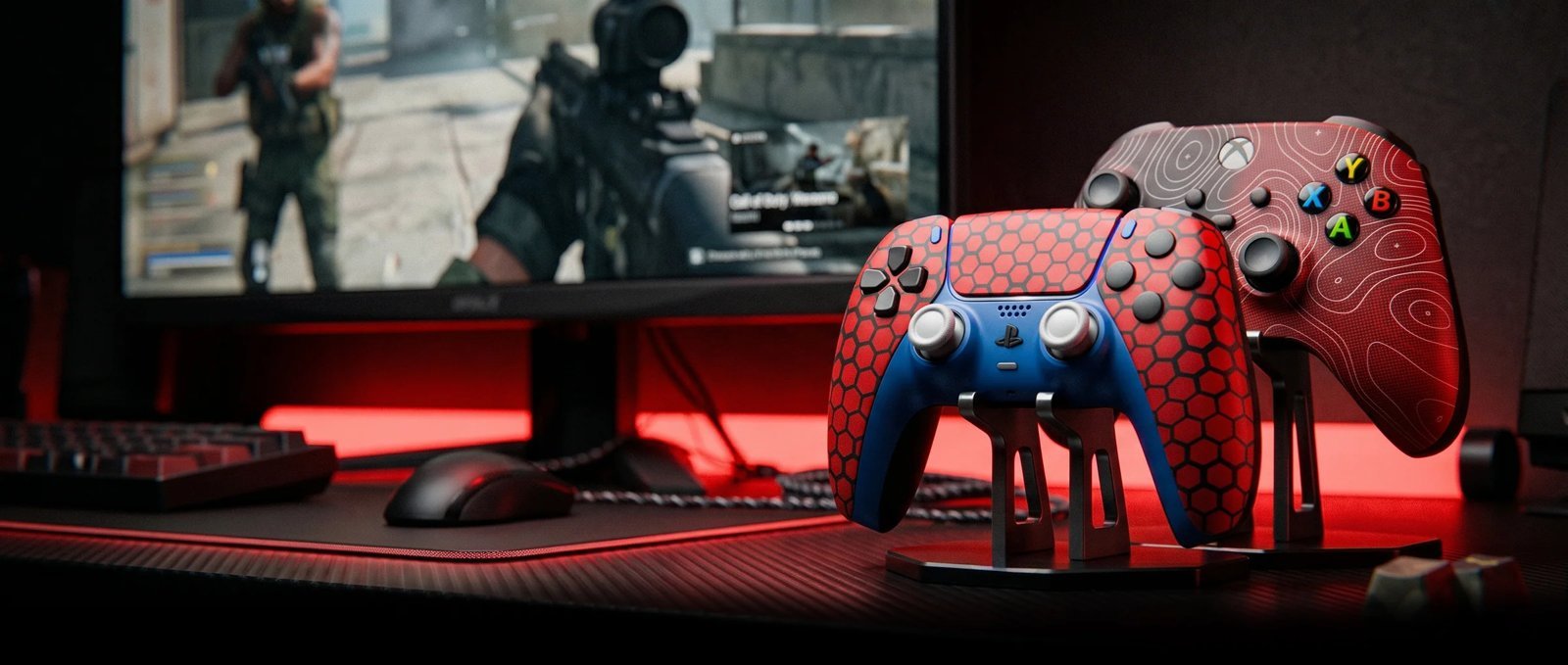
The gaming industry wants you to believe improvement comes from the store: better gear, paid coaching, premium battle passes. It does not. Skill comes from deliberate practice, and nearly all of it is free. Here is how to get better at video games without spending money – the training methods, settings tweaks, and mindset shifts that actually raise your rank.
How to Get Better at Video Games Without Spending Money
Fix your settings first (free, immediate)
Before practicing anything, fix the settings holding you back:
- Sensitivity: most beginners play on sensitivity far too high. Lower it until you can track a moving target smoothly, then adjust up slightly. For shooters, a lower sensitivity with a large mousepad (or lower stick sensitivity on controller) is the pro standard for a reason.
- Field of view (FOV): raise it to 100-110 if the game allows. More peripheral vision means fewer surprises.
- Turn off mouse acceleration and enable raw input. Consistent aim requires 1:1 input – acceleration makes muscle memory impossible.
- Graphics for performance: lower settings for higher, stable framerates. A stable 120fps on low settings beats a stuttering 60fps on ultra for competitive play. Turn off motion blur and reduce visual clutter.
- Audio: use any headphones you own – even earbuds beat speakers for directional sound. Learn what footsteps, reloads, and ability sounds tell you.
- Keybinds: move critical actions to comfortable keys/buttons. Defaults are designed for everyone, which means for no one.
Practice Deliberately, Not Just More
Ten hours of mindless matches teaches less than one hour of focused practice. The free training toolkit:
- Aim trainers (free): browser-based and free tools exist for every shooter. Fifteen minutes of tracking and flicking drills before playing builds mechanics faster than matches alone.
- Custom games and practice ranges: every major game has one. Use it to drill one specific skill – movement tech, ability combos, last-hitting – in isolation.
- Record your gameplay: free recording software (OBS Studio) or console built-in capture. Watch one loss per session and find three mistakes. You will be shocked how many errors you never noticed live.
- One thing at a time: pick one weakness per week – crosshair placement, map awareness, resource management. Focus beats scattered grinding.
- Warm up, do not just queue: 10-15 minutes of drills before ranked matches. Pros warm up; so should you.
Learn for Free (The Best Coaches Are Free)
- Watch better players critically: streams and pro VODs are free masterclasses – but watch actively. Ask: why did they position there? Why that timing? Pause and predict, then see if you were right.
- Free guides and wikis: every major game has community wikis, guides, and subreddits with compiled knowledge. Read the beginner guides fully – most players skip them and plateau on basics.
- Patch notes: read them. Knowing what changed is free advantage over players who do not.
- Find a practice partner: one friend at your level to drill with beats ten random teammates. Discord servers for your game are full of people looking for the same. For in-person sessions, our guide to planning a fun game night for adults covers the hosting side.
The Mental Game (Free, Underrated)
- Stop blaming teammates. The moment you focus on others’ mistakes, you stop fixing your own. After every loss: what could you have done differently? There is always something.
- Take breaks on tilt. Losing streaks compound – frustration degrades decision-making, which causes more losses. Two losses in a row? Take 15 minutes. Your rank will thank you.
- Sleep matters. Reaction time and decision-making measurably degrade with poor sleep. The all-night grind actively makes you worse.
- Play to improve, not to win. Paradoxically, focusing on one skill per session raises your rank faster than focusing on the rank. The wins follow the skill.
What Not to Spend Money On
- “Pro” controllers/mice before fundamentals: a $150 mouse will not fix bad crosshair placement. Upgrade gear only when your skill clearly exceeds your equipment.
- Paid coaching as a beginner: free resources cover everything until you are genuinely advanced. Coaching helps break plateaus at high levels, not build foundations.
- Skins for confidence: they look cool; they do not aim for you. Buy them for fun, not for skill.
Genre-Specific Training
Different genres demand different skills. Here is how to focus your free practice by game type:
First-person shooters
Mechanics are king: crosshair placement (aim at head height around corners, always), counter-strafing (stop before shooting for accuracy), and recoil control (pull down while spraying). Drill each in the practice range 10 minutes daily. Game sense – rotations, timing, economy – comes from watching pro VODs and reviewing your own demos. The free aim trainers build the mouse control; only matches build the brain.
MOBAs and strategy
Knowledge beats mechanics here. Learn one character deeply before expanding your pool – their matchups, power spikes, and limits. Watch high-level replays of your character specifically, not just general guides. Last-hitting and resource management are drillable in practice tools; map awareness is trained by glancing at the minimap every 3-5 seconds until it is unconscious. Die less by asking “where is the enemy team?” before every aggressive move.
Fighting games
The lab is everything: training mode is free and unlimited. Learn your character’s punish combos first (what to do when the opponent makes a mistake), then neutral game (how to approach safely). Play long sets against slightly better players – losing 20 games to someone better teaches more than winning 20 against someone worse. The fighting game community’s free resources (character Discords, YouTube guides) are among gaming’s best.
Battle royales
Positioning and decision-making outweigh raw aim. Study the map: rotations, high ground, cover. Engage only fights you can win or must take – the discipline to disengage is the skill most players lack. Watch your replays for deaths: 90% were avoidable with better positioning, not better aim.
The Takeaway
Fix your settings, drill one skill at a time, review your own gameplay, learn from free resources, and protect your mental game. That is how to get better at video games without spending money – and it works better than any purchase, because skill compounds and gear depreciates. The players outranking you mostly just practiced smarter, not richer. And when you want competition without the ranked grind, the best party games for a mixed-age group deliver couch multiplayer fun.


5 thoughts on “How to Get Better at Video Games Without Spending Money”