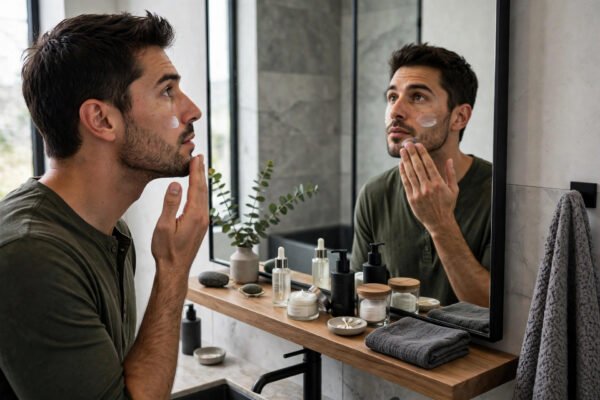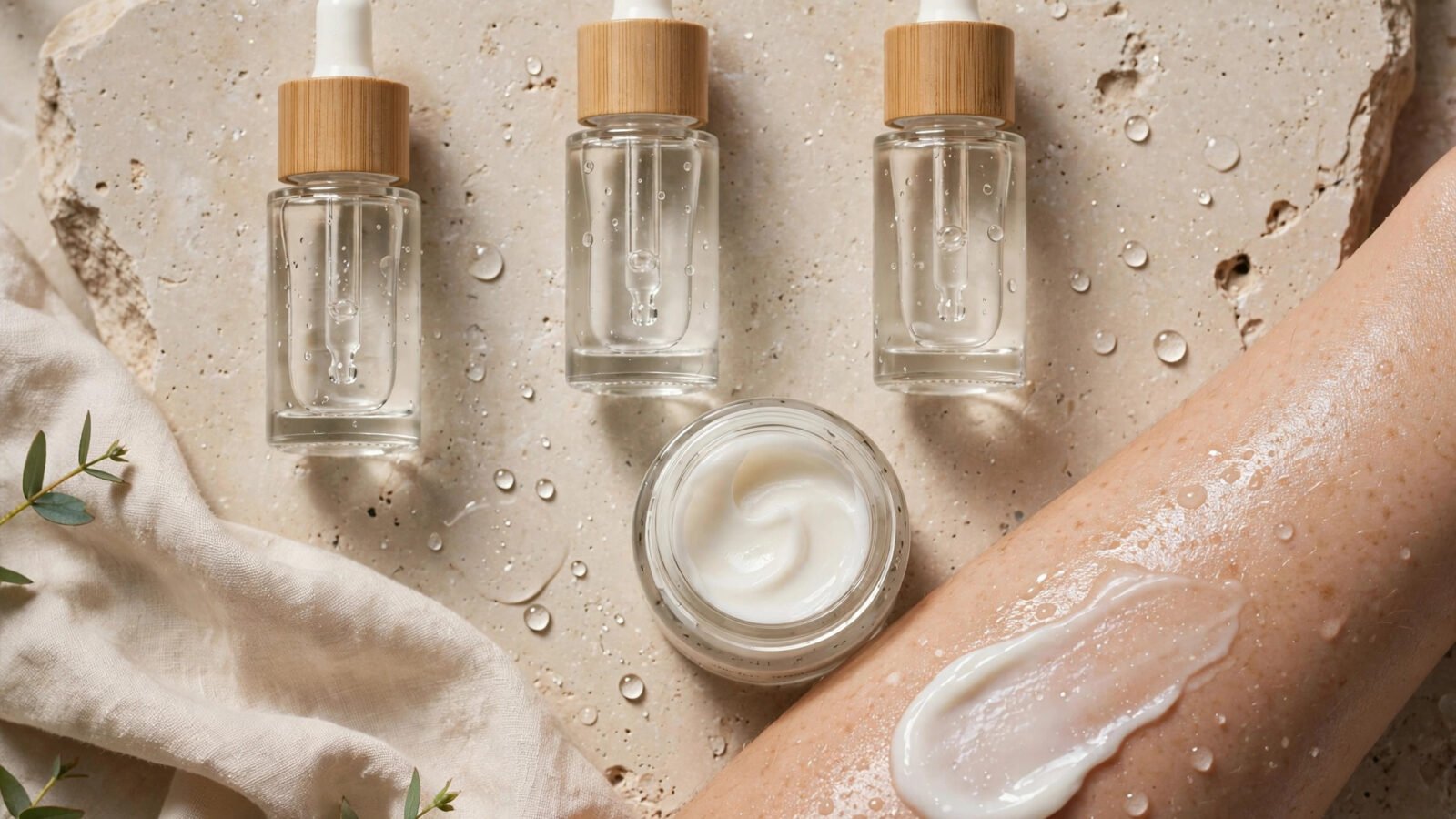
Somewhere along the way, skincare became a second job. Ten steps, twelve products, a 40-minute nightly ritual, and a bathroom shelf that looked like a chemistry lab. Then the backlash arrived — and it never left. Skinimalism, the stripped-back philosophy of fewer products and simpler routines, didn’t just survive the trend cycle. It won it, and it keeps winning.
Search data, sales figures, and dermatologists all tell the same story: consumers are buying fewer products, routines are shrinking, and the 10-step marathon that K-beauty made famous is now the exception rather than the aspiration. Why does less keep beating more? The answer is part science, part economics, and part cultural exhaustion.
What skinimalism actually means
Skinimalism isn’t neglect — it’s editing. The core routine is three to four steps: gentle cleanser, treatment (one active, chosen for your actual concern), moisturizer, and morning sunscreen. Everything else is optional, not mandatory. The philosophy borrows from minimalism broadly: every product must earn its place, multi-taskers beat single-taskers, and consistency with three products beats sporadic use of twelve.
The contrast with the 10-step routine is instructive. The K-beauty original was never really about ten products — it was about layering lightweight hydration and treating skincare as ritual self-care. But the Western interpretation became maximalist: essence, ampoule, serum, two masks a week, and a medicine cabinet that required its own budget line. Skinimalism is the correction, and it arrived right on schedule.
The science: why less works better
Dermatologists have been quietly saying this for years: the skin barrier is a real, fragile thing, and over-treatment damages it. Stacking multiple actives — retinoids plus vitamin C plus AHAs plus exfoliating acids — routinely produces the exact problems people are trying to fix: redness, sensitivity, breakouts, and a compromised moisture barrier. The American Academy of Dermatology’s skincare basics have always emphasized gentle cleansing, moisturizing, and sun protection as the non-negotiable core; everything else is situational.
The research on barrier function backs the minimalists. Studies on the stratum corneum show that over-exfoliation and over-cleansing measurably increase transepidermal water loss — skin literally leaks moisture faster. The “skin cycling” trend (rotating active nights with recovery nights) was essentially skinimalism smuggled into maximalist routines: an admission that rest days outperform relentless treatment. The National Center for Biotechnology Information’s published dermatology research includes extensive work on barrier repair, and the through line is consistent: protect the barrier first, treat second.
The economics of doing less
Let’s talk money, because it’s doing quiet work here. A full 10-step routine with mid-range products easily runs $200–$400 to assemble and $50–$100 a month to maintain. A skinimalist routine — cleanser, one serum, moisturizer, sunscreen — costs a fraction of that, and the products last longer because you’re not layering four things twice daily.
This landed exactly as consumers were rethinking spending across the board. The same budget consciousness behind self-care ideas that don’t cost money applies to the bathroom shelf: the most sustainable routine is the one you can afford to keep buying. Skinimalism’s pitch — better skin for less money and less time — is nearly unbeatable value proposition in a tight economy. The FDA’s cosmetics resources are worth a look here too, if only to calibrate what product claims are actually regulated (spoiler: far fewer than you’d think).
The cultural exhaustion factor
Beyond science and money, there’s fatigue. The 10-step era coincided with peak influencer skincare: shelfies, hauls, “holy grail” videos, and the constant implication that your routine was one product away from perfect. Skinimalism reads as a rejection of that entire economy — of being sold to, of the anxiety that your skin is a problem requiring twelve solutions.
It also fits how people actually live. The audience for a 40-minute routine was always smaller than the marketing suggested; most people want to look put-together in five minutes on busy mornings, not perform a ritual. Skinimalism won because it aligned the ideal routine with the real routine — and stopped making people feel guilty about the gap.
What the brands did about it
The industry’s response is the surest sign skinimalism won: the brands adopted it. “Multipurpose” and “3-in-1” became launch keywords; moisturizer-sunscreen hybrids, cleanser-exfoliant combos, and serum-moisturizers flooded shelves. Even brands built on maximalism introduced “starter” and “essentials” lines — a tacit admission of where the market moved.
Retailers reorganized around the shift as well. Routine-builder quizzes replaced the old logic of selling as many steps as possible; brands now compete on which three products deserve a place rather than how many a shelf can hold. The entire commercial grammar of skincare changed — from accumulation to curation — and consumers rewarded the brands that edited first.
Dermatologist-founded and “clinical minimal” brands rode the wave hardest, positioning simplicity as sophistication. The marketing inversion is complete: where 2018’s luxury was a twelve-product ritual, 2026’s luxury is a four-product routine that works — restraint as the new status signal.
The limits: when minimalism isn’t enough
Honesty requires the caveat. Skinimalism handles maintenance beautifully but under-treats real conditions: persistent acne, melasma, rosacea flares, and photoaging often need targeted actives, prescription treatments, or procedures that a four-step routine can’t deliver. “Less is more” is a starting philosophy, not a treatment plan — and anyone with a diagnosed skin condition should be working with a dermatologist, not a trend.
The smart version of skinimalism is diagnostic: start minimal, add one thing at a time for a specific reason, and keep what earns its place. That’s not a trend. That’s just good skincare.
Conclusion
Skinimalism keeps beating the 10-step routine because it’s better aligned with reality — with skin biology, with budgets, with busy mornings, and with a culture tired of being sold complexity. The 10-step era wasn’t wrong about everything (layering hydration was a genuine insight), but it mistook more for better.
The lasting lesson isn’t really about product counts. It’s that skincare works best as a system you can sustain: gentle, consistent, barrier-first, and honest about what your skin actually needs. Four products, used daily, will beat twelve products used aspirationally every time. Less won because less works.
Frequently Asked Questions
What is a basic skinimalist routine?
Cleanser, one targeted treatment serum, moisturizer, and sunscreen in the morning. That’s the complete core. Add products only for specific, persistent concerns — and one at a time, so you know what’s working.
Can skinimalism work for acne-prone skin?
Often yes — over-treatment is a common acne aggravator, and simplifying frequently calms breakouts. But persistent or severe acne usually needs targeted treatment (benzoyl peroxide, retinoids, or prescription options), so see a dermatologist rather than assuming minimalism alone will fix it.
Is the 10-step routine bad for your skin?
Not inherently, but the risk of barrier damage, irritation, and product interactions rises with each layer — especially with multiple actives. If your skin is thriving on a longer routine, there’s no mandate to shrink it; the issue is routines built from marketing rather than need.
How long before a simplified routine shows results?
Barrier recovery from over-treatment typically shows within 2–4 weeks of simplifying. For treatment goals (texture, tone, fine lines), give any routine 8–12 weeks — skin cell turnover takes about a month, and most actives need two to three cycles to show real change.
Does skinimalism mean skipping sunscreen some days?
Never — sunscreen is the one non-negotiable step, and it’s the highest-value product in any routine regardless of length. If you wear only one product in the morning, make it SPF 30 or higher. Every other step is optional; sun protection isn’t.