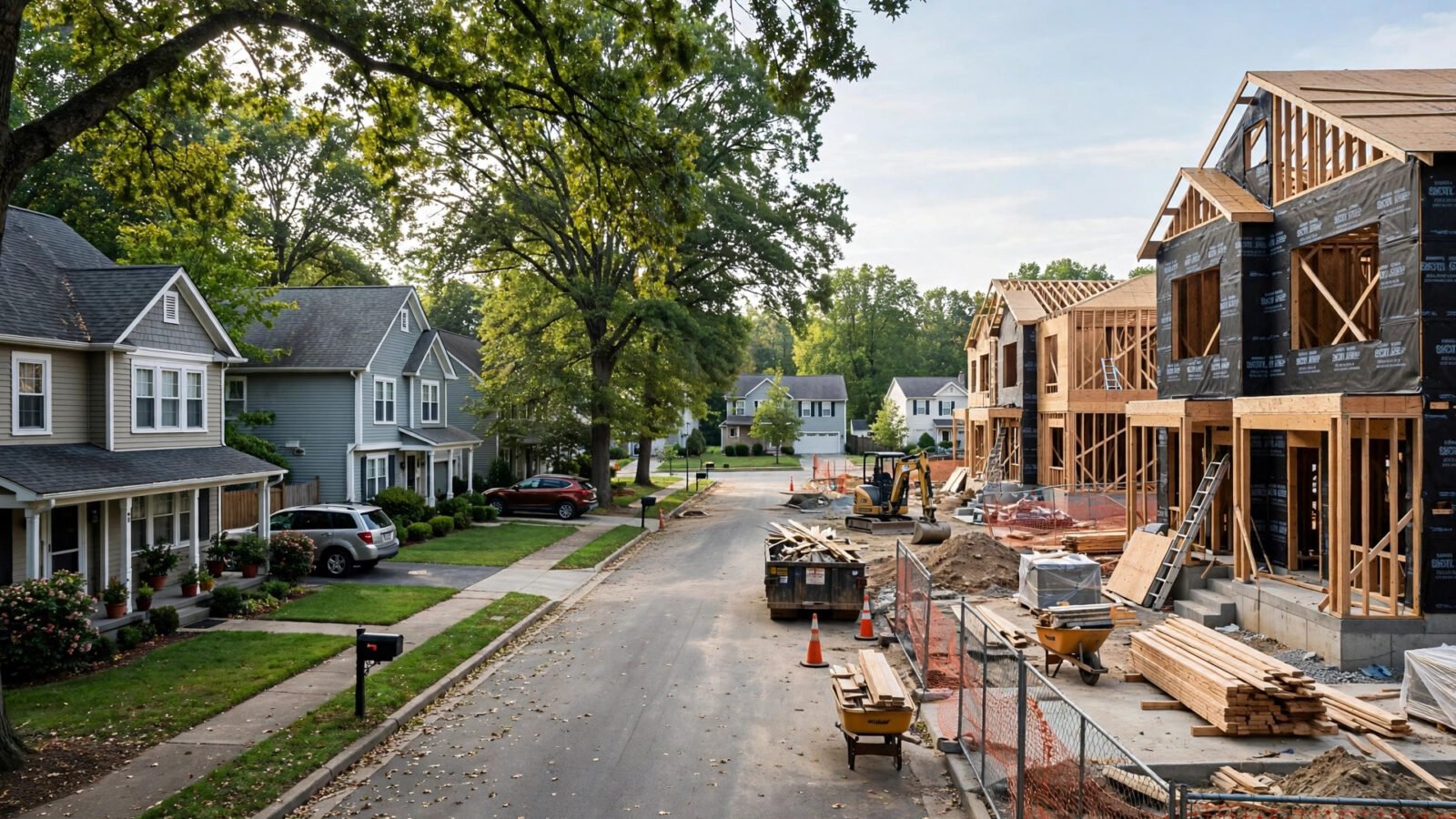
America has a housing shortage measured in the millions — and a large and growing coalition of economists, planners, and policymakers agrees on the primary cause: it’s illegal to build enough housing in most of the places people want to live. Zoning codes written decades ago ban apartments in most residential neighborhoods, mandate large lots and abundant parking, and empower small groups of neighbors to block new homes. The result is artificial scarcity with very real victims.
Zoning reform — changing those rules to legalize more housing — has gone from planner’s fantasy to active policy in states and cities across America. Here’s what the reforms actually do, where they’re working, and whether they can unlock the housing America needs.
What Zoning Reform Actually Means
“Zoning reform” covers a spectrum of changes, from modest to transformative. The common thread: allowing more homes on the same land, by right (without discretionary approval battles). The major categories:
Legalizing “missing middle” housing: Allowing duplexes, triplexes, fourplexes, townhomes, and cottage courts in neighborhoods zoned exclusively for single-family homes. This is the most widespread reform — the gentle density that fits existing neighborhood scale while multiplying unit counts.
Accessory dwelling units (ADUs): Legalizing backyard cottages, garage apartments, and basement units — the lowest-impact way to add housing, using existing lots and infrastructure. California’s ADU reforms produced a genuine boom, with tens of thousands permitted annually.
Transit-oriented upzoning: Allowing apartments near transit stations — the highest-leverage reform, since it adds housing where car-free living is viable. Multiple states and cities have enacted TOD overlays with real results.
Parking reform: Eliminating minimum parking requirements, which force developers to build expensive parking instead of homes. The HUD and planning researchers have documented how parking mandates inflate housing costs — each structured parking space can add tens of thousands to a unit’s cost.
By-right approval and process reform: Making compliant projects approvable without discretionary hearings — removing the veto points where small opposition groups kill needed housing. Time is money in development, and process delay is a hidden tax on every home.
Where It’s Happening
The reform wave is genuinely national. Oregon and California led with statewide missing-middle legalization; Washington, Montana, and Vermont followed with their own versions. Minneapolis’s landmark 2040 plan (ending single-family-only zoning citywide) survived legal challenges and became the national template. Cities from Gainesville to Arlington to Spokane enacted local reforms; states from Utah to Massachusetts streamlined ADUs and approvals.
The politics are the story: zoning reform assembled the strangest coalition in modern policy — progressive housing advocates and libertarian economists, developers and tenant organizers, all agreeing the rules block needed homes. Opposition comes from incumbent homeowners defending neighborhood character and property values — a powerful force, but one that’s losing more fights than it used to.
The Brookings Institution’s housing research tracks the wave: more pro-housing state legislation passed in recent years than in the previous several decades combined.
Does It Work? The Early Evidence
The honest answer: yes, but slower and more modestly than advocates hope. The evidence so far:
Minneapolis: After the 2040 plan, the city permitted more duplexes/triplexes and saw rents grow more slowly than peer cities — suggestive but confounded by other factors. California ADUs: unambiguous success — tens of thousands of new units, the state’s most productive housing policy by unit count, achieved with minimal controversy. Oregon: steady missing-middle production in Portland, though less dramatic than hoped. Auckland, New Zealand (the international case study): sweeping upzoning followed by measurable rent moderation relative to peers — the strongest evidence that supply works at scale.
The pattern: reforms that legalize easy housing types (ADUs, duplex conversions) produce quickly; reforms enabling larger projects take years to show results (development cycles are long); and no single reform solves the shortage alone — it takes the full stack, sustained over a decade-plus. Patience is the underrated variable: the cities seeing results now reformed years ago, and today’s reforms are investments in the 2030s.
Why Reform Alone Isn’t Enough
Zoning reform is necessary but not sufficient, and the honest advocates admit it. The other constraints: construction costs — labor shortages, materials prices, and financing costs can make even legal housing unprofitable to build. Infrastructure — water, sewer, schools, and roads must support new homes. Financing for small-scale development — the missing-middle builders (small local developers, homeowner-builders) struggle to get loans designed for large projects. Political durability — reforms get repealed or undermined when opponents regroup after the initial vote.
And the deepest limitation: zoning reform enables market-rate housing, which helps middle-income households most. The lowest-income households need subsidies too — vouchers, public housing investment, nonprofit development. The full solution is supply plus subsidy, not either alone. The Census Bureau’s housing data underscores the scale: millions of units short, requiring both market and non-market responses sustained over many years.
What Comes Next
The reform frontier is moving to harder targets: commercial-corridor upzoning (the vast strips of underused retail land), office-to-residential conversion (accelerated by remote work), state-level “builder’s remedy” laws (letting developers bypass local obstruction when cities miss housing targets — California’s version is genuinely feared by NIMBY cities), and pre-approved building plans (cutting soft costs for small developers).
The political momentum favors more reform, not less — the housing shortage is now a top-tier voter concern, especially among younger voters locked out of ownership. Each successful reform makes the next one easier by demonstrating that the sky doesn’t fall when duplexes appear.
For homeowners and communities, the practical implication: the neighborhood of 2036 will likely allow more housing types than today’s — and property owners should understand the trend. Those running businesses from home are already navigating related rules — making a home-based business look professional increasingly intersects with zoning’s evolution. And buyers should watch how real-estate services are evolving as markets get more complex.
Zoning reform could unlock more housing because the shortage was, to a remarkable degree, a deliberate policy choice — and policy choices can be unmade. The reforms won’t work overnight, won’t work alone, and won’t satisfy everyone. But the direction is set: the rules that made it illegal to build enough homes are being rewritten, city by city and state by state. The housing America needs is, increasingly, legal to build. Now comes the harder part: actually building it, year after year, until supply finally catches up with demand everywhere.
Frequently Asked Questions
What is zoning reform?
Changes to land-use rules that legalize more housing — allowing duplexes/fourplexes in single-family zones, ADUs, apartments near transit, reduced parking mandates, and faster by-right approvals.
Does building more housing lower rents?
The evidence (notably Auckland, Minneapolis, and numerous US studies) indicates that increased supply moderates rent growth relative to constrained peers. Supply alone doesn’t solve affordability for the lowest incomes — subsidies are also needed.
What is missing-middle housing?
Duplexes, triplexes, fourplexes, townhomes, and cottage courts — housing types between single-family homes and large apartment buildings, historically common but widely banned by modern zoning.
What is a “builder’s remedy” law?
A state law letting developers bypass local zoning obstruction when cities fail to meet state housing targets — California’s version is the strongest, and it has become a powerful tool for forcing housing approvals in resistant cities.
Why do people oppose zoning reform?
Concerns about neighborhood character, traffic, property values, and local control. Research generally finds the feared harms are overstated, but the political power of incumbent homeowners remains the movement’s main obstacle everywhere it organizes.