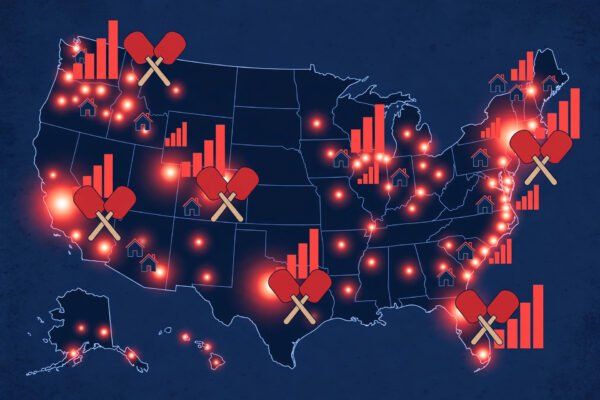
The down payment has always been the cruelest barrier in American housing: you need wealth to buy a home, but the primary way families build wealth is buying a home. For decades, first-time buyer programs chipped at this paradox around the edges. In 2026, they’re expanding aggressively — bigger assistance amounts, broader eligibility, new program designs — in what amounts to the most serious policy effort yet to crack the first-time buyer barrier.
Why now, what’s actually available, and do these programs work? Here’s the full picture.
Why Programs Are Expanding Now
The expansion is a response to a genuine crisis in first-time buying. Home prices outran incomes for years; mortgage rates, while down from peaks, remain well above the 3% era; and the result is the oldest, wealthiest first-time buyer cohort in history — with millions of would-be buyers stuck renting indefinitely. The homeownership rate for younger households lags previous generations at the same age by wide margins.
Policymakers across the spectrum concluded the barrier isn’t desire or creditworthiness — it’s the upfront cash. Surveys consistently show the down payment (plus closing costs) as the top obstacle, far ahead of monthly affordability or credit scores. Programs that attack the cash barrier directly have the highest leverage, and the political will to fund them has grown as the generational homeownership gap became impossible to ignore.
The Program Landscape: What’s Actually Available
State and local down-payment assistance (DPA)
The workhorse of first-time buyer support: state housing finance agencies in all 50 states offer DPA — typically grants or forgivable/second loans covering 3–5% of the purchase price for down payment and closing costs. Funding and generosity vary enormously by state, but the best programs effectively reduce the cash-to-close to near zero for qualifying buyers. These are the programs most buyers miss — they’re poorly marketed and underutilized relative to need.
Federal programs: FHA, VA, USDA
The federal trio remains foundational. FHA loans (3.5% down, flexible credit) serve millions of first-time buyers; VA loans (0% down for eligible veterans and service members) are the best deal in American housing for those who qualify; USDA loans (0% down in eligible rural/suburban areas) are the most underused program in the country — millions of eligible buyers don’t know they qualify. The Department of Housing and Urban Development’s resources detail eligibility that surprises many applicants.
New-model programs: shared equity and employer assistance
The innovative frontier: shared-equity programs (public or nonprofit funds contribute to the down payment in exchange for a share of future appreciation — no monthly payment, settled at sale), employer-assisted housing (companies offering down-payment grants or forgivable loans as a recruitment tool, growing fast in high-cost markets), and community land trusts (which separate land ownership from home ownership to keep prices permanently affordable).
Special-purpose expansions
Recent years brought targeted expansions: programs for first-generation buyers (whose parents never owned — addressing the wealth-transfer gap directly), down-payment assistance tied to specific professions (teachers, healthcare workers, first responders), and “first-look” programs giving owner-occupants bidding priority over investors. The Consumer Financial Protection Bureau’s homebuyer guides track these evolving options.
Do They Work? The Evidence
The research verdict is encouraging with caveats. DPA measurably increases homeownership rates among targeted populations — the cash barrier is real, and removing it works. Default studies show assisted buyers perform reasonably: slightly higher default rates than unassisted buyers (expected, given lower wealth buffers), but far better than critics predicted — especially for grant-based (not second-loan) assistance and programs with homebuyer education requirements.
The education component matters enormously. Programs pairing assistance with counseling — budgeting, maintenance expectations, understanding mortgages — show the best outcomes. Which makes sense: the buyers who benefit most from assistance are often those with the least experience navigating ownership, and preparation compounds the financial help. Buyers should also master the fundamentals — household budgeting discipline is what turns an assisted purchase into lasting ownership.
The honest limitation: assistance helps buyers clear the bar, but it doesn’t lower the bar itself. In markets where prices are fundamentally disconnected from incomes, DPA lets a few more buyers through a door that’s still too narrow. The programs are necessary but not sufficient — supply-side reform (more homes) remains the deeper fix.
Navigating the Maze: Practical Guidance
The biggest problem with first-time buyer programs isn’t availability — it’s discoverability. Hundreds of programs overlap confusingly, eligibility rules are opaque, and the buyers who need them most often don’t know they exist. The practical playbook:
Start with your state housing finance agency. Every state has one, every one offers DPA, and their websites (increasingly user-friendly) list current programs, income limits, and participating lenders. This single step uncovers most of what’s available.
Check federal eligibility broadly. Many buyers assume they don’t qualify for VA (check discharge status carefully — more veterans qualify than think), USDA (the “rural” maps include many suburbs), or FHA (more flexible than its reputation). Don’t self-disqualify.
Ask employers. Employer-assisted housing is growing fast and often unadvertised — HR departments may offer thousands in assistance that employees never learn about.
Get the counseling. HUD-approved housing counseling is often free, frequently required for the best programs, and genuinely useful — counselors know the local program stack and can assemble combinations (state DPA + federal loan + employer help) that buyers would never find alone.
Understand the agent landscape too. Commission structures and representation rules have shifted in recent years — the evolving role of real-estate agents is worth understanding before you start touring homes.
The Generational Stakes
The expansion of first-time buyer programs is ultimately about whether the homeownership ladder still functions. For most of the 20th century, it did: each generation bought homes, built equity, and passed wealth down. The 21st century broke the mechanism for millions — and the programs expanding now are the policy system’s attempt to repair it.
Whether they succeed at scale depends on funding durability (programs expand and contract with political winds), pairing with supply growth (assistance without homes just bids up prices), and reaching the buyers who need them (the discoverability problem). The early evidence says well-designed programs work. The open question is whether we’ll fund them like the generational imperative they are.
First-time buyer programs are expanding because the alternative — accepting that homeownership is becoming a hereditary privilege — is politically and morally untenable. The programs don’t solve everything, and they can’t substitute for building more homes. But for the buyer scraping together a down payment while paying record rent, the difference between a 20% requirement and a 3% assisted path isn’t policy abstraction. It’s the difference between a landlord and a home.
Frequently Asked Questions
What is down-payment assistance?
Programs (grants, forgivable loans, or low-interest second loans) that cover part or all of a first-time buyer’s down payment and closing costs — offered by state housing agencies, local governments, nonprofits, and employers.
Do I have to be truly “first-time” to qualify?
Usually “first-time” means not having owned a home in the past three years — so returning buyers often qualify. Some programs target first-generation buyers (parents never owned) specifically.
What’s the minimum down payment for a first-time buyer?
As low as 0% (VA, USDA) or 3–3.5% (conventional, FHA) — and down-payment assistance can cover even these amounts for qualifying buyers, reducing cash-to-close to near zero.
Do down-payment assistance programs increase default risk?
Assisted buyers default slightly more than unassisted buyers, but far less than critics predicted — especially with grant-based assistance and programs requiring homebuyer education. Outcomes are strongest when assistance is paired with counseling.