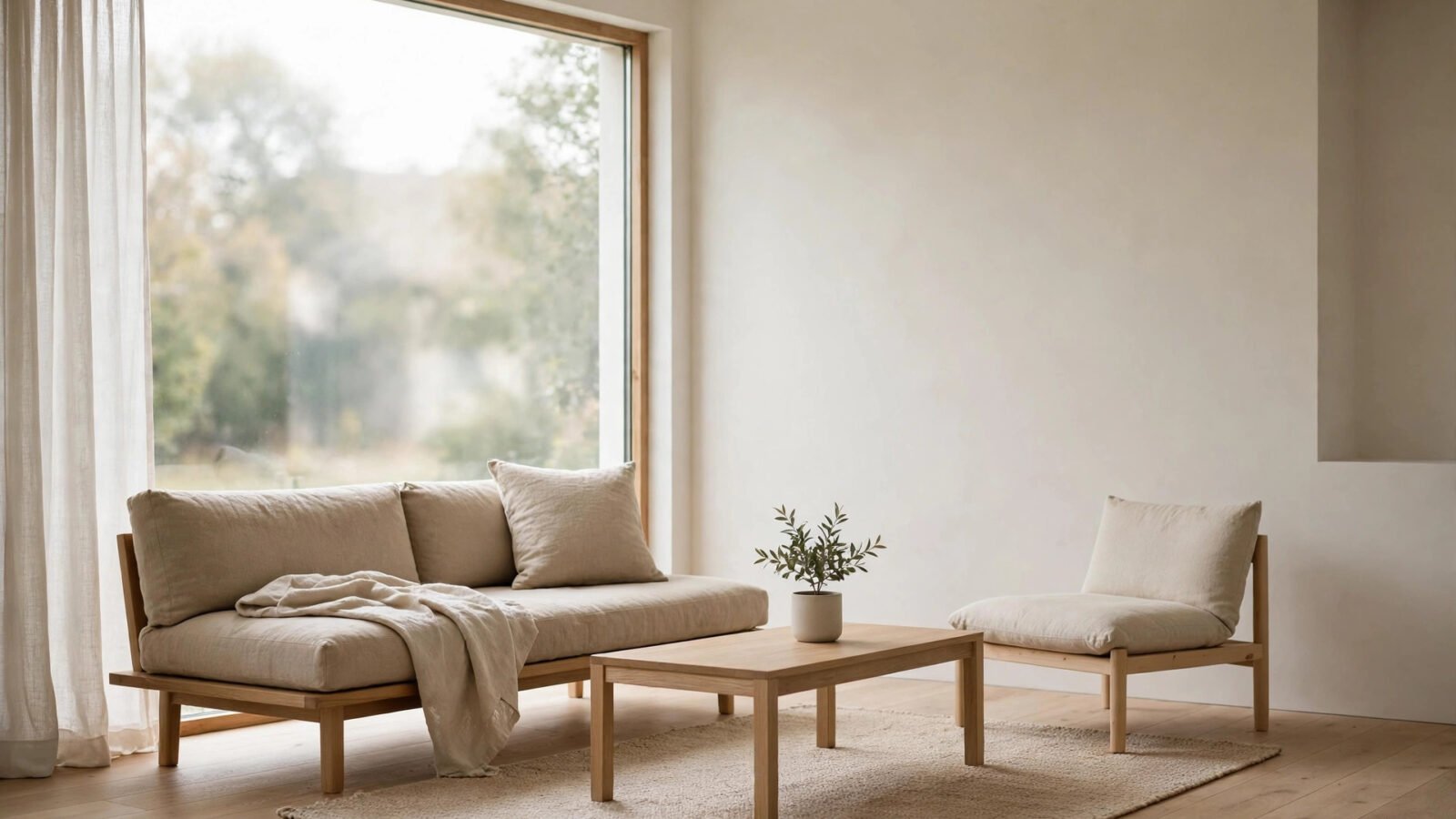
Somewhere between the third subscription box and the closet full of clothes with tags still on, a lot of Americans started asking an uncomfortable question: what is all this stuff actually doing for me? The minimalist money trend — spending less, living more — is the financial expression of that reckoning. It is not about deprivation or white-walled apartments. It is about the radical idea that every dollar you do not spend on things you do not need is a dollar that buys freedom, time, and options.
Minimalist money is having a moment because the math became undeniable. The average household carries thousands in consumer debt while working longer hours to fund consumption that research consistently shows does not increase happiness past a point. The minimalists looked at that equation and walked away from it — and their finances, almost without exception, improved dramatically.
What minimalist money actually means
Strip away the aesthetics and minimalist money is a simple operating system: spend intentionally on what you value, ruthlessly eliminate the rest, and redirect the difference toward freedom — debt payoff, savings, investments, time. It is not frugality as suffering; it is curation as strategy. A minimalist might spend lavishly on the two things they genuinely love — travel, say, or a hobby — while spending nearly nothing on everything else. The point was never spending as little as possible. It is spending as deliberately as possible.
The distinction matters because deprivation budgets fail. Research on willpower and decision fatigue shows that austerity framed as sacrifice collapses within weeks. Minimalist money reframes the same behaviors as alignment: you are not denying yourself the impulse purchase; you are choosing the early retirement, the sabbatical, the emergency fund instead. Every “no” is a “yes” to something you ranked higher. That reframe — from sacrifice to selection — is why the trend sticks where diets and crash budgets do not. The physical side often starts the journey: decluttering your home without feeling overwhelmed frequently triggers the financial reevaluation, as people confront how much money became stuff they do not use.
The happiness research behind it
The science is unusually settled here. Beyond the point where basic needs and reasonable comfort are met, additional spending produces rapidly diminishing happiness returns — while experiences, relationships, and freedom from financial stress produce lasting well-being. Minimalist money is essentially applied happiness research: it cuts the spending categories with the worst joy-per-dollar (status goods, impulse purchases, upgraded versions of things that worked fine) and protects the ones with the best (time with people, meaningful experiences, security). People who adopt it consistently report not just better finances but lower anxiety — because financial minimalism and mental minimalism turn out to be the same practice.
The minimalist money playbook
Start with the audit: 90 days of spending, categorized honestly, with each category rated on the value it actually delivered. Most people discover 20 to 30 percent of spending produced near-zero lasting value — that is the minimalist dividend waiting to be claimed. Next, apply the “enough” test to major categories: housing, transport, food. These three dominate most budgets, and right-sizing even one — a smaller apartment, one car instead of two, cooking over delivery — dwarfs a hundred micro-optimizations.
Then build the minimalist infrastructure: automatic savings that capture the freed cash before lifestyle reabsorbs it, a 30-day list for non-essential purchases (write it down, wait, watch most desires evaporate), and a one-in-one-out rule for physical goods. Unsubscribe from marketing emails — the average person does not have a spending problem so much as a temptation-delivery problem. And protect the categories that genuinely enrich life; minimalism that eliminates joy is just miserliness with better branding. Filling free time richly matters too — self-care ideas that don’t cost money prove that the best parts of a day rarely appear on a receipt.
Where minimalists put the freed money
The destination of minimalist savings reveals the philosophy’s real goal: freedom, not accumulation. The hierarchy most adherents follow: kill high-interest debt first (nothing says “not minimalist” like paying 24 percent APR), build a robust emergency fund, max tax-advantaged retirement accounts, then invest the surplus in boring index funds. Beyond that, the money buys the ultimate minimalist luxury — time. Sabbaticals, career downshifts, part-time work, early retirement: these are the purchases minimalists are actually saving for, and they cost far less than the consumption treadmill they replaced.
The CFPB’s savings resources and NerdWallet’s budgeting tools help quantify the opportunity: a household redirecting $800 monthly from low-value spending to investments builds roughly $150,000 in a decade at historical average returns. That is the minimalist money trend in one number — less stuff, more future.
The critiques — and the answers
Fair criticisms exist. Minimalism can be a privilege aesthetic: it is easier to romanticize owning little when you could afford more, and the movement’s imagery skews affluent. The answer is that the financial mechanics work at any income — spending intentionally helps a $40,000 household more, proportionally, than a $200,000 one. Another critique: extreme minimalism can strain relationships when partners disagree. The answer is the same as any money conflict — negotiate the system together, protect each person’s genuine priorities, and remember the goal is alignment, not identical preferences.
The deepest critique is philosophical: does optimizing spending miss the bigger lever of earning more? It can, if minimalism becomes an excuse to avoid career growth. But the best practitioners treat the philosophy as both/and — earn ambitiously, spend intentionally. Forbes’ coverage of lifestyle design regularly profiles people who paired high earning with minimalist spending to reach financial independence decades early — the combination is the cheat code.
Living more
The trend’s tagline — spending less, living more — is the whole thesis. The “more” is time, freedom, security, presence: the things money can buy only when it is not already spent. Start small: one category audited, one subscription canceled, one automatic transfer set up. Minimalist money is not a destination but a direction — and every step in that direction buys back a piece of your life.
Frequently Asked Questions
Is minimalist money just being cheap?
No. Cheapness minimizes all spending; minimalist money maximizes the value of spending — cutting ruthlessly where spending adds nothing while protecting or even increasing spending on what genuinely matters to you.
How much can minimalist spending actually save?
Most households find 20 to 30 percent of spending delivers little lasting value. Redirecting even $500–$800 monthly toward debt payoff or investments compounds into six figures over a decade.
Does minimalism work on a low income?
The mechanics help proportionally more at lower incomes, where every dollar redirected matters most. The focus shifts from cutting luxuries to maximizing the value of essentials — but intentionality beats income as a predictor of financial progress.
What is the 30-day list?
A minimalist staple: when you want a non-essential purchase, write it on a list with the date. Revisit after 30 days — most desires fade, and the ones that remain have proven themselves worth buying deliberately.
Can minimalism and enjoying life coexist?
That is the entire point. Minimalist money protects high-value spending — experiences, relationships, genuine passions — while eliminating the low-value spending that was crowding it out. Most adherents report enjoying life more, not less.