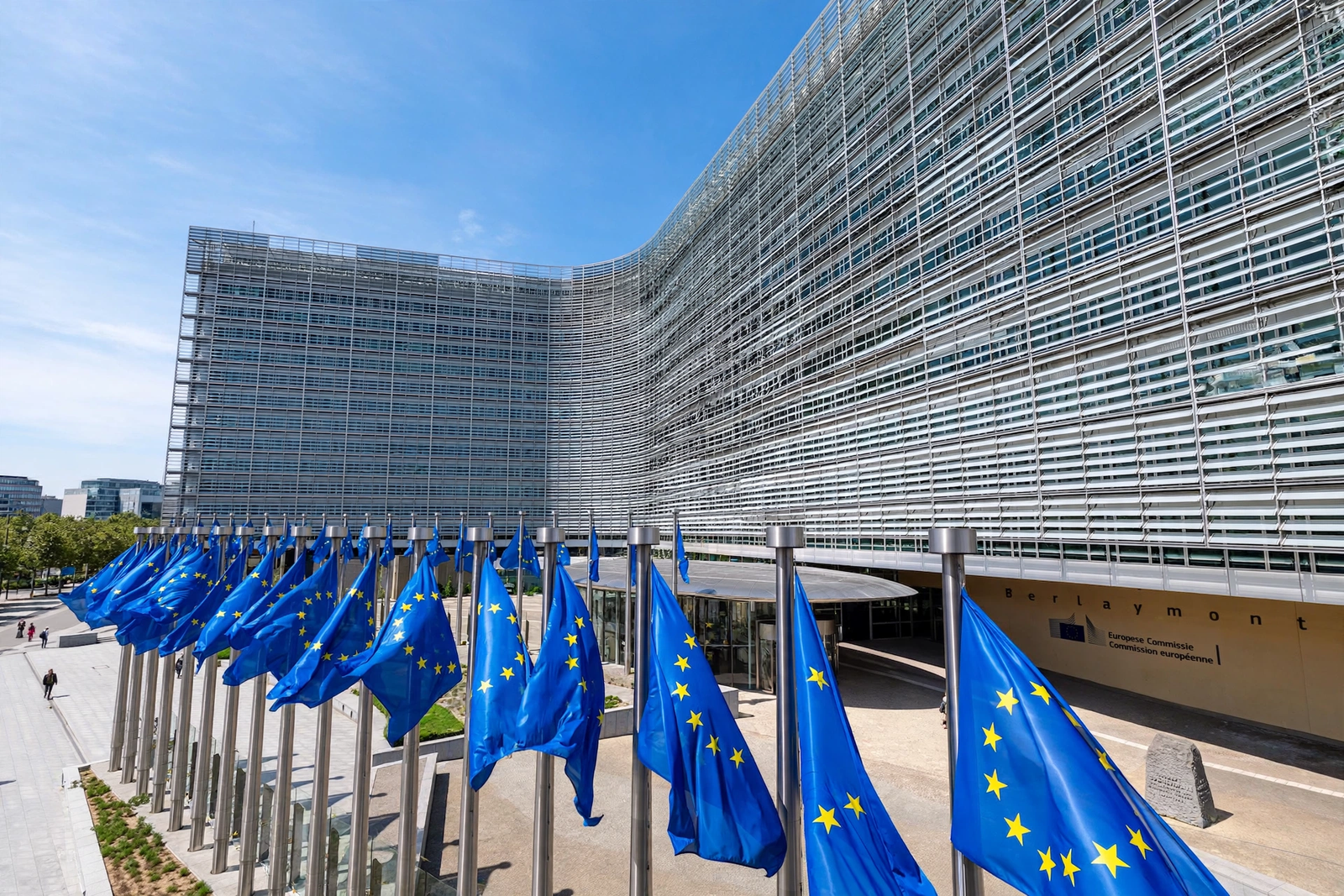
The European Union is one of the world’s most powerful political and economic blocs — but pinning down exactly how many countries belong to it trips people up, mostly because the number changed in recent memory. Here’s the current count, the full list, and which countries might join next.
The 27 EU Member Countries
As of 2026, the EU’s 27 members are: Austria, Belgium, Bulgaria, Croatia, Cyprus, Czech Republic (Czechia), Denmark, Estonia, Finland, France, Germany, Greece, Hungary, Ireland, Italy, Latvia, Lithuania, Luxembourg, Malta, Netherlands, Poland, Portugal, Romania, Slovakia, Slovenia, Spain, and Sweden.
Together these countries are home to roughly 450 million people and form the world’s largest single market — a fact you can verify on the EU’s official country profiles page.
Why the Number Changed: Brexit
For most of the 2010s, the answer to “how many EU members” was 28. That changed on 31 January 2020, when the United Kingdom formally left the EU after the 2016 Brexit referendum. The UK was the first country ever to leave the bloc, dropping the count to 27 — where it has remained ever since.
Before the UK, no member state had ever withdrawn, though Greenland (a Danish territory) left the European Community back in 1985.
How Countries Join the EU
Joining isn’t as simple as signing a form. Candidate countries must meet the Copenhagen criteria: stable democratic institutions, a functioning market economy, and the ability to adopt the EU’s entire body of law (the acquis communautaire — over 80,000 pages of rules). Negotiations typically take a decade or more.
The most recent joiner was Croatia in 2013. Before that, the big 2004 enlargement added ten countries at once, mostly from Central and Eastern Europe.
Which Countries Could Join Next?
Several countries are official candidates, including Albania, Bosnia and Herzegovina, Georgia, Moldova, Montenegro, North Macedonia, Serbia, Turkey, and Ukraine. Of these, Montenegro and Serbia are furthest along in negotiations, while Ukraine and Moldova were granted candidate status in 2022. Realistically, no new member is expected to join before the late 2020s at the earliest.
What EU Membership Actually Means
Members share more than a flag. The core pillars include:
- The single market — free movement of goods, services, capital, and people across borders.
- The eurozone — 20 of the 27 members use the euro as their currency.
- Shared laws and standards — from food safety to data privacy (GDPR).
- Collective bargaining power — the EU negotiates trade deals as one bloc.
The European Parliament’s official site explains how the institutions work in practice.
EU Membership Over Time: A Short Timeline
The EU didn’t start with 27 members — it started with six. The 1951 Treaty of Paris created the European Coal and Steel Community with France, West Germany, Italy, Belgium, Netherlands, and Luxembourg. Enlargements followed in waves: 1973 (UK, Ireland, Denmark), the 1980s Mediterranean expansion (Greece, Spain, Portugal), 1995 (Austria, Finland, Sweden), the historic 2004 intake of ten countries, 2007 (Bulgaria, Romania), and 2013 (Croatia). Each wave reshaped the bloc’s politics and economy, and each required years of negotiation.
Members vs. Eurozone vs. Schengen: Not the Same Thing
People often conflate three overlapping groups. The EU has 27 members. The eurozone (countries using the euro) has 20 members — Denmark opted out, while Sweden, Poland, Czechia, Hungary, Romania, and Bulgaria kept their currencies (Bulgaria adopted the euro in 2026). The Schengen Area (passport-free travel) includes 29 countries — all EU members except Ireland and Cyprus, plus non-EU states like Norway, Switzerland, and Iceland. Knowing the distinction saves embarrassment at dinner parties.
How the EU Makes Decisions With 27 Members
Running a union of 27 sovereign states requires elaborate machinery. The European Commission proposes legislation, the European Parliament (720 MEPs elected every five years) and the Council of the EU (national ministers) amend and approve it, and the European Council (heads of state) sets the strategic direction. Most laws pass by qualified majority — 55% of member states representing 65% of the EU population — so no single country can routinely block everything, though unanimity is still required for foreign policy and taxation.
Frequently Asked Questions
How many countries are in the EU in 2026?
27. The UK left in 2020, reducing the total from 28.
Is the UK still in the EU?
No. The UK formally withdrew on 31 January 2020 and is no longer a member.
Which was the last country to join the EU?
Croatia, which joined on 1 July 2013.
Do all EU countries use the euro?
No — 20 of the 27 members use the euro. Denmark has a formal opt-out, and others like Sweden, Poland, and Hungary retain their own currencies.
Is Turkey in the EU?
No. Turkey has been a candidate since 1999, but accession talks have been effectively frozen for years.
Has any country been kicked out of the EU?
No. There is no expulsion mechanism — Article 7 can suspend a member’s voting rights, but it has never been fully triggered.
What’s the difference between the EU and Europe?
Europe is a continent with about 44 countries; the EU is a political union of 27 of them.
Love big-number trivia? Check out how many millions are in a billion“>how many millions are in a billion and how high aeroplanes fly“>how high aeroplanes fly.