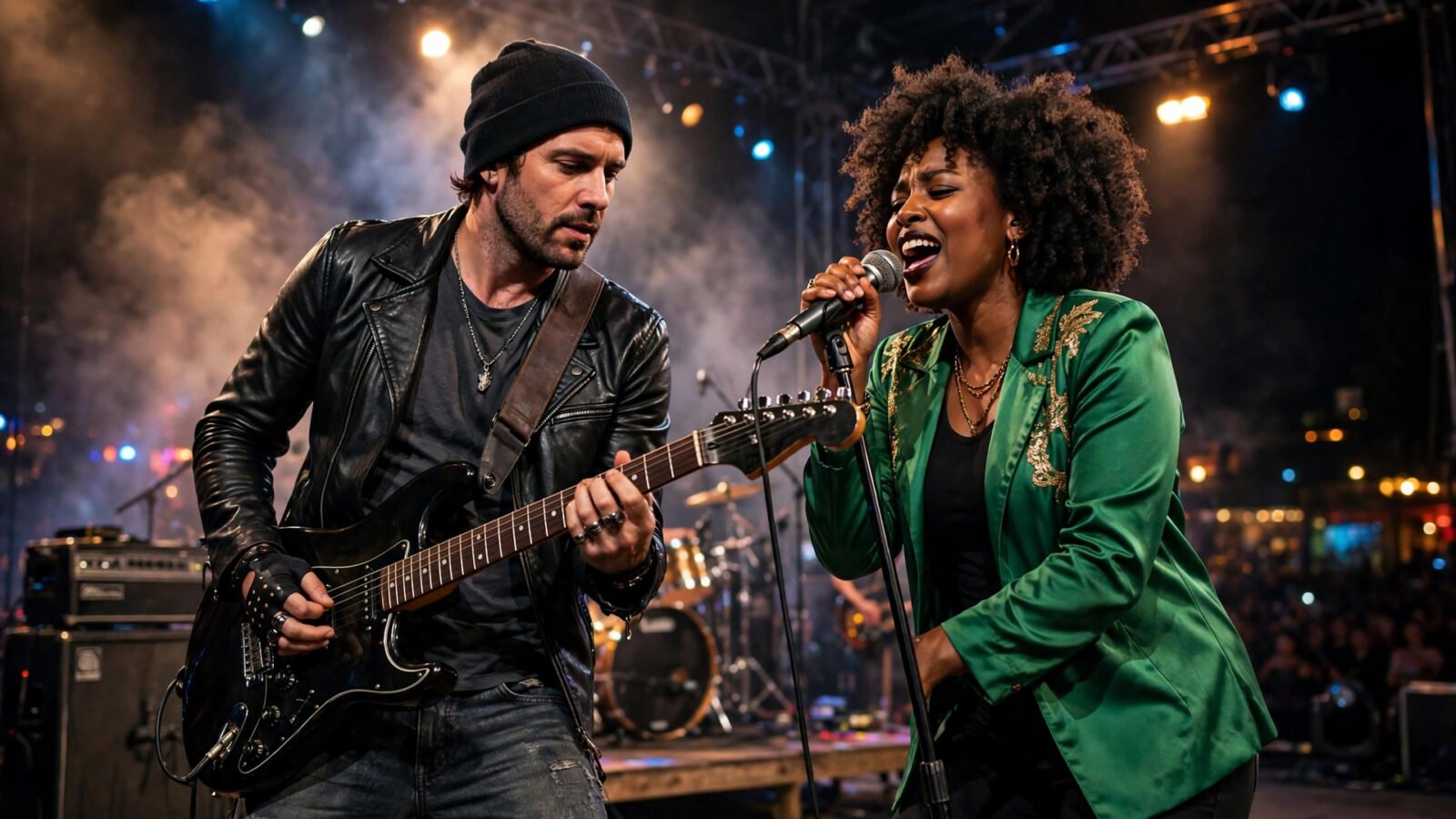
Some collaborations are marketing exercises. Others redraw the map. In 2026, a string of cross-genre partnerships did the latter — songs that should not have worked on paper became the year’s defining hits, and in the process proved that the walls between musical worlds were mostly scaffolding. Here is how 2026’s collaborations broke genre walls, and what the rubble is building.
Why 2026 Was the Tipping Point
Genre-blending is not new — but 2026 was the year it stopped being the exception and became the rule. Several forces converged. Streaming erased the distribution barriers that kept genres in separate stores and separate radio formats; a listener’s “Discover” feed never cared about categories. Social platforms made collaboration discovery frictionless — artists find each other in comments and DMs, record remotely, and release without label diplomacy. And a generation of producers fluent in multiple traditions treats genre the way bilingual speakers treat language: switching mid-sentence, naturally.
The commercial validation sealed it. When cross-genre singles outperform “pure” genre releases on the charts — as Billboard’s 2026 chart data repeatedly showed — the industry’s risk calculus flips. Fusion stops being the gamble and becomes the safe bet; staying in one lane starts looking like the risk.
The Collaborations That Defined the Year
The year’s landmark team-ups share a pattern: genuine mutual admiration, not label-arranged marriages. The best 2026 collaborations came from artists who were already fans of each other’s work — the country star who grew up on hip-hop, the K-pop group covering Latin hits in interviews, the indie rocker producing for rappers. Authenticity is audible; audiences can tell the difference between a collaboration and a co-branding deal.
What made them work musically was respect for both traditions. The successful fusions did not dilute either genre into background texture — they let the tension stand. A trap beat under a mariachi horn section, a shoegaze guitar drowning in reggaeton percussion: the friction is the point. The failures of 2026 (and there were some) all made the same mistake — sanding both genres down to an inoffensive middle that pleased nobody.
For listeners wanting to trace these threads themselves, our guide to finding good new music without streaming algorithms covers the human-curated channels where the next wave of collaborations surfaces first.
The Producers: Genre’s Real Demolition Crew
Behind every great collaboration is usually a producer fluent in both worlds — and 2026 belonged to them. The year’s most in-demand producers share an unusual resume: credits spanning hip-hop, country, Latin, electronic, and indie, often on the same album. They function as translators, finding the tempo where a corrido and a trap beat lock, the key where a pop vocal sits over an Afrobeats groove.
This producer class is also the most diverse the industry has seen — geographically, culturally, linguistically — because fluency in multiple traditions correlates with lived experience across them. The features at Rolling Stone have chronicled several of these careers, and the through-line is consistent: the future of production is multilingual in every sense.
What Genre Walls Were Protecting
It is worth asking what the walls were for. Genres were never just about sound — they were about community, identity, radio formats, award categories, and marketing budgets. Breaking them has costs: some communities feel their traditions diluted, some artists lose the infrastructure that supported their scene, and the algorithmic feed that enables fusion also flattens context.
The 2026 conversation handled this with unusual maturity. The best collaborations honored their sources — crediting, featuring, and financially including the originators rather than just sampling the aesthetic. The line between fusion and appropriation is respect plus compensation, and the year’s best work stayed firmly on the right side.
Learning to Play Across the Walls
The collaboration wave is inspiring a generation of musicians to train across traditions — and the tools have never been more accessible. Our beginner’s guide to learning guitar as a complete beginner is the classic starting point, but the 2026 twist is learning with fusion in mind: the guitarist studying both fingerpicking and reggaeton rhythms, the producer learning dembow alongside trap.
The New Map
With the old walls down, what replaces genre? The emerging answer: scenes, moods, and communities of taste rather than categories of sound. Playlists organized by feeling, festivals booked by vibe, artists defined by their collaborators rather than their section of the record store. It is messier than the old system — and far more honest about how music actually works.
The collaborations of 2026 did not just make great songs. They proved that the most interesting music happens at the borders — and then erased the borders. What is left is bigger than any genre: all of it, all at once, for anyone curious enough to listen.
Frequently Asked Questions
What was the biggest cross-genre collaboration of 2026?
Several landmark team-ups defined the year across different genre pairings — country/hip-hop, K-pop/Latin, indie/electronic among them. The common thread was authenticity: artists collaborating from genuine mutual fandom rather than label arrangement, which audiences rewarded with massive streaming numbers.
Why are genres disappearing in music?
Streaming removed distribution barriers, social platforms made cross-genre collaboration frictionless, and a generation raised on shuffle never internalized the boundaries. Commercially, fusions now outperform pure-genre releases — which flipped the industry’s risk calculus.
Is genre-blending cultural appropriation?
It depends on how it is done. The respected 2026 collaborations credited, featured, and compensated originators — respect plus compensation. Problems arise when artists extract aesthetics without acknowledgment. The year’s best work modeled the right approach.
The Remix as Diplomacy
One of 2026’s smartest collaboration formats is the cross-genre remix — not the perfunctory verse-swap, but the genuine reimagining. The year’s best remixes functioned as cultural diplomacy: the original artist handing their song to a collaborator from another world and letting them rebuild it from the foundation. A pop single reborn as a regional Mexican anthem, a hip-hop track recast in electronic minimalism — each version expanding the song’s audience rather than just extending its chart life.
The economics favor it. A well-chosen remix doubles a song’s playlist placements across genre-separated editorial lists, introduces each artist to the other’s audience, and costs a fraction of recording a new single. Labels caught on fast — 2026 saw remix packages planned from a song’s release rather than commissioned after the fact. The artists who do it best treat the remix as its own art form, not a marketing afterthought.
The fan response reveals something about 2026 listening habits: audiences increasingly experience songs as plural — the original, the remix, the live version, the sped-up edit — a fluid text rather than a fixed recording. Genre walls cannot survive that kind of listening.
How can I find cross-genre music I will like?
Follow producers rather than artists — the multilingual producers behind the fusions lead to more discoveries. Human-curated playlists, live shows with eclectic bills, and friend recommendations beat algorithms for this kind of exploration.
What makes a cross-genre collaboration work?
Mutual respect and genuine fandom between the artists, plus a producer fluent in both traditions. The successful 2026 fusions let the tension between genres stand rather than sanding both down to a safe middle — friction is the point, and audiences can hear the difference.