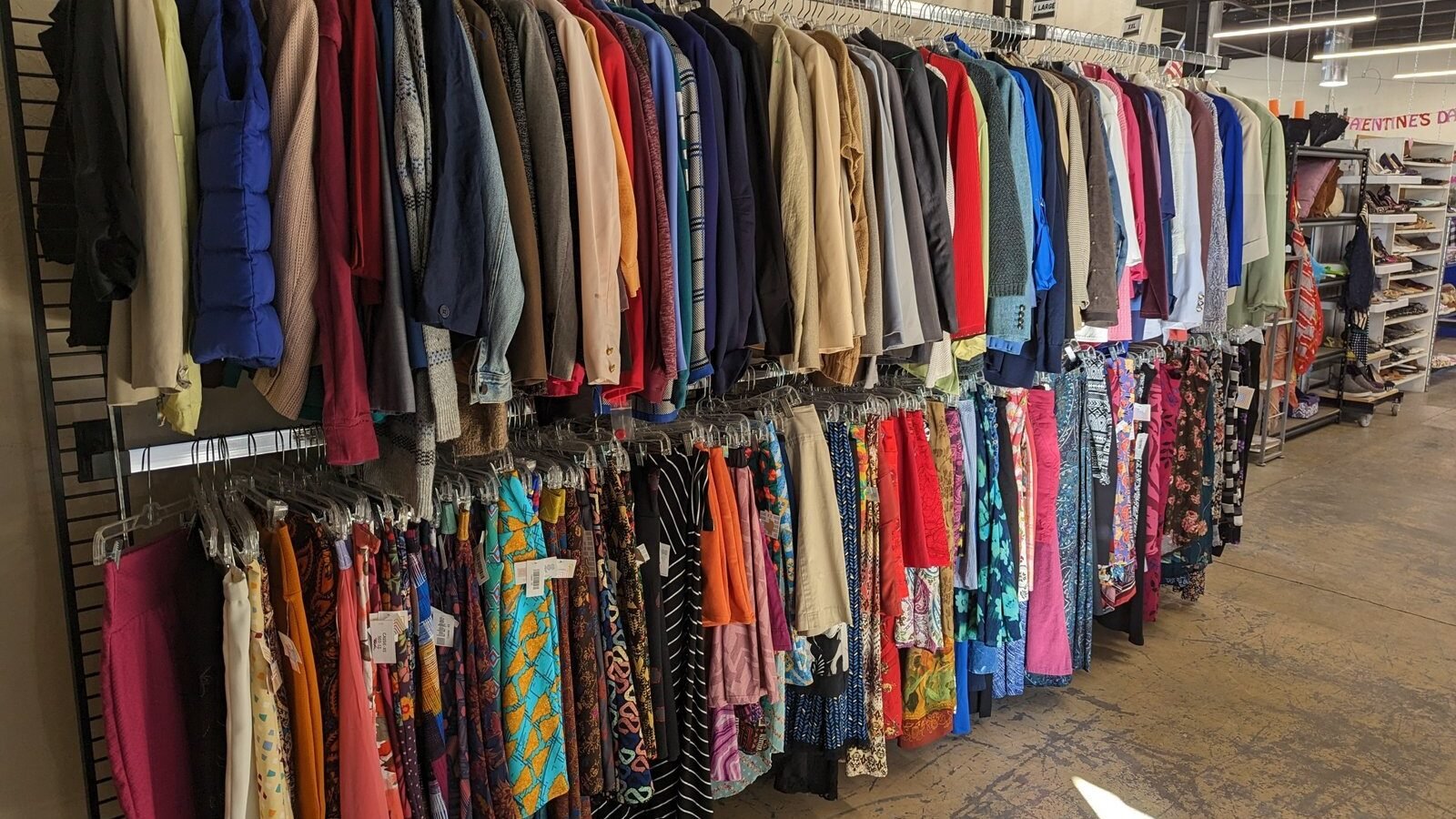
My best outfits cost less than a fast-food lunch. A $12 Brooks Brothers blazer. $8 barely-worn Allen Edmonds shoes. A cashmere sweater for $6 that retails for $200. Thrift stores are the greatest arbitrage in fashion — quality clothes at 5–10% of retail — but only if you know how to shop them. Walk in blind and you’ll drown in stained fast fashion and walk out with nothing. If you’re asking how to find good quality thrift store clothes, here’s the treasure-hunter’s playbook: timing, inspection skills, category strategy, and knowing quality when you touch it.
I’ve thrifted for over a decade, and the learning curve is real but short. These are the lessons that took me from ‘overwhelmed browser’ to ‘person strangers ask about their outfit.’
How Do I Find Good Quality Thrift Store Clothes? Time It Right
Timing is the highest-leverage thrift skill. Shop weekday mornings — new donations hit floors after weekend drop-offs, and serious pickers shop early. Learn each store’s restock rhythm (ask staff; many restock specific categories on set days). Shop seasonally ahead: buy coats in spring, swimsuits in fall — off-season donations flood in during closet cleanouts, and competition is zero. January is prime time (New Year purges), as is September (summer cleanouts) and post-holiday weeks.
Location strategy: thrift stores in affluent neighborhoods receive better donations — it’s uncomfortable but true. The wealthy donate barely-worn designer and quality basics constantly. Stores near universities are goldmines in May/June (graduation move-outs — students donate incredible stuff rather than ship it). Estate-sale-adjacent shops and church rummage sales in nice areas outperform chain thrifts for quality. And go often but briefly — inventory turns over daily, so the 20-minute weekly pop-in beats the monthly marathon. Regularity beats duration in treasure hunting.
The Inspection Checklist: Quality in 30 Seconds
Train your hands and eyes with this 30-second inspection: fabric first — natural fibers (wool, cashmere, silk, cotton, linen) and quality blends signal worth; hold to light (thin, see-through = worn out or cheap). Seams: straight, tight stitching with no puckering; lined jackets and finished interior seams indicate quality construction. Check stress points: armpits (deodorant stains, wear), collar (grime ring), cuffs (fraying), crotch and knees (thinning), zippers (run them twice), buttons (present and matching — replacements are easy, missing ones are fine, but check).
Smell test: musty is fixable (vinegar soak, sunning); smoke and heavy perfume often aren’t — pass. Look for the quality tells: real horn or mother-of-pearl buttons, hand-stitching details, bound seams, ‘made in’ labels from Italy/England/Japan (not guarantees, but signals), and brand labels you recognize as quality (Brooks Brothers, J.Crew, Banana Republic, Eileen Fisher, Pendleton, Allen Edmonds, Coach for leather). Flip items inside out — quality shows in the construction nobody sees. This inspection becomes automatic within a few trips; soon you’ll scan racks at speed, touching only the promising pieces.
- Fabric: natural fibers, hold-to-light test, no pilling or thinning
- Seams: straight stitching, finished interiors, lined jackets
- Stress points: armpits, collar, cuffs, zippers (run twice), buttons
- Smell: musty = fixable; smoke/perfume = usually pass
- Quality tells: real buttons, hand details, good labels, clean interiors
Best Categories (and What to Skip)
Thrift MVPs: blazers and sport coats (men donate barely-worn ones constantly — $8–20 for $200–400 garments), wool sweaters and cashmere (check for moth holes by holding to light), leather goods (belts, bags, jackets — leather ages well and thrift prices are absurd), denim (Levi’s for $8; quality lasts decades), dress shirts (inspect collars and cuffs), and wool coats (the $25 thrifted overcoat is a rite of passage). Women’s: silk blouses, designer denim, barely-worn occasion dresses (‘worn once to a wedding’ is a whole thrift category), and quality handbags.
Skip or scrutinize: underwear and swim (hygiene — just buy new), fast-fashion basics (a $4 Forever 21 top isn’t a deal, it’s future landfill — see fast fashion vs slow fashion), heavily worn shoes (soles tell the truth — check wear patterns; lightly worn quality shoes are fine, destroyed ones aren’t), and anything needing more repair than it’s worth (a $10 item needing $30 of tailoring isn’t a $10 item — though see basic tailoring for the DIY-able fixes). Suits: great finds, but budget tailoring into the price. Always try on — thrift sizing is chaos across eras and brands (vintage sizes run small; see online sizing principles applied in person).
Pricing, Negotiation, and the Long Game
Know the pricing rhythms: most thrifts run color-tag sales (50% off certain tags weekly) — learn the rotation and time big purchases. Half-price days and holiday sales cut already-low prices further. Some stores negotiate on flawed items (point out the missing button politely); chains usually don’t. Set personal price ceilings per category (mine: blazers $20, sweaters $10, shirts $6, shoes $15) — ceilings prevent ‘but it’s such a deal’ overspending on things you don’t need.
The long game: thrift with a list (know your gaps from capsule wardrobe planning — targeted hunting beats browsing), but stay open to serendipity (the grail finds are never on the list). Build relationships with staff at favorite stores — they’ll tip you to good donations. Donate back your own cast-offs (the ecosystem runs on circulation). And track your wins: my running tally of retail-vs-paid keeps the habit joyful and the spending honest. Thrifting isn’t just cheap shopping — it’s the most sustainable way to dress well (see sustainable brands on a budget), a treasure hunt that pays, and — when that $12 blazer gets its tenth compliment — genuinely more fun than retail. Check Goodwill’s website for store locators and sale calendars in your area.
Treasure Hunting Is a Skill
Finding quality thrift store clothes: shop weekday mornings in good neighborhoods, inspect fabric/seams/stress points in 30 seconds, target blazers/leather/wool/denim, know your price ceilings, and thrift with a list but stay open to serendipity.
The $12 blazer that gets compliments isn’t luck. It’s timing, inspection, and showing up weekly. The treasure is out there — go find it.




One thought on “How Do I Find Good Quality Thrift Store Clothes?”