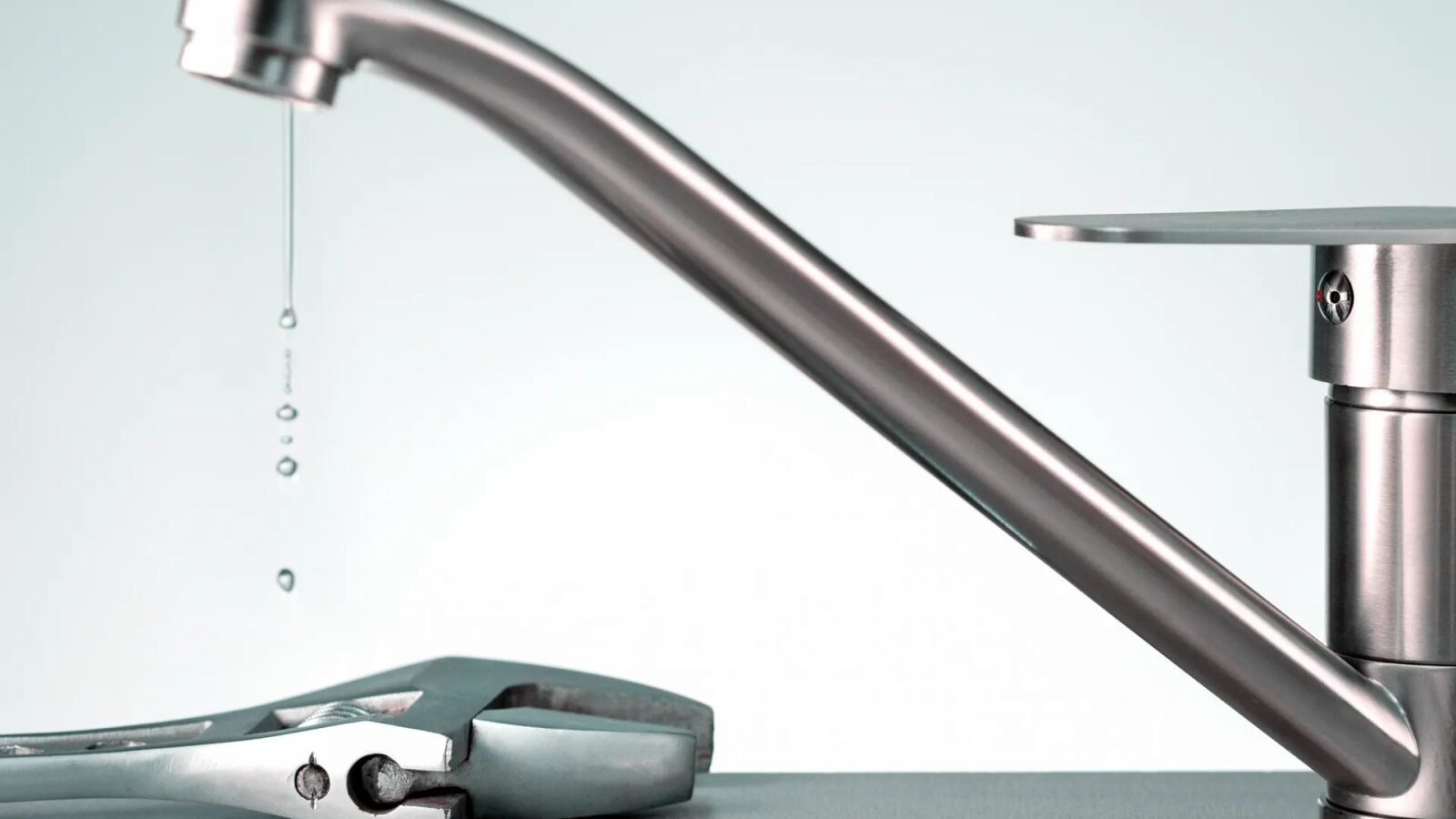
Drip. Drip. Drip. A leaky faucet is the kind of problem that’s easy to ignore until you get the water bill, or until the drip becomes a stream at 2 a.m. I put mine off for three weeks once, and when I finally fixed it, the whole job took 40 minutes and a $6 part. I was annoyed at myself for waiting.
Here’s the truth: fixing a leaky faucet without calling a plumber is one of the most approachable DIY plumbing jobs there is. You need basic tools, a replacement washer or cartridge, and the willingness to turn off a valve. Let’s do this.
Fix a Leaky Faucet Without Calling a Plumber: Know Your Faucet Type
Before you touch anything, figure out what kind of faucet you have, because the fix depends on it. The four types are compression (two separate hot/cold handles that you tighten down), ball (single handle, common in kitchens), cartridge (single handle that moves up/down and side to side), and ceramic disc (single lever, very smooth operation, newer faucets).
Compression faucets are the leakers of the bunch and also the easiest to fix: it’s almost always a worn rubber washer. Cartridge and ceramic disc faucets need their cartridge replaced, which sounds intimidating but is usually a single part that pulls straight out. Check your faucet’s brand and model; it’s often stamped under the sink or on the original paperwork.
- Compression faucet (two handles): Replace the rubber washer and possibly the O-ring. The $5 fix that solves 90% of drips.
- Ball faucet (single kitchen handle): Replace the ball assembly and springs with a repair kit ($15-$25) matched to your brand.
- Cartridge faucet: Pull the old cartridge and replace it with an identical one ($15-$40). Bring the old part to the store to match it.
- Ceramic disc faucet: Replace the disc cartridge ($20-$50). These rarely leak, but when they do, sediment is usually the culprit.
- Identify your brand first. Moen, Delta, and Kohler use different cartridges. The brand name is often on the faucet or under the sink.
- Take photos as you disassemble. One photo per step means reassembly takes minutes instead of an hour of head-scratching.
Step-by-Step: Fixing a Compression Faucet Drip
This is the most common repair, so let’s walk through it completely. Total time is 30 to 60 minutes, and you’ll spend $5 to $15 on parts. The only tools you need are an adjustable wrench, a screwdriver, and plumber’s grease.
The critical first step: turn off the water. There are shutoff valves under the sink for that faucet; turn both clockwise until they stop. Then open the faucet to drain remaining water and confirm the supply is off. If the under-sink valves are stuck or missing, shut off the house’s main valve instead.
- Turn off the water supply. Close the hot and cold valves under the sink, then open the faucet to release pressure and confirm no flow.
- Plug the drain. Drop a stopper or rag in the drain. Small screws love to disappear down drains at the worst moment.
- Remove the handle. Pop off the decorative cap, unscrew the handle screw, and lift the handle off. Note the order of parts.
- Unscrew the packing nut. Use your adjustable wrench to loosen the nut holding the stem assembly, then lift out the stem.
- Replace the washer. Unscrew the small screw at the bottom of the stem, swap the old washer for an identical new one, and reassemble in reverse order.
- Turn water back on slowly. Check for leaks at every joint. Tighten gently if needed; over-tightening cracks things.
When to Actually Call the Plumber
I’m all for DIY, but know your limits. If you disassemble the faucet and find corroded parts that crumble, a cracked valve body, or shutoff valves that won’t budge, it’s time to call a professional. Forcing corroded plumbing is how a $10 washer job becomes a $400 emergency visit.
Also call a plumber if the leak is coming from under the sink or inside the wall rather than from the faucet spout itself. Supply line leaks and valve problems are a different job with real flooding risk. There’s no shame in it; knowing when to stop is the mark of a smart DIYer.
- Call if parts are corroded solid. Green, crusty buildup that won’t budge means the faucet may need full replacement.
- Call if shutoff valves don’t work. If you can’t stop the water, you can’t safely do the repair. A plumber can replace the valves too.
- Call for leaks inside walls. Water stains on ceilings or walls below the bathroom signal a bigger problem than a washer.
- Consider full replacement. If your faucet is 20+ years old and needs its third repair, a new $80 faucet often makes more sense.
- Know your main shutoff. Every homeowner should know where the main water shutoff is. Find it before you need it in an emergency.
Frequently Asked Questions
How much water does a leaky faucet waste?
A faucet dripping once per second wastes over 3,000 gallons per year. Faster drips waste proportionally more, and hot water drips waste energy too.
Why does my faucet still drip after I replaced the washer?
The valve seat, the surface the washer presses against, may be worn or corroded. A valve seat wrench ($10) lets you replace or resurface it, which usually solves persistent drips.
Can I fix a leaky faucet without turning off the water?
Technically sometimes, but don’t. Water pressure makes the job nearly impossible and one slip floods your cabinet. Always shut off the supply first.
Tools That Make This Job Easier
The right tool doesn’t just make a job faster; it makes the result better. I’ve done projects the hard way and the equipped way, and the difference in both enjoyment and outcome is enormous. You don’t need a workshop, just the right few items.
- Borrow before buying. Specialty tools you’ll use once are perfect borrows. Neighbors, friends, and tool libraries exist for exactly this.
- Rent the big stuff. Anything over $100 that you’ll use for one weekend is a rental. $40/day beats $200 gathering dust.
- Sharp beats expensive. A sharp $15 utility knife outperforms a dull $40 one. Fresh blades, sharp bits, and honed edges matter more than brands.
- Safety gear is a tool. Glasses, gloves, mask, ear protection. The project isn’t done right if you got hurt doing it.
- Go deeper: The EPA WaterSense guide to fixing household leaks for authoritative detail on this topic.
The bottom line: Fixing a leaky faucet without calling a plumber is a 40-minute job that costs under $15 in parts and saves you a $150 service call. Identify your faucet type, shut off the water, swap the washer or cartridge, and enjoy the silence. Your water bill will thank you too.




3 thoughts on “How to Fix a Leaky Faucet Without Calling a Plumber”