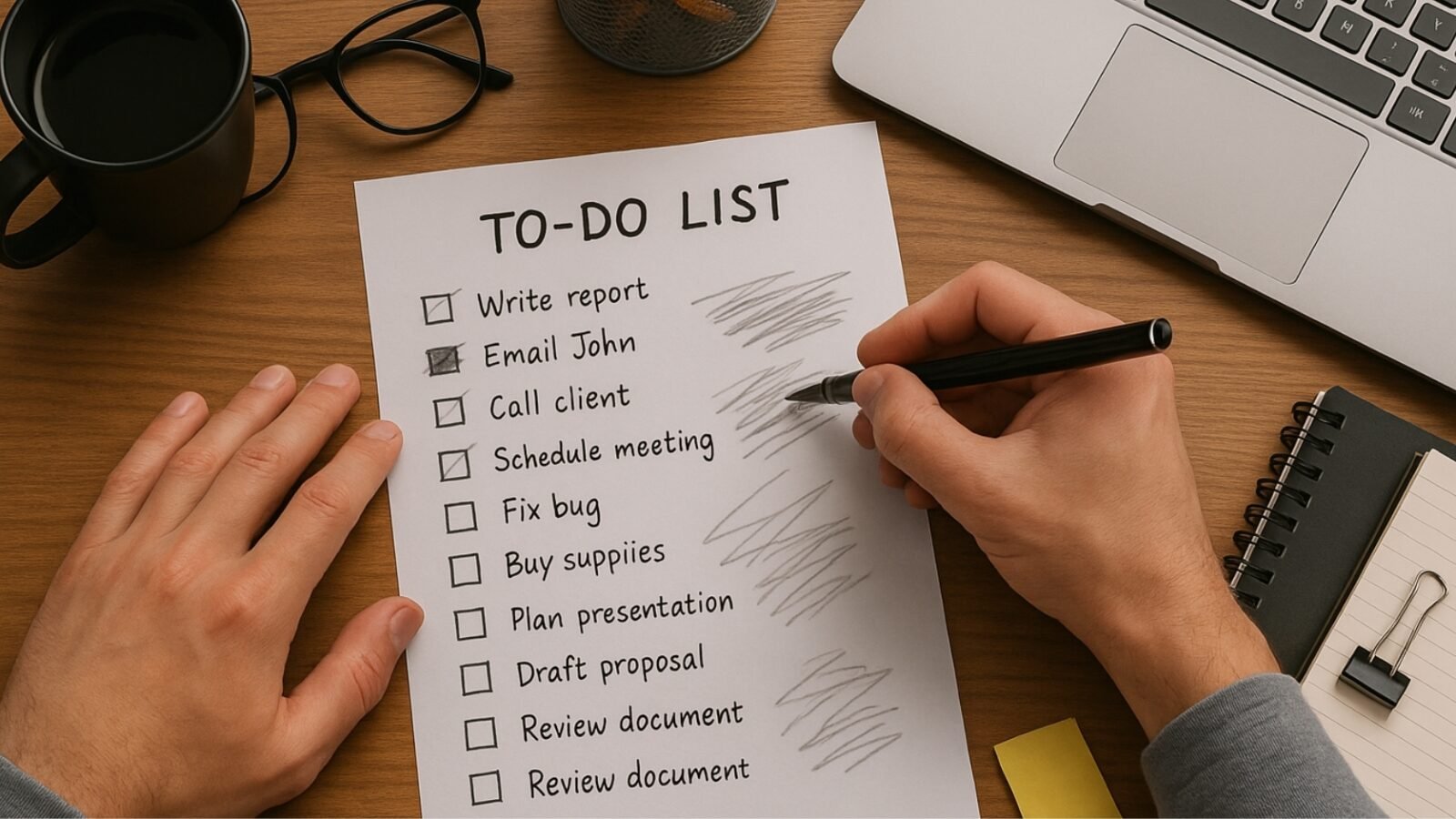
You know the task matters. You know delaying makes it worse. You do it anyway — then feel terrible about it, which somehow makes starting even harder. If you want to stop procrastinating on important tasks, the first thing to understand is that procrastination isn’t a time-management problem; it’s an emotion-management problem. And if you’re putting off growth goals specifically, break them into tiny reps — you can learn a new skill as a busy parent in 20-minute daily sprints once the dread is gone.
Research consistently shows we procrastinate to avoid negative feelings: boredom, anxiety, self-doubt, resentment, confusion. The task isn’t too big — it feels threatening. Once you get that, the fix stops being “try harder” (which never works) and starts being “make starting feel safe.” These tactics work best inside build a daily routine that sticks, because structure makes anti-procrastination habits automatic instead of effortful.
How Do I Stop Procrastinating on Important Tasks? Shrink the First Step Until It’s Laughable
The most reliable anti-procrastination technique ever studied is embarrassingly simple: make the first step so tiny you can’t say no. Not “write the report” — “open the document and write the title.” Not “clean the garage” — “put on shoes and stand in the garage.” Not “do taxes” — “gather the paperwork into one pile.”
This works because starting is the entire battle. Once you’re in motion, continuing feels natural — psychologists call it the Zeigarnick effect: your brain hates unfinished tasks and will nudge you to keep going. I’ve never once opened a document to “just write the title” and stopped there. The activation energy is the wall; everything after is downhill.
The Two-Minute and Ten-Minute Rules
- Two-minute rule: if a task takes less than two minutes, do it now. This alone clears half the nagging backlog that fuels guilt-procrastination.
- Ten-minute rule: commit to just ten minutes on the dreaded task. You’re allowed to stop after. You almost never will.
- Temptation bundling: pair the task with something you enjoy — favorite podcast while doing paperwork, good coffee while answering emails.
- Implementation intentions: don’t say “I’ll do it tomorrow.” Say “At 9 AM, at my desk, I’ll open the spreadsheet.” Specificity triples follow-through.
Fix the Emotion, Not Just the Schedule
Ask yourself why this particular task triggers avoidance. Common culprits:
It’s vague. “Work on project” is paralyzing; “draft the three bullet points for slide two” is doable. Break it down until the next step is obvious.
You’re afraid of doing it badly. Perfectionism is procrastination in a fancy coat. Give yourself permission to produce a deliberately bad first draft — you can fix bad, but you can’t fix blank.
It feels pointless. Connect the task to something you care about, even loosely. “This report funds the vacation” beats “because I have to.”
You’re exhausted. Sometimes procrastination is your body telling the truth. A 20-minute nap or a walk can do more than three hours of guilty staring. The the American Psychological Association’s research on procrastination has solid research on why rest isn’t laziness — it’s fuel.
Design Your Environment Like It Matters (It Does)
Willpower is unreliable; environments are not. Put your phone in another room during work blocks. Block distracting sites during focus hours. Lay out everything you need for the task the night before. Every friction point you remove is one less excuse your brain can grab. Environment design pairs well with habit structure — a reliable morning routine for people who hate mornings gives your focus blocks a consistent launchpad every day.
Systems That Make Starting Automatic
Motivation is unreliable, so build systems that don’t need it:
Time-block the dreaded task. Vague intentions die; calendar appointments survive. Put the task on your calendar like a meeting with your boss — same time, same place, non-negotiable. When the block arrives, you don’t decide whether to start; you just show up. Decision eliminated, procrastination starved.
Get an accountability partner. Tell one person what you’ll do and by when — a coworker, a friend, even a group chat. Social pressure is a feature, not a bug. Daily 5-minute check-ins (“did the thing / didn’t do the thing”) outperform elaborate productivity systems for most people.
Do a weekly review. Fifteen minutes every Sunday: what got done, what’s stuck, what’s the one priority for next week. Procrastination thrives in vagueness; a weekly review forces every task to have a next step and a owner (you). Most chronic procrastinators I know skip this and wonder why Monday feels overwhelming.
Track streaks, not perfection. Mark an X on a calendar for every day you work on the important thing. After a few days, the streak itself becomes the motivator — you won’t want to break the chain. And when you inevitably miss a day, the rule is simple: never miss twice. One miss is life; two is a new habit.
When Procrastination Is a Signal, Not a Flaw
Sometimes chronic avoidance means the goal is wrong, not you. If you’ve broken it down, fixed the environment, tried accountability — and still can’t start after weeks — ask the hard question: do I actually want this? Quitting the wrong goal isn’t procrastination; it’s clarity. The energy you free up goes straight into things that matter, and starting those feels effortless by comparison.
Start Today, Not Monday
The biggest procrastination trap is waiting for the perfect moment: Monday, the new month, “when things calm down.” Perfect moments don’t arrive — and waiting for one is just procrastination wearing a planning costume. Shrink today’s first step to two minutes and do it before dinner. A messy start today beats a perfect start that never comes, because action creates the motivation you’ve been waiting for. Monday-you will thank today-you.
The Practical Takeaway
Pick the one task you’ve been avoiding longest. Right now — not later — shrink its first step to something under two minutes and do that step today. Then schedule the next concrete step for a specific time tomorrow. Procrastination breaks when starting gets easier than avoiding, and you just made starting nearly effortless. The relief you’ll feel after is the real reward, and it compounds fast.




One thought on “How to Stop Procrastinating on Important Tasks”