How Long can I Drive on a Bad Wheel Bearing? Complete Answer
What Does a Bad Wheel Bearing Sound Like?
A failing wheel bearing almost always announces itself before it fails. The classic symptom is a humming or growling noise that gets louder as you speed up. Many drivers describe it as a low rumble, similar to driving on a coarse road surface — except it follows your car everywhere.
A few telltale details help you tell a bearing apart from other noises:
- The noise changes when you turn. If the hum gets louder when you steer left, the bad bearing is usually on the right side (and vice versa), because turning shifts weight onto the opposite wheel.
- The noise increases with speed but doesn’t change with engine RPM. Rev the engine in neutral — if the noise stays tied to road speed, it’s a bearing (or a tire issue), not the engine.
- You may feel vibration through the steering wheel or floorboard at highway speeds.
- In advanced stages, you’ll hear grinding or clicking — that’s metal-on-metal contact, and it means the bearing is badly degraded.
So, How Long Can You Really Drive on It?
Mechanics generally say a mildly worn bearing can last 1,000–1,500 miles under normal driving, but this is a rough estimate, not a promise. The real answer depends on:
1. How bad the damage is
A bearing that’s just starting to hum has lots of life left compared to one that’s grinding. The grinding stage means the ball or roller bearings inside have already broken down — failure could be days away.
2. Your driving conditions
Highway miles at steady speed are easier on a failing bearing than stop-and-go traffic, rough roads, or heavy loads. Potholes and hard cornering accelerate the wear.
3. Front vs. rear
Front bearings carry steering loads on top of vehicle weight, so they tend to fail faster than rear bearings once damaged.
The honest bottom line: the moment you notice the noise, start planning the repair. Driving it “a little longer” is common, but every mile adds risk. For a clear picture of what worn suspension and steering components cost to fix, see our how much to replace ball joints average price guide 2026“>ball joint replacement price guide.
What Happens If a Wheel Bearing Fails Completely?
A wheel bearing failure is not like running out of washer fluid — it can be genuinely dangerous. Here’s what can happen:
- Wheel lockup: The bearing can seize, stopping the wheel abruptly. At highway speed, that’s a recipe for a serious accident.
- Wheel separation: In extreme cases, the wheel can literally come off the vehicle.
- Brake and suspension damage: A loose, wobbling wheel chews up rotors, calipers, ABS sensors, and suspension components — turning a $300 bearing job into a $1,500+ repair.
- Loss of steering control: A front bearing failure can make the steering feel unpredictable or suddenly unresponsive.
This is why every mechanic will tell you the same thing: don’t gamble on a bad bearing. If the noise is loud or the wheel feels loose, don’t drive it — have it towed. Check how much does towing cost average price guide“>average towing costs so a tow bill doesn’t surprise you either.
Can You Test a Wheel Bearing Yourself?
Yes — there’s a simple driveway test:
- Jack up the car and support it securely on jack stands.
- Grab the tire at the 12 and 6 o’clock positions and try to rock it.
- If you feel play or looseness, the bearing (or a related component) is worn.
- Spin the wheel by hand — a rough, gritty feel or grinding noise confirms it.
Note that some looseness can also come from worn ball joints, so this test points you in the right direction but isn’t a definitive diagnosis on its own.
How Much Does Wheel Bearing Replacement Cost?
In 2026, expect to pay roughly:
- $250–$450 per wheel for most sedans and small SUVs (parts + labor).
- $400–$700+ for luxury vehicles, trucks, or bearings pressed into the hub (which takes more labor).
- Hub assemblies (bearing + hub sold together) run $80–$250 for the part alone.
Labor is usually 1–2 hours per wheel. Since both sides wear at similar rates, many shops recommend replacing bearings in pairs — ask for a quote on both. Staying on top of routine upkeep like how often should you service your car“>regular car servicing helps catch bearing wear early, before it damages neighboring parts.
Tips to Make Your Wheel Bearings Last Longer
- Avoid potholes and curbs — hard impacts are the #1 bearing killer.
- Don’t overload the vehicle beyond its rated capacity.
- Keep tires properly inflated and rotated — uneven tire wear puts uneven stress on bearings. See how often should you get your tires rotated complete answer“>how often to rotate your tires.
- Get alignments checked after hitting something hard.
Wheel Bearing Replacement: DIY or Shop Job?
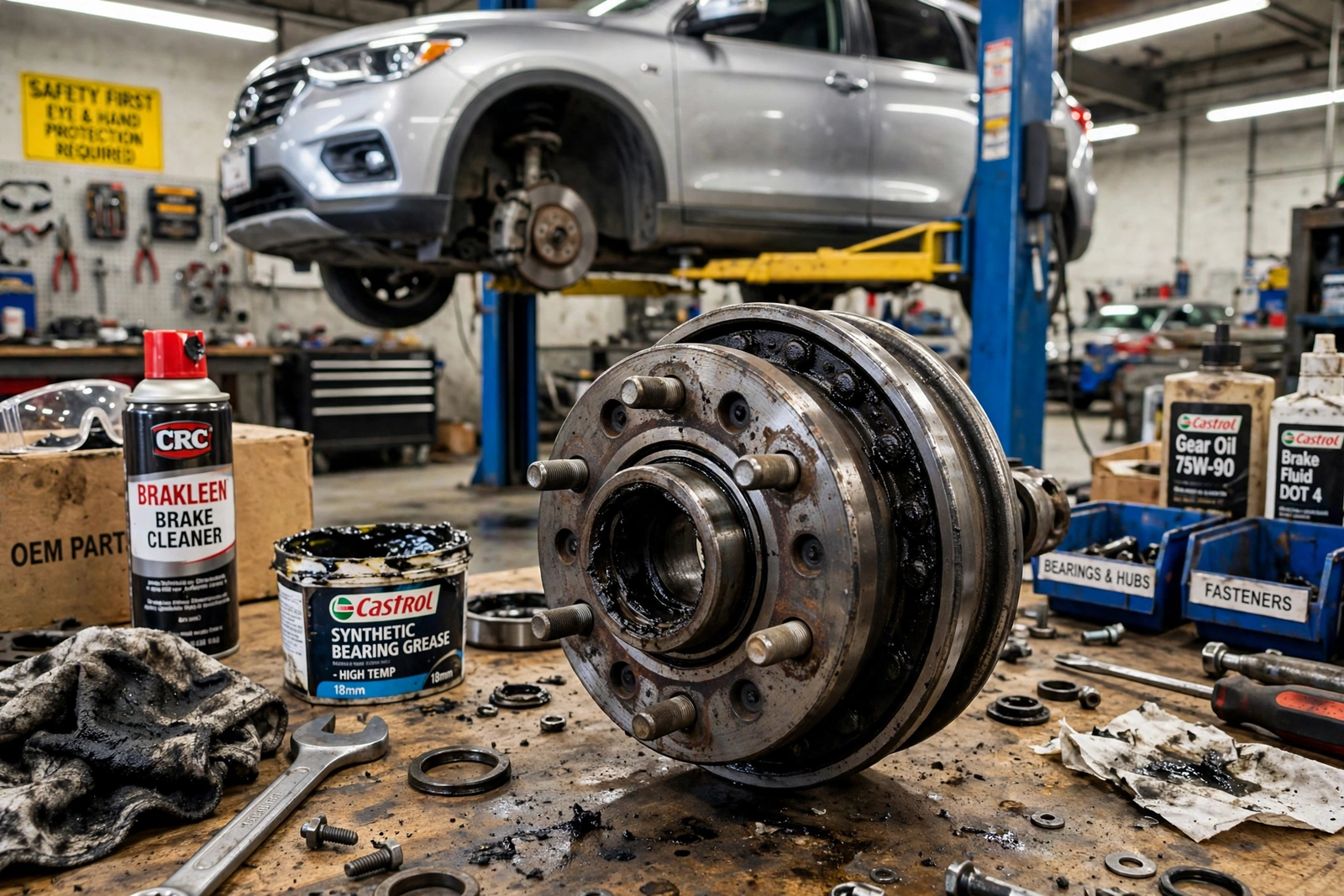
Replacing a wheel bearing is a moderate DIY job if you have a jack, jack stands, and basic tools — but there’s a catch. Many modern cars use press-in bearings that require a hydraulic press or a specialized bearing puller set. Bolt-on hub assemblies, on the other hand, are straightforward: unbolt the old hub, bolt on the new one.
If you’re attempting it yourself, budget 2–3 hours per wheel for your first time. You’ll need a torque wrench (axle nuts have specific torque specs — over-tightening destroys the new bearing), penetrating oil for rusted bolts, and patience. The YourMechanic guide to wheel bearing lifespan has model-specific tips worth reading before you start.
For most drivers, a shop is the safer bet. Get estimates from a few places — RepairPal’s wheel bearing cost estimator gives you a fair-price baseline for your zip code so you can spot an inflated quote. And if both sides are worn, ask about a package price for doing both at once.
OEM vs. aftermarket bearings
Quality matters enormously here. Premium brands (SKF, Timken, Moog, NSK) routinely last 100,000+ miles; bargain bearings sometimes fail within 20,000. The price difference is usually only $30–$60 per bearing — cheap insurance against doing the job twice.
Frequently Asked Questions
Can a bad wheel bearing damage my tires?
Yes. A wobbling wheel causes uneven, accelerated tire wear — you may see feathering or scalloping on the tread.
Will a bad wheel bearing trigger the ABS light?
It can. Many modern hub assemblies include the ABS wheel speed sensor, so bearing play or damage can set off the ABS warning light.
Is it safe to drive to the shop with a noisy bearing?
If the noise is a mild hum and the wheel feels tight, a short, careful drive to a nearby shop is usually acceptable. If there’s grinding, vibration, or looseness, call a tow truck instead.
Do wheel bearings fail suddenly?
Rarely without warning — they almost always hum or growl for weeks first. Sudden failure usually follows ignored warning signs.
How long do wheel bearings normally last?
Most last 85,000–100,000 miles, though quality bearings on well-maintained cars can exceed 150,000 miles.
Can I replace just one wheel bearing?
Yes, but if one side has failed from age, the other is often close behind. Many drivers replace both for peace of mind.