How to Donate My Salvaged Non-active Title Motorcycle: Step-by-Step Guide (2026)
Can You Donate a Motorcycle With a Salvage Title?
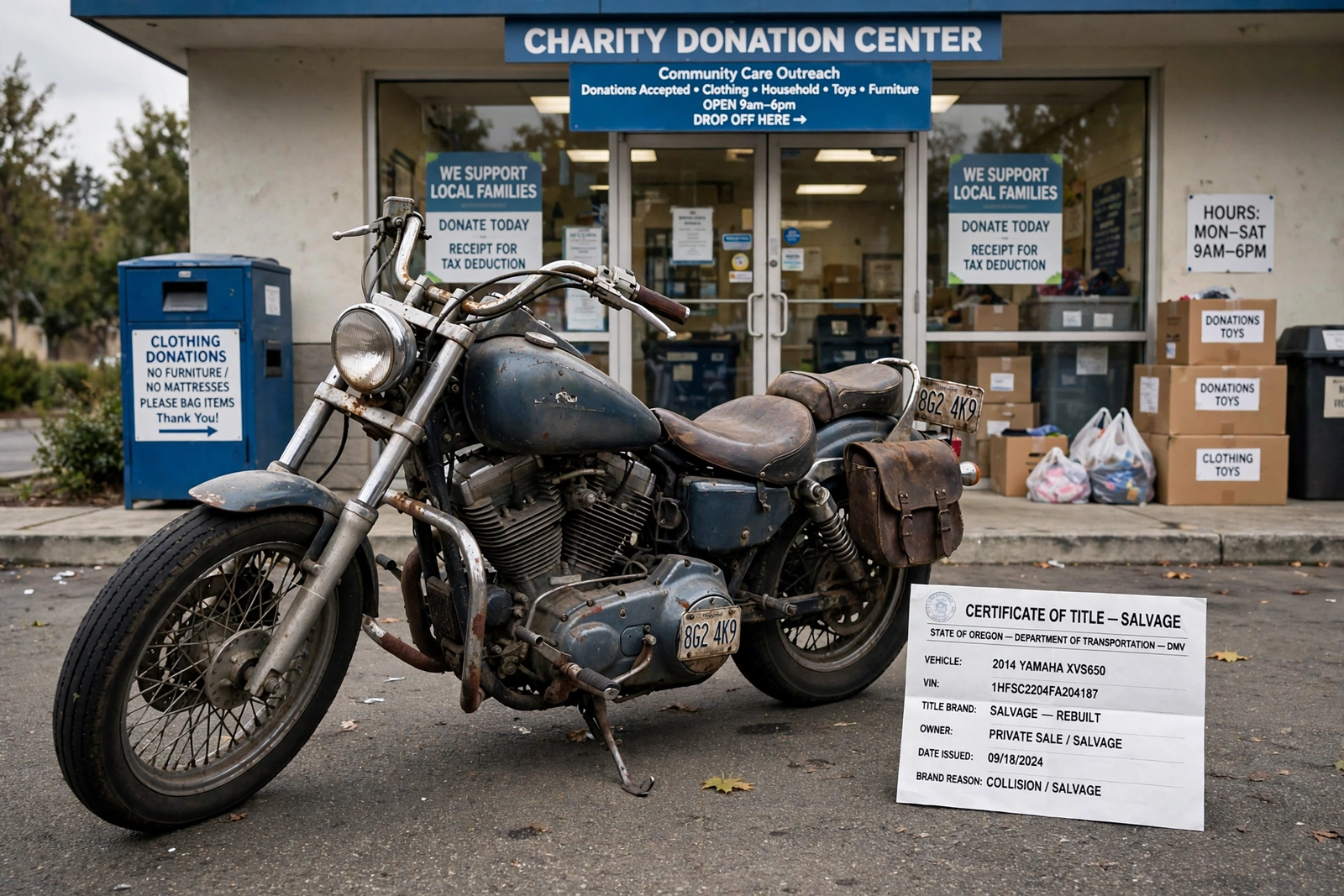
Yes, it is legal in most states, but it takes more work than donating a clean-title car. Many large vehicle-donation programs only accept clear titles because salvage vehicles are harder to resell and carry more paperwork. That does not mean you are stuck: plenty of smaller charities, veteran organizations, and motorcycle-specific nonprofits accept salvage-title bikes, especially if the motorcycle runs or has valuable parts.
The key distinction is title status. A salvage title means an insurer declared the bike a total loss. A rebuilt title means a salvage bike was repaired and passed inspection. A non-active or inactive title usually means the registration lapsed, the bike was declared non-operational, or the title was surrendered, which is common for project bikes and long-stored motorcycles. Charities treat each status differently, so know exactly which one you have before you start calling.
What “Non-Active Title” Means for Your Donation
“Non-active” is not a single legal term; it is how owners describe several situations: a title on non-operational (planned non-operation) status, an expired registration with no current plates, or a title that was never transferred into your name. Each creates a different paperwork path:
- Non-operational status: easiest case. You hold a valid title; only the registration is inactive. Most charities that accept salvage bikes will take these.
- Title never transferred to you: harder. You generally cannot donate a bike you do not legally own. Transfer the title into your name first, even if it costs a small DMV fee.
- Lost title: apply for a duplicate title from your state DMV before donating. Charities cannot process a donation without a title in most states.
- Lien on the title: the lien must be satisfied first. No charity will take a bike the bank still has a claim on.
Check your status through your state’s DMV or title office. In Texas, for example, the Texas DMV’s title information explains how to resolve inactive and bonded title situations. Whatever your state, get the title clean and in your name before you contact charities; it makes everything downstream ten times easier.
Step-by-Step: Donating Your Salvaged Motorcycle
Step 1: Confirm the title status and your ownership
Pull the title out and read it carefully. Is your name on it? Is there a lien listed? Is it branded salvage, rebuilt, or clean? If anything is unclear, call your DMV with the VIN. Do not guess; signing the wrong line or donating a bike you do not legally own creates real legal headaches.
Step 2: Find charities that accept salvage-title motorcycles
Call before you commit. Ask three specific questions: Do you accept motorcycles with salvage or rebuilt titles? Do you accept non-running bikes? Is towing free in my area? National programs like Goodwill, the American Red Cross vehicle program, and various veteran charities run vehicle donations, but acceptance policies vary by local chapter, so confirm with the actual office handling your pickup. Motorcycle-specific and local charities are often more flexible than the big national call centers.
Step 3: Get the donation terms in writing
Ask how the charity will use the bike: will it be repaired and used, given to someone in need, or sold at auction for parts? This matters for your tax deduction, as explained below. Also confirm the pickup is free; reputable programs tow at no cost to you within their service area.
Step 4: Prepare the bike and the paperwork
Remove your personal belongings, license plate (in most states the plate stays with you, not the bike), and any toll tags. Gather the title, a bill of sale or donation receipt form, and your ID. Do not sign the title until the tow driver or charity representative is present and you have verified their identity.
Step 5: Sign the title over correctly
Fill in the charity’s full legal name (not an abbreviation) as the buyer/transferee, enter the odometer reading, and sign exactly as your name appears on the title. Never sign a blank or “open” title; that is how vehicles end up title-jumped into legal limbo. Take a photo of the signed title for your records.
Step 6: Get your receipt and file release of liability
Get a written receipt at pickup showing the charity’s name, tax ID, the bike’s VIN, and the date. Then file a release of liability or notice of transfer with your DMV, usually online in minutes. This is critical: until the state records the transfer, you are still legally responsible for the bike. If it gets ticketed or abandoned, those problems come to you.
Step 7: Cancel insurance and close it out
Once the transfer is recorded, cancel the motorcycle’s insurance policy. Keep copies of everything (title photo, receipt, release of liability confirmation, and later the IRS Form 1098-C) for at least three years in case of an audit.
Paperwork Checklist
| Document | Why you need it |
|---|---|
| Vehicle title in your name | Legal proof of ownership; required to transfer |
| Government-issued photo ID | Charity verifies you are the titled owner |
| Donation receipt from charity | Proof of donation for your tax records |
| Release of liability / notice of transfer | Ends your legal responsibility with the DMV |
| IRS Form 1098-C (if sold over $500) | Charity sends this; sets your deduction amount |
| Lien release (if applicable) | Proves no lender has a claim on the bike |
Tax Deduction Rules for Vehicle Donations
Donating a vehicle can earn you a charitable tax deduction, but the rules are stricter than most people expect. Under IRS rules on charitable vehicle donations, the key threshold is $500:
- If the charity sells the bike for $500 or less, you may generally deduct the fair market value up to $500.
- If the charity sells it for more than $500, your deduction is generally limited to the actual gross sale price, which the charity reports to you on Form 1098-C. You cannot claim the Kelley Blue Book value if the bike sold for less.
- If the charity keeps and uses the bike (for example, a vocational program that repairs it for training), you may be able to deduct fair market value, and the charity will certify the intended use.
Salvage-title motorcycles almost always sell at auction for parts, which means modest sale prices and modest deductions. Be realistic: a wrecked bike might bring $200 to $800 at auction. You must itemize deductions to benefit at all, and donations over $5,000 require a qualified appraisal. When in doubt, talk to a tax professional before assuming a big write-off.
What Happens to Your Donated Motorcycle
Most donated salvage bikes go to salvage auctions, where dismantlers buy them for parts. Running bikes in decent shape may be repaired and resold, with proceeds funding the charity’s programs. Some vocational and rehabilitation charities use donated bikes directly as training projects for mechanics. None of these outcomes is “better” for you tax-wise in a predictable way; the sale price is what it is. What matters is choosing a legitimate, registered 501(c)(3) charity so your donation actually does good and your deduction holds up.
Alternatives If No Charity Will Take It
- Sell it for parts or as a project bike. List it on Facebook Marketplace or Craigslist with honest photos and the salvage title disclosed. Part-outs often bring more than whole-bike sales.
- Sell to a salvage yard. Fast and simple; expect $100 to $500 depending on the bike’s weight and part value.
- Trade it in. Some powersports dealers take salvage-title bikes as trade credit. Read how trading in a vehicle works step by step for the negotiation playbook, which applies to bikes too.
- Donate to a school or training program directly. Technical colleges with motorcycle mechanic programs sometimes accept bikes that national charities reject.
Whatever you choose, never abandon the bike or sign the title over to a stranger informally. An improperly transferred salvage motorcycle can generate tickets, tolls, and liability in your name for years. And if the bike is ever made roadworthy again, whoever owns it will need to think about keeping up with regular service just like any other vehicle.
Frequently Asked Questions
Can I donate a motorcycle that does not run?
Yes, many charities accept non-running motorcycles, especially if they have parts value. Be upfront about the condition when you call; the charity needs to know whether to send a flatbed and whether the bike is worth their towing cost.
Do I need a title to donate a motorcycle?
In most states, yes. A charity generally cannot legally take ownership without a title transfer. If you lost the title, apply for a duplicate from your DMV first; it usually costs $15 to $30 and takes a few weeks.
How much can I deduct for donating a salvage motorcycle?
Usually the actual auction sale price, which for salvage bikes is often $200 to $800. The charity reports this to you on Form 1098-C. Do not claim a higher fair-market value unless the charity certifies it kept and used the bike.
Is towing really free?
With reputable national and regional programs, yes, within their service areas. If a “charity” asks you to pay for towing or charges processing fees, treat it as a red flag and find another organization.
Can I donate a motorcycle with a lien on it?
No. The lien must be paid off and released before donation. A charity will not accept a vehicle that a lender still has a legal claim on.
What if the charity never sends Form 1098-C?
Follow up in writing. Charities are required to provide it within 30 days of the sale for donations over $500. Without it, you cannot claim a deduction above $500, so keep your pickup receipt and correspondence as backup.