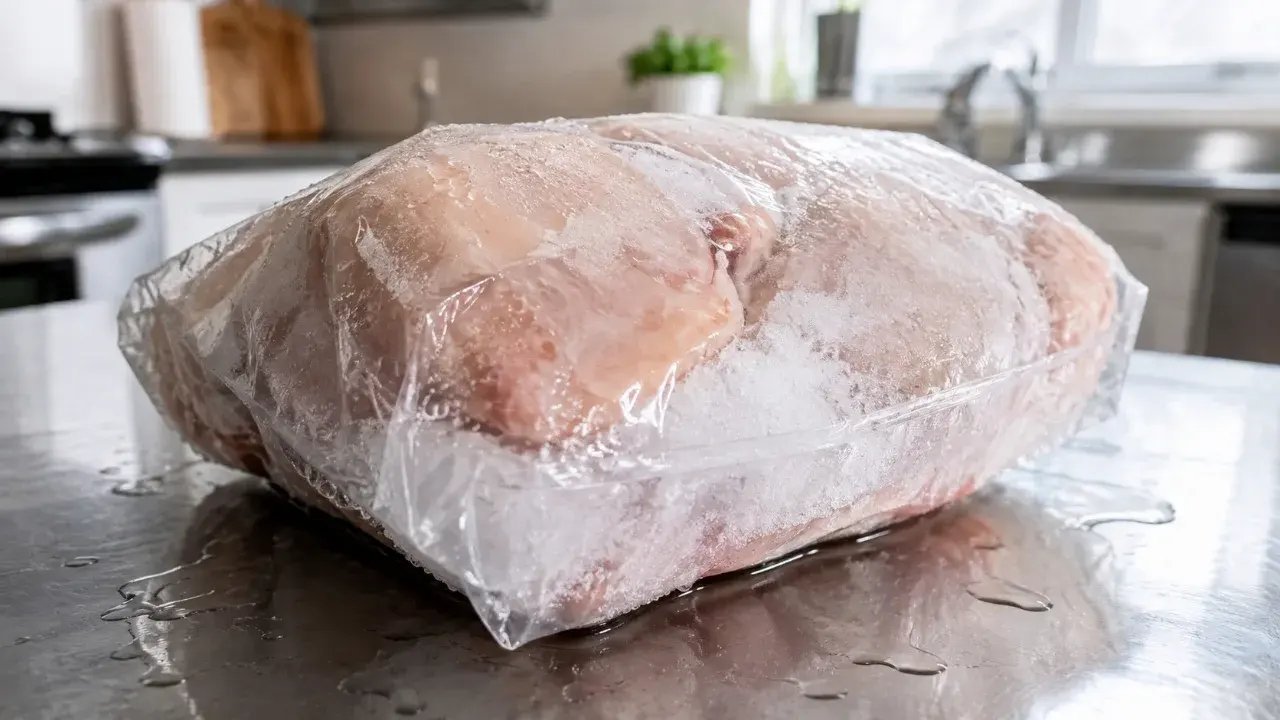
It’s 4 PM, dinner needs to happen at 6, and the chicken is a solid brick in the freezer. We’ve all been there. Knowing how to defrost meat safely and quickly is one of those kitchen skills that pays off weekly — because the difference between the safe methods and the risky ones isn’t obvious, and the risky ones are exactly what a rushed cook is tempted to do.
Let’s get the cardinal rule out of the way: meat should never sit at room temperature to thaw. The outside of the meat enters the bacterial danger zone (40–140°F) hours before the center thaws. The USDA is unambiguous about this. Here are the three methods they actually endorse, from best to fastest.
Method 1: Refrigerator Thawing (Safest, Slowest)
Move the frozen meat to the fridge and let it thaw gradually at a safe temperature. This is the gold standard — zero risk, best texture, and the most forgiving if plans change (thawed meat keeps 1–2 days in the fridge before cooking; ground meat should be cooked within a day).
Timing: roughly 24 hours per 4–5 pounds. A pound of chicken breasts or ground beef thaws overnight; a whole turkey needs days. Place it on a rimmed plate or in a container on the bottom shelf to catch drips — cross-contamination from raw meat drippings is a real hazard.
The habit that fixes everything: move tomorrow’s meat to the fridge tonight. It takes ten seconds and eliminates 90% of thawing emergencies.
Method 2: Cold Water Thawing (Safe and Fast)
This is the answer to the 4 PM emergency. Submerge the meat — in its sealed packaging or a leakproof zip-top bag with the air pressed out — in a bowl of cold tap water. Not warm, not hot: cold. Change the water every 30 minutes to keep it cold and moving.
Timing: about 30 minutes per pound. Chicken breasts thaw in 1–2 hours; a pound of ground beef in about an hour. Small cuts like steaks or pork chops can be ready in under an hour.
Rules: the meat must be in waterproof packaging (waterlogged meat cooks badly and breeds bacteria), the water must stay cold, and meat thawed this way must be cooked immediately — no refreezing, no “I’ll cook it tomorrow.” FoodSafety.gov lists this as an approved method with exactly these conditions.
Method 3: Microwave Defrosting (Fastest, Most Uneven)
Use your microwave’s defrost setting, following its weight guidelines. It works in minutes, but it thaws unevenly — edges start cooking while the center stays frozen. Rotate and break apart the meat as it thaws, and cook it immediately afterward, no exceptions. Honestly, I reserve this for true emergencies; the texture penalty is real, especially for steaks.
What Never to Do
- Counter thawing. The outside sits in the danger zone for hours. This is the most common unsafe habit and the one to break first.
- Hot water thawing. Feels faster, but the outer layers cook slightly while warming into prime bacterial territory. Cold water is nearly as fast and actually safe.
- Thawing, refreezing, thawing again. Every cycle degrades texture and extends the time in the danger zone. Cook it first, then freeze the cooked result — that’s fine.
- Leaving it in a hot car “to thaw on the way home.” Just… don’t.
Can You Cook Meat From Frozen?
Yes — and this surprises people. The USDA says it’s safe to cook meat from frozen; it just takes about 50% longer, and you can’t do it for everything. It works well for: chicken breasts in the oven, ground beef (brown it from frozen, breaking it apart as it thaws), and frozen shrimp (thaw under cold running water in minutes anyway). It does not work well for: large roasts (burnt outside, raw inside), or anything in a slow cooker — slow cookers warm too gradually, keeping the meat in the danger zone too long. If you’re planning slow cooker pulled pork, thaw the pork first.
How to Defrost Meat Safely and Quickly: A Cheat Sheet
- Planned ahead: fridge, 24 hrs per 4–5 lbs
- Forgot (hours available): sealed bag in cold water, change water every 30 min
- Forgot (minutes available): microwave defrost, then cook immediately
- Truly desperate: cook from frozen, add 50% time (not in slow cooker)
Freezing and Meal Prep: The Thawing Connection
Smart freezing makes thawing easier – the two skills are a system:
Freeze in usable portions
Freeze meat in the portions you will actually cook: individual chicken breasts separated by parchment, ground beef flattened in 1-pound bags, stew meat in recipe-sized bags. A giant 5-pound frozen block is a thawing nightmare; five 1-pound flat packs thaw in an hour in cold water. The extra two minutes of portioning at freeze time saves an hour at cook time. Label each with weight and date – “chicken thighs, 1.5 lb, 10/17” – so you can grab exactly what the recipe needs.
The flat-freeze method
For ground meat, soups, and sauces: fill zip-top freezer bags, press flat (about an inch thick), squeeze out air, and freeze flat on a sheet pan. Flat packs thaw dramatically faster than bulky containers – a flat pound of ground beef thaws in cold water in about an hour versus 3+ for a thick block. They also stack like files, turning a chaotic freezer into an organized drawer. This one technique improves both your freezing and your thawing simultaneously.
Thawing for meal prep day
If Sunday is prep day, Saturday night is move-to-fridge night. Set a phone reminder – the “forgot to thaw” emergency is almost always a planning failure, not a time failure. Keep a running “thaw tonight” list on the fridge during prep weeks. And build one freezer-to-oven meal into every prep rotation (frozen lasagna, frozen enchiladas) as insurance – the meal that needs no thawing at all is the ultimate backup plan.
Refreezing: the real rules
Meat thawed in the fridge can be refrozen without cooking (quality dips slightly, safety is fine). Meat thawed in cold water or the microwave must be cooked before refreezing. Cooked thawed meat can be refrozen as a cooked dish. The pattern: every thaw method has a next step, and the fridge method is the most forgiving. When in doubt, cook it – cooked food is always freezable, and a cooked meal in the freezer is never a waste.
The Takeaway
Build the “fridge tonight” habit and you’ll rarely need the emergency methods. But when you do, cold-water thawing is your best friend: fast, safe, and kind to texture. Keep the water cold, keep the packaging sealed, cook immediately — and dinner is saved. For the other half of the freezer equation, see our guide to freezing leftovers without freezer burn.