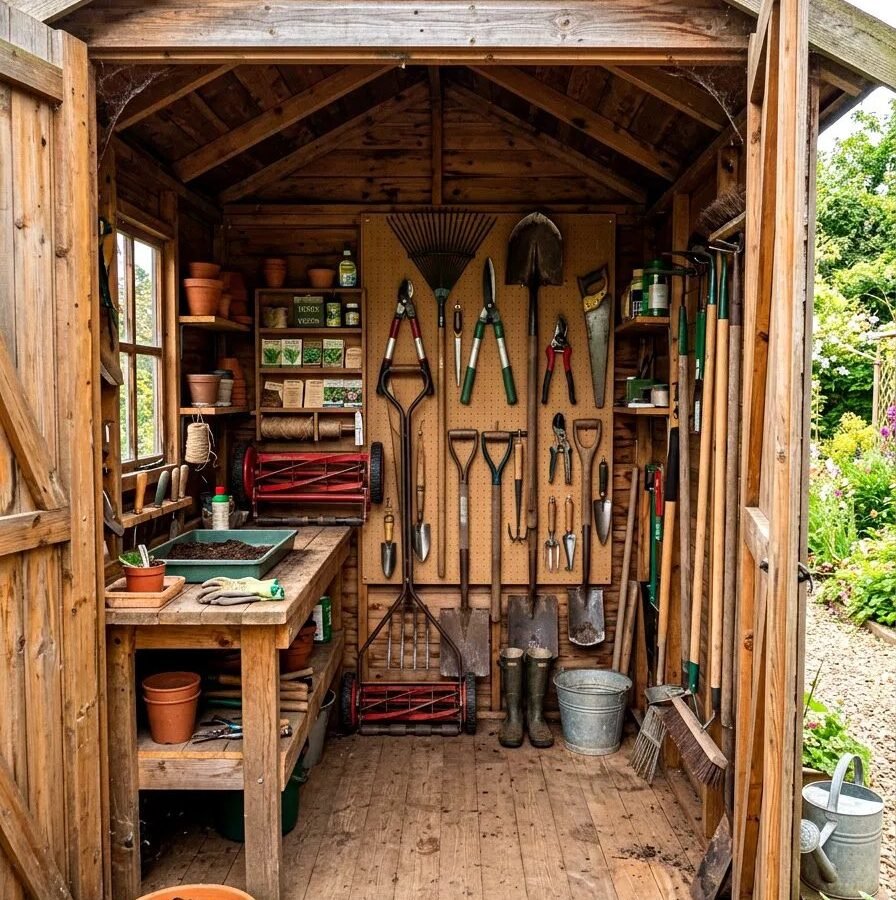
Small sheds are where good intentions go to become chaos. You buy the shed to get organized, fill it in a weekend, and within a year you can’t reach the back without a spelunking expedition. Mine reached critical mass when I had to move six things to reach the lawnmower, every single time.
The best way to store tools in a small shed isn’t a bigger shed; it’s using vertical space ruthlessly and giving every tool a visible, accessible home. Here’s the system that tamed mine.
Best Way to Store Tools in a Small Shed: Think Vertical
In a small shed, the floor is precious and the walls are free. Every tool that can hang should hang. Pegboard on the largest wall ($20-$30) holds hand tools visibly; French cleat systems ($40-$60 in lumber) hold heavier items and rearrange endlessly as your collection changes. I switched from piled tools to a cleat wall and effectively doubled my usable space.
Overhead is the other frontier. Ceiling-mounted racks ($40-$80) hold ladders, long lumber, and seasonal items above head height. In an 8×10 shed, the ceiling holds as much as a wall. Just keep heavy items low and light items high for safety.
- Pegboard the main wall. $20-$30. Every hand tool visible and reachable. Outline shapes so missing tools are obvious.
- Install French cleats. $40-$60. Modular, strong, rearrangeable. Holds heavy tools that pegboard can’t.
- Use the ceiling. $40-$80 racks for ladders, lumber, and seasonal gear. As much space as a wall, completely free.
- Hang long tools. Rakes, shovels, and brooms on wall hooks or a dedicated rack. Never lean them in corners again.
- Magnetic strips for metal tools. $10-$15. Screwdrivers, wrenches, and bits on a wall strip: visible and grabbable.
- Door storage. The inside of the shed door holds slim organizers for gloves, tapes, and small supplies.
Zones and Small-Item Systems
Divide the shed into zones even in tiny spaces: garden tools, power tools, lawn care, and hardware/supplies. Each zone gets a defined area, even if it’s just one wall section. Zoning prevents the slow mixing that turns organized sheds back into chaos; when something’s out of place, its zone tells you where it belongs.
Small items need containment or they colonize every surface. Clear stackable bins ($5-$10 each) with labels for hardware, fasteners, and supplies. A small-parts organizer ($15-$25) for screws and nails. And a strict rule: small items live in containers, never loose on shelves. The five minutes of labeling saves hours of searching.
- Create mini-zones. Garden, power tools, lawn care, supplies. Even in 8×10, zones keep order.
- Clear labeled bins. $5-$10 each. See contents without opening. One category per bin, always labeled.
- Small-parts organizer. $15-$25 for screws, nails, fasteners. Ends the jar-of-mixed-hardware era.
- Contain or chaos. Small items live in containers, never loose. This rule alone maintains order.
- Rolling cart for projects. $40-$60. Active project supplies in one movable spot instead of spread everywhere.
- Keep the floor clear. Floor space is for large equipment and walking. Everything else goes up.
Climate, Security, and Maintenance
Sheds face temperature swings and moisture that garages don’t. Store power tool batteries indoors (heat and cold kill them), keep hand tools lightly oiled to prevent rust, and ensure ventilation to reduce condensation. A $15 battery-powered hygrometer tells you if moisture is a problem; above 60% humidity consistently, add ventilation.
Secure the shed: a quality hasp and padlock ($20-$30), and consider that sheds are easy burglary targets, so don’t store irreplaceable valuables. Finally, do a seasonal 20-minute reset: return strays to zones, toss broken items, and rehang anything that’s migrated. Small sheds stay organized only with light, regular maintenance.
- Store batteries indoors. Temperature extremes destroy lithium batteries. Bring them inside between uses.
- Oil metal tools. A light wipe with oil prevents rust in humid sheds. Annual 10-minute job.
- Ventilate. Vents or a small solar fan reduce condensation that rusts tools and rots wood.
- Lock it properly. $20-$30 hasp and padlock. Sheds are easy targets; don’t make it easier.
- Seasonal 20-minute reset. Return strays, toss junk, rehang migrants. Light maintenance beats annual overhauls.
- Don’t store chemicals carelessly. Fertilizers, fuels, and pesticides need sealed containers away from ignition sources.
Frequently Asked Questions
How do I organize a very small shed?
Go vertical: pegboard, French cleats, ceiling racks, and door organizers. Zone the space by activity, contain small items in labeled bins, and keep the floor clear except for large equipment.
How do I keep tools from rusting in a shed?
Ventilate to control moisture, oil metal surfaces lightly, store batteries indoors, and fix any roof leaks immediately. A hygrometer ($15) tells you if humidity is the problem.
What should not be stored in a shed?
Power tool batteries (temperature damage), important documents, valuables (theft risk), and paint (temperature swings ruin it). Also keep fuels and chemicals properly sealed and separated.
Budgeting This Project the Smart Way
Home projects have a well-earned reputation for costing more than expected, but that’s usually a planning failure, not bad luck. I’ve learned to budget with a simple system that absorbs surprises without derailing the project or my finances.
- Add a 20% contingency. Every project uncovers something: a stripped screw, a second coat, a forgotten supply. Budgeting the buffer upfront keeps it stress-free.
- Price everything before starting. A complete materials list with real prices prevents the slow bleed of unplanned hardware-store trips that quietly double costs.
- Buy quality where it counts. Spend on the things that determine results (paint, fasteners, blades); save on the things that don’t (drop cloths, disposable brushes).
- Track as you go. A running total on your phone keeps spending honest. It’s much easier to adjust mid-project than to be shocked at the end.
- Go deeper: Review CPSC home workshop safety tips for authoritative detail on this topic.
The bottom line: The best way to store tools in a small shed is vertical thinking: pegboard and French cleats on walls, racks on the ceiling, zones by activity, and small items in labeled bins. Keep the floor clear, protect against moisture, and do a seasonal reset. A small shed organized this way holds more than a big shed left to chaos.