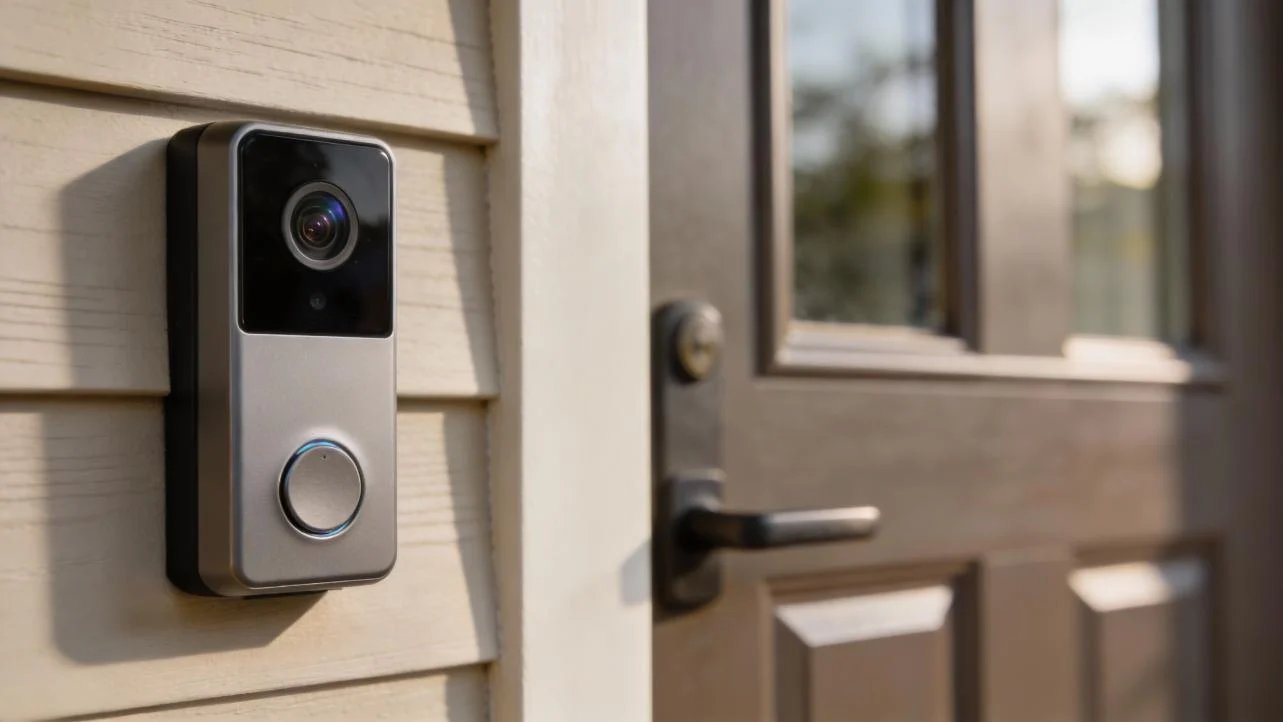
Most video doorbells have a dirty secret: the hardware is just the entry fee. Ring and Nest want $5–$15/month forever to save your videos, detect packages, and do the things you actually bought the doorbell for. But a video doorbell without a monthly subscription is absolutely possible — several excellent options store video locally and charge $0/month for full features.
Why subscriptions exist (and how no-fee doorbells avoid them)
Cloud storage costs money, so Ring/Nest charge you rent for it. No-subscription doorbells skip the cloud: they record to a base station or hub in your home (local storage), sometimes with optional microSD. You get video history, motion alerts, and two-way talk with no monthly bill. The trade-off: if a thief steals the base station too, the footage goes with it — and remote viewing depends on your home internet being up.
The best video doorbells without a monthly subscription: top picks
1. Eufy Video Doorbell S330 (Battery) — best overall
~$200 (often $150 on sale). Eufy’s flagship records 2K video to the included HomeBase 3 with 16 GB built-in storage (expandable to 16 TB — yes, terabytes). No monthly fee for anything: person detection, package detection, activity zones, and video history all work free. Battery lasts 3–6 months per charge. The Eufy app is polished, and HomeBase doubles as a hub for Eufy cameras. This is the no-subscription gold standard. See Eufy’s official site for current models and pricing.
2. Reolink Video Doorbell — best budget wired option
~$90–$110. Reolink’s doorbell records to microSD (up to 128 GB) right in the unit — no hub needed — and supports PoE or battery/wired power options. The app is less slick than Eufy’s, but the video quality punches above the price and there’s genuinely no fee for anything. Great for the tech-comfortable buyer.
3. Eufy Video Doorbell C31 — best cheap no-fee pick
~$80–$100. A simpler Eufy with local storage and no subscription. Fewer smart features than the S330 (no package detection), but it nails the basics: clear video, fast alerts, two-way talk, free local recording.
4. TP-Link Tapo D230S1 — best value bundle
~$90 including the hub. 2K video, local storage on the hub, no subscription for core features. Tapo’s ecosystem (bulbs, plugs, cameras) is excellent value if you’re building out a smart home on a budget.
What you give up vs. Ring/Nest
Honest comparison:
- Advanced AI features: Ring’s familiar-face detection and Nest’s intelligent alerts are genuinely good — and paywalled. Eufy’s on-device AI is decent but a step behind.
- Cloud backup: no-subscription means no offsite copy. Mitigate with a hidden base station and, for Eufy, the expandable storage.
- Ecosystem: if your whole home is Alexa+Ring or Google Nest, mixing brands adds app friction.
- Neighborhood features: Ring’s Neighbors app is a real community tool with no equal on the no-fee side.
Can you use Ring without a subscription?
Yes, sort of — a Ring doorbell without Ring Protect still gives live view, motion alerts, and two-way talk. What you lose: video recording/history, snapshots, and person/package alerts. For many people that’s the whole point of the doorbell, which is why the no-fee alternatives above are usually the better buy if you refuse subscriptions on principle.
Installation tips
- Battery models install in 15 minutes with two screws — no wiring. Just keep the chime/hub within good WiFi range.
- Wired models need an existing doorbell transformer (16–24 VAC). Check yours before buying; older homes sometimes have underpowered 10V transformers that need a $15 upgrade.
- WiFi signal at the door is the #1 cause of doorbell complaints. Test with your phone at the mounting spot — if your WiFi is flaky there, fix that first or the fanciest doorbell will disappoint.
- Mount at ~48 inches high for the best face/package framing.
Privacy: who sees your doorbell footage?
Worth thinking about before you mount a camera on your front door: where does the footage go, and who can access it? With local-storage doorbells (Eufy, Reolink), your video stays in your house — no company servers, no employee access, no data resale. That’s a genuine privacy advantage over cloud doorbells. But you’re still recording a public-facing area, which carries responsibilities: in the US, recording video of your own doorstep is generally legal, but audio recording has stricter rules in some states (so-called two-party consent states). Be a good neighbor: angle the camera at your property, not the neighbor’s windows; tell household members and regular visitors it’s there; and check your HOA rules — some restrict visible cameras. The best doorbell is one that protects your packages without souring the neighborhood.
Finally, think about power redundancy: a battery doorbell with a dead battery protects nothing. Set a calendar reminder to check battery levels monthly, or go wired if you have the transformer — a wired no-subscription doorbell is the closest thing to set-and-forget home security that exists under $150.
The bottom line
The video doorbell that works best without a monthly subscription in 2026 is the Eufy S330 — full features, local storage, $0/month. Budget buyers should look at the Reolink doorbell or Eufy C31. You’ll sacrifice some AI polish and cloud backup versus Ring/Nest, but you’ll never pay a monthly fee — and over five years, that’s $300–$900 back in your pocket. And if subscription fatigue extends beyond doorbells, our guide to canceling forgotten subscriptions finds the rest.


