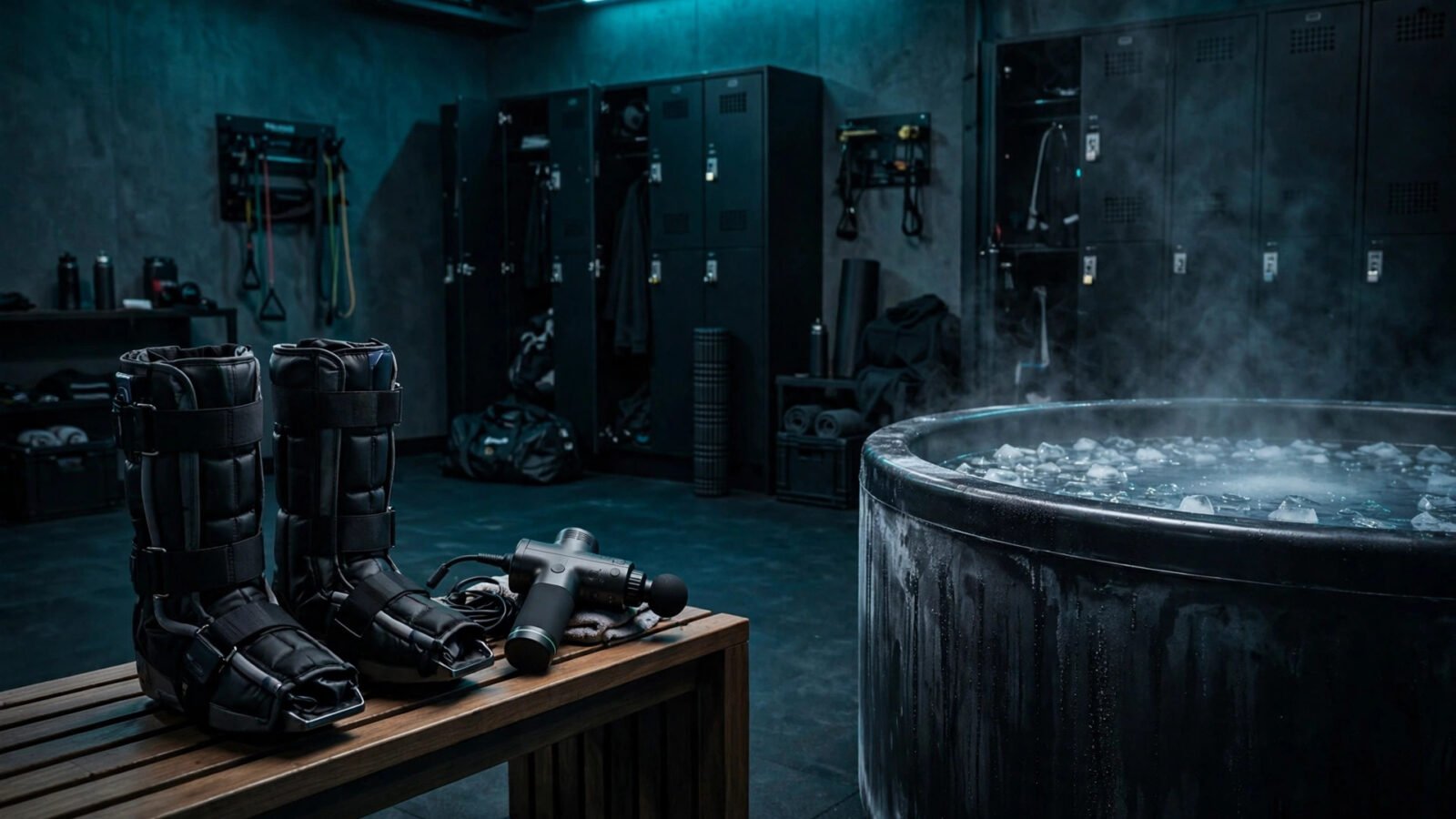
There was a time when an athlete’s entire recovery plan could fit on an index card: ice bath, protein shake, eight hours of sleep, repeat. The best-equipped locker rooms in America had a whirlpool, a stretching table, and a trainer with a roll of athletic tape. That was the whole toolkit.
Fast-forward to 2026 and the picture looks nothing like that. A high school sprinter in Ohio checks her readiness score before practice. A weekend marathoner in Austin straps into pneumatic compression boots while answering emails. Cold-plunge tubs have joined the Peloton bike as the status symbol of the serious suburban garage gym. Recovery technology — once the exclusive domain of professional training staffs — has become a mainstream, multi-billion-dollar industry, and it changed not just how athletes recover, but how ordinary people think about training itself.
This is the story of how recovery went from an afterthought to the centerpiece of modern athletic culture — and what the shift means for anyone who works out.
When Recovery Was Just “Rub Some Dirt on It”
For most of sports history, recovery was an act of faith. Coaches preached ice baths and long stretches because that was what coaches had always done. The science of recovery barely existed; trainers relied on instinct and tradition. If you asked a 1990s NFL lineman about his recovery protocol, he’d laugh — recovery was eating and sleeping and showing up sore the next day.
The first real crack in that mindset came from the longevity outliers. Tom Brady’s TB12 method made “pliability” a household word and suggested that recovery was a discipline, not an accident. LeBron James famously said he spends over a million dollars a year on his body — trainers, chefs, hyperbaric chambers, cryotherapy. Cristiano Ronaldo’s reported sleep routine, with multiple short naps through the day, sounded eccentric until sports scientists started explaining why it worked. Superstars turned recovery into spectacle, and fans started paying attention.
The Wearables That Turned Sleep Into a Stat
The single biggest driver of mainstream recovery tech was the wearable revolution. WHOOP straps, Oura rings, and Garmin watches transformed invisible bodily processes into numbers people could obsess over: heart-rate variability, sleep stages, respiratory rate, “readiness” scores. Suddenly recovery wasn’t something you felt — it was something you measured.
Professional teams were early adopters. By the early 2020s, dozens of NBA, NFL, and MLB organizations were issuing wearables to players, using the data to flag fatigue before it became injury. That trickled down fast. A device that started as a pro-team tool became a $30-a-month subscription for anyone with a 5K on the calendar.
The real cultural shift was sleep. For decades, athletes treated sleep as negotiable; wearables made it undeniable. Research published through the National Institutes of Health has shown that athletes who sleep fewer than eight hours a night face significantly higher injury risk, and that finding has reshaped everything from youth sports scheduling to pro travel routines. If you want to understand how to recover faster after a hard workout, the honest answer starts with a dark, cool bedroom — no gadget required.
Readiness Scores Changed the Conversation
The “readiness score” may be recovery tech’s most important invention — not because it’s perfect, but because it gave amateurs permission to rest. Runners who used to feel guilty about taking a day off now had a number telling them their body needed it. Coaches report that the single biggest behavioral change from wearables isn’t harder training; it’s smarter rest. People finally treat recovery as part of the program instead of the absence of one.
Compression Boots and Percussive Guns Go Consumer
Walk into any serious home gym in 2026 and you’ll probably find two items that, a decade ago, existed only in pro locker rooms: pneumatic compression boots and a percussive massage gun. Hyperice’s Normatec boots — inflatable leg sleeves that squeeze in rhythmic waves — went from NFL sidelines to airport kiosks. Theragun and its imitators did the same for deep-tissue percussion, with prices falling from $600 to around $100 for credible versions.
When the price of a technology falls 80 percent while Instagram fills with athletes using it, mainstream adoption follows. The devices also solved a real problem: low-impact workouts for joint pain keep people moving, but boots and massage guns offered something active rest couldn’t — the feeling of doing something about soreness while sitting on the couch. Studies suggest compression can reduce perceived soreness and percussive therapy may improve short-term range of motion, but neither replaces sleep, nutrition, or progressive training.
Cold Plunges, Saunas, and the Contrast Comeback
No recovery trend has captured the public imagination like the cold plunge. Fueled by breathwork gurus, podcast hosts, and a pandemic-era hunger for controllable stress, dedicated plunge tubs from brands like Plunge and Ice Barrel became one of the fastest-growing categories in home fitness. The ritual — three minutes of shivering water, often followed by a sauna — promises everything from reduced inflammation to bulletproof immunity.
Saunas rode the same wave. Finnish-style heat bathing, long a staple of Scandinavian athletic culture, went mainstream in the US as recovery lounges and bathhouse-style social clubs opened in major cities. Contrast therapy — alternating hot and cold — became the signature ritual of the recovery-obsessed, and for good reason: reviews of contrast water therapy suggest it can reduce muscle soreness, even if the effect sizes are modest.
The science remains a step behind the hype. Cold water immersion does appear to reduce perceived soreness, but researchers have also found it may blunt long-term muscle and strength adaptations when used immediately after lifting — a wrinkle the plunge evangelists rarely mention. The lesson of the cold-plunge era isn’t that ice works miracles; it’s that athletes will pay almost anything for a ritual that makes them feel in control.
The Weekend Warrior Effect
Perhaps the most surprising part of the story is who adopted all this: not just pros, but the enormous middle of the fitness market. The weekend warrior — the 5K runner, the rec-league soccer player, the masters swimmer — became recovery tech’s ideal customer. These athletes train hard enough to get genuinely sore but lack access to team trainers, so a $200 massage gun or a $400 plunge tub fills a real gap.
Group fitness and running clubs amplified the trend. When everyone in your run group wears a WHOOP strap and compares recovery scores over coffee, recovery becomes social. Even the health benefits of walking 30 minutes a day got a tech layer, with step streaks and zone-2 heart-rate targets turning the humble walk into a quantified recovery session.
What the Science Actually Says (and What It Doesn’t)
Strip away the marketing and the evidence hierarchy is clear. At the top: sleep, nutrition, and smart training load — the boring fundamentals that account for the vast majority of recovery. In the middle: compression, cold water, and heat, which offer real but modest benefits, mostly in reducing soreness and improving perceived readiness. At the bottom: a long tail of gadgets with more testimonials than trials.
Recovery technology became mainstream because it solved three problems at once: it made the invisible visible, it gave amateurs access to tools that used to require a team of specialists, and it turned rest into something you could buy, measure, and post about. The gadgets will keep evolving — smarter sensors, AI-driven protocols, probably a few more ice baths along the way. But the deeper shift is permanent: in 2026, training hard without a recovery plan isn’t tough. It’s just outdated.
Frequently Asked Questions
Do compression boots actually work for recovery?
Research suggests pneumatic compression can reduce perceived muscle soreness and may help with short-term recovery after intense exercise, though effects on actual performance are modest. They’re a useful supplement to sleep and nutrition, not a replacement.
What is the best recovery tech for a beginner?
Start with a sleep-tracking wearable rather than expensive hardware. Consistent, quality sleep has the strongest evidence of any recovery intervention. Add a foam roller or massage gun for soreness before investing in compression systems or cold plunges.
Is a cold plunge better than a traditional ice bath?
They’re essentially the same mechanism — cold water immersion. Dedicated plunge tubs just make the water colder, cleaner, and more convenient than a bathtub full of ice. Avoid plunging immediately after strength training if muscle growth is your goal, as cold may blunt adaptation.
How much should an amateur athlete spend on recovery tech?
Most recreational athletes see diminishing returns beyond a few hundred dollars: a basic wearable for sleep tracking, a massage gun or foam roller, and attention to nutrition. Expensive systems make sense mainly for high-volume competitors or people who genuinely enjoy the ritual.