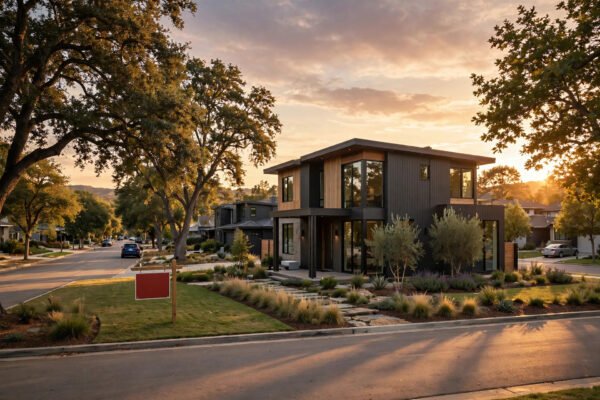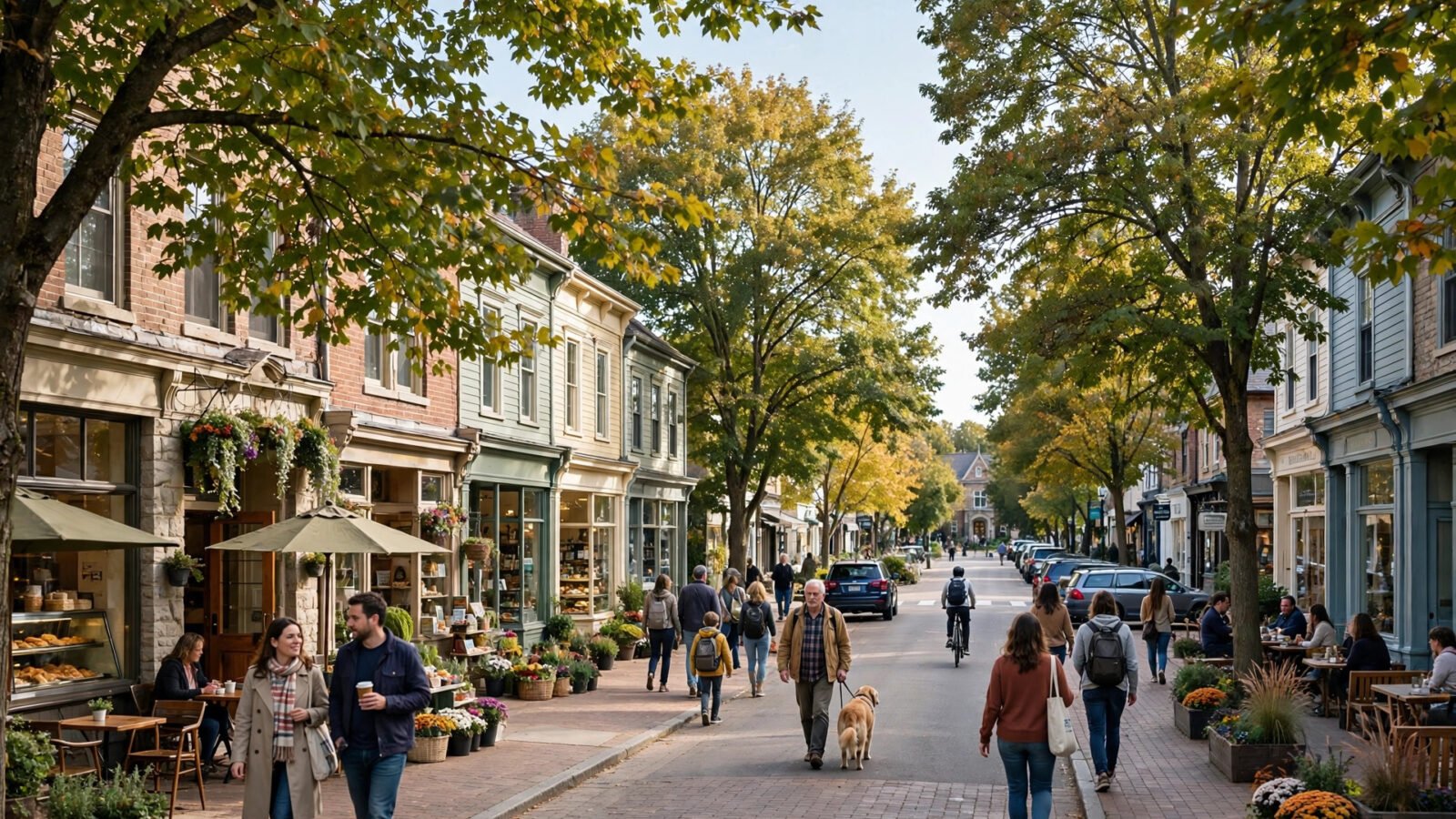
For decades, the American suburb had a single design language: the cul-de-sac, the garage-forward facade, the arterial road with six lanes and no sidewalk. Walkability was something cities had and suburbs didn’t — by design. Then something shifted. The most in-demand suburban developments in America today look nothing like the subdivisions of the 1990s: they’re built around town centers, laced with trails, and designed so daily life doesn’t require a car for every errand.
The growing appeal of walkable suburbs reflects a profound change in what homebuyers want — and developers, planners, and policymakers are racing to deliver it. Here’s what’s driving the shift and what it means for the future of suburban America.
What “Walkable Suburb” Actually Means
The term covers a spectrum. At one end: retrofitted suburbs adding sidewalks, trail networks, and mixed-use town centers to existing car-dependent fabric. At the other: purpose-built walkable communities — new developments designed from scratch around a village center with shops, restaurants, offices, and housing in close proximity, connected by genuinely walkable streets.
The common thread is the 15-minute-neighborhood concept applied to suburbia: daily needs (groceries, coffee, schools, parks, some workplaces) reachable on foot or by bike. Not Manhattan density — typically townhomes, small apartment buildings, and compact single-family homes around a mixed-use core. The EPA’s smart-growth research has documented the model extensively: walkable suburban designs consistently command price premiums over conventional subdivisions in the same markets.
Why Buyers Want It: The Demand Drivers
The remote-work reshuffle
Remote and hybrid work untethered millions from downtown commutes — but instead of fleeing to exurbs as predicted, many chose suburbs with amenities. The logic: if you’re home all day, the neighborhood becomes your world, and a neighborhood where you can walk to lunch beats one where every errand is a drive. Walkable suburbs captured the remote-work premium that exurbs were supposed to get.
Aging in place
America’s suburbs are aging — literally. The baby boomers who bought suburban homes in the 1980s are now in their 70s, and many want to stay in their communities without depending on cars for everything. Walkable suburban design is aging-friendly design: single-level living near services, safe pedestrian infrastructure, social connection without driving. The demographic math guarantees decades of demand.
The health and happiness data
Research consistently links walkable neighborhoods to more physical activity, lower obesity rates, better mental health, and stronger social connection. Residents of walkable areas report higher life satisfaction — the casual encounters of foot traffic build the “weak ties” sociologists identify as crucial to well-being. Even walking 30 minutes daily is easier when the built environment invites it rather than punishing it.
Climate and cost
Transportation is Americans’ second-largest household expense after housing, and car-dependent suburbs maximize it. Walkable suburbs offer a genuine cost advantage: households that can drop from two cars to one save thousands annually. The climate math points the same way — fewer vehicle miles, more efficient land use.
The Price Premium (and the Supply Problem)
Here’s the market’s verdict: walkable suburban neighborhoods command significant price premiums — often 20–40% over comparable car-dependent areas — and the premium has grown, not shrunk. That premium is both validation and indictment: validation that demand is real, indictment that supply is artificially constrained.
The constraint is regulatory. Most American suburbs illegally prohibit walkable development through zoning: single-family-only districts, minimum lot sizes, parking mandates, setbacks, and use separations that make the corner store illegal. The walkable suburbs buyers want are, in most jurisdictions, illegal to build. The shortage isn’t a market failure — it’s a policy choice, and the growing YIMBY and zoning-reform movements are attacking it directly.
Retrofit vs. Build New: Two Paths
New walkable suburbs get the attention, but retrofitting existing suburbs may matter more — America already built the car-dependent kind, and they’re not going anywhere. The retrofit playbook: add mixed-use town centers on dead-mall or strip-mall sites (the “grayfield” opportunity), build trail networks connecting neighborhoods, allow accessory dwelling units and gentle density, redesign stroads into complete streets.
The dead-mall-to-town-center conversion is the signature move of the 2020s: failed retail sites, already entitled and infrastructure-served, reborn as walkable mixed-use neighborhoods. Hundreds are underway nationally. It’s the rare win-win-win — developers get entitled land, cities get tax base, residents get walkability without sprawl.
What Buyers Should Look For
Not every suburb marketed as “walkable” delivers. The genuine article has: a real mix of uses within walking distance (not just a subdivision with a sidewalk to nowhere), connected street networks (grids beat cul-de-sacs), safe pedestrian infrastructure (not just painted bike lanes on 45-mph arterials), and transit access or credible transit plans. Walk Score is a useful starting filter, but walk the neighborhood yourself at different times of day — the lived experience reveals what metrics miss.
Also assess trajectory: is the suburb becoming more walkable (trail projects funded, town-center plans approved, zoning reforms passed) or resting on one nice block? The trend matters as much as the current state — buying into improving walkability captures appreciation as the premium grows.
And the home itself still matters: whether renting or buying in these neighborhoods, the fundamentals of making a space yours apply — making a rental feel like home works beautifully in a walkable townhome with a front porch made for lingering.
The Pushback
The walkable-suburb trend has critics. Some residents fight density and mixed-use as threats to “neighborhood character” — the classic NIMBY objection that keeps zoning restrictive. Others note the equity problem: walkable suburbs’ price premiums mean the benefits flow disproportionately to affluent buyers, while lower-income households remain in car-dependent areas with the highest transportation costs. Without deliberate affordable-housing policy, walkability becomes another amenity sorted by income.
There’s also the authenticity debate: master-planned “walkable” developments can feel staged — lifestyle centers performing urbanism rather than organic neighborhoods. The best ones evolve genuine character over time; the worst remain outdoor malls with apartments attached. Time, as always, is the test.
The growing appeal of walkable suburbs is really about Americans renegotiating the suburban bargain: keeping the space, the schools, and the quiet while reclaiming the connection, convenience, and vitality the old model sacrificed. The demand is proven, the premium is real, and the main obstacle is the zoning code. Fix the rules, and the suburbs buyers actually want can finally get built — one town center, one trail network, one legalized corner store at a time.
For the policy playbook behind walkable development, HUD’s community planning resources show how federal programs support mixed-use, transit-connected neighborhoods.
Frequently Asked Questions
What makes a suburb walkable?
A mix of housing, shops, and services within walking distance; connected street networks; safe pedestrian and bike infrastructure; and access to parks and transit. True walkability means daily needs are reachable without a car at all.
Do walkable neighborhoods cost more?
Yes — walkable suburban areas typically command 20–40% price premiums over comparable car-dependent neighborhoods, reflecting strong demand and constrained supply (much walkable development is restricted by zoning).
Are walkable suburbs healthier?
Research consistently links walkable neighborhoods to more physical activity, lower obesity rates, better mental health, and stronger social connections among residents of all ages.
Can existing car-dependent suburbs become walkable?
Yes, through retrofitting: mixed-use town centers on redeveloped retail sites, trail networks, zoning reform allowing gentle density, and complete-streets redesigns. Many suburbs are pursuing exactly these strategies right now.