Every city has one: the neighborhood that “is about to pop.” The artists moved in five years ago. A craft brewery opened. Someone’s cousin bought a bungalow for nothing and now it’s worth triple. By the time everyone’s sure, the deals are gone — the trick is spotting the signals before the crowd does.
Identifying undervalued neighborhoods before they appreciate is part data science, part street-level anthropology. The professionals who do it well — investors, developers, and savvy homebuyers — read a specific set of leading indicators. Here’s how they think, and how you can apply the same lens.
The Classic Gentrification Signals
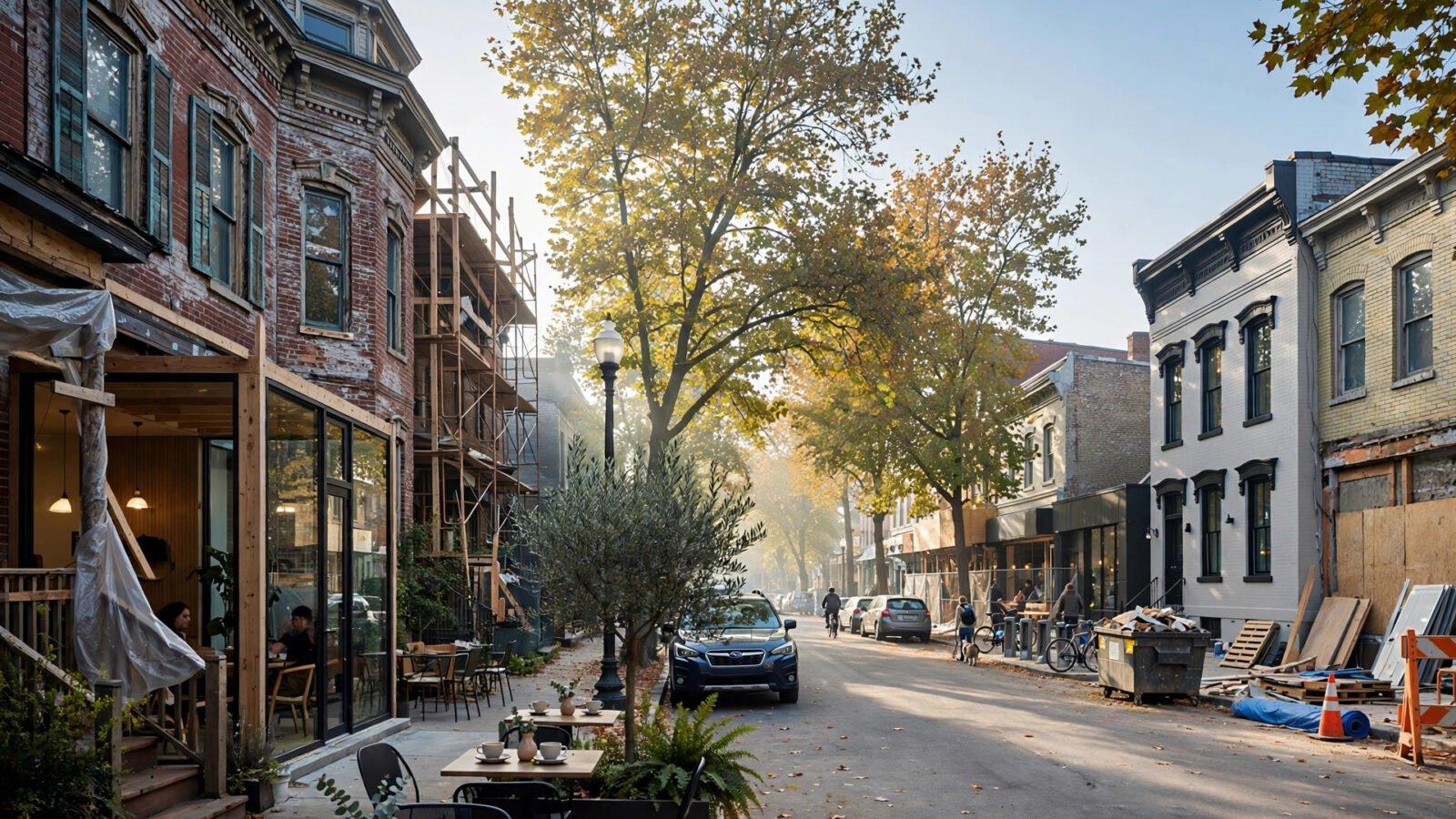
The traditional playbook starts with the cultural leading indicators. Artists, musicians, and young creatives move where rent is cheap; their presence makes an area interesting; interesting attracts amenities; amenities attract higher-income residents; prices follow. The lag between the artists arriving and prices moving is the window — typically 5–10 years, though it’s compressing in hot markets.
The commercial signals are more concrete and more reliable: independent coffee shops (the cliché exists for a reason), craft breweries, vintage stores, and ethnic restaurants that draw diners from across the city. When commercial rents start rising and chains start scouting locations, the residential market usually follows within 18–36 months. The Census Bureau’s American Community Survey data — tracking income, education, and rent changes at the tract level — lets you verify whether the anecdotes show up in the numbers.
The Infrastructure Play: Follow the Transit and Investment
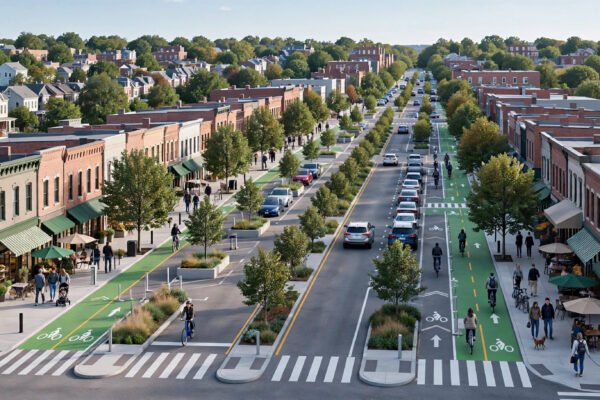
The most bankable appreciation driver isn’t cultural — it’s infrastructure. New transit lines are the single most reliable neighborhood-value catalyst in urban America: properties near new stations historically appreciate faster than comparable areas, with the effect beginning when lines are announced (not when they open). Highway removals, new parks, riverwalk developments, and major institutional investments (a hospital expansion, a university campus) all function similarly.
The practical method: track your city’s capital-improvement plans, transit-agency expansion maps, and major employer announcements. The appreciation window opens at announcement and closes at completion — buying after the ribbon-cutting means paying the premium. Zoning changes are the quieter signal: upzoning (allowing denser development) reliably lifts land values, and the parcels that benefit most are often a block or two from the obvious center.
Reading the Data Like a Pro
Price-to-rent ratios
Neighborhoods where purchase prices are low relative to rents signal investor demand coming — when it becomes cheaper to buy than rent, owner-occupants and investors both pile in. Zillow’s market research and similar platforms publish these ratios at the neighborhood level.
Days on market and sale-to-list ratios
Falling days-on-market and rising sale-to-list ratios indicate tightening demand before prices fully adjust. A neighborhood where homes suddenly sell in a week at asking — after years of languishing — is repricing in real time.
Permit and renovation activity
Building permits are the professionals’ favorite leading indicator. A surge in renovation permits means investors are already betting; new-construction permits mean developers see demand. Most cities publish permit data free — it’s public, underused, and predictive.
Demographic momentum
Rising educational attainment and falling average age in census-tract data reliably precede price appreciation. The pattern is so consistent that institutional investors buy tract-level demographic datasets specifically to find it.
Investor activity itself
Watch who’s already buying: a rising share of cash purchases and investor acquisitions in a neighborhood signals that professionals see value the broader market hasn’t priced yet. Public records and platforms tracking investor transactions make this visible — when the smart money starts accumulating quietly on streets nobody’s watching, pay attention. Just remember you’re following, not leading, at that point; the best deals precede the investor wave, not ride it, so treat investor activity as confirmation rather than discovery.
The Risks: Why “About to Pop” Often Doesn’t
Honest assessment requires the failure modes. Neighborhoods can stall for decades: the transit line gets canceled, the anchor employer leaves, crime persists, or the cultural energy never converts to residential demand. Buying on the thesis that appreciation will come means carrying costs (taxes, maintenance, mortgage) while waiting — and waiting can last longer than your finances.
There’s also the ethical dimension the investment literature often skips: profiting from gentrification means participating in displacement. Longtime residents — disproportionately lower-income and minority — bear the costs of the appreciation investors celebrate. The responsible version of this strategy involves supporting policies (community land trusts, tenant protections, affordable-housing requirements) that let neighborhoods improve without expelling the people who made them interesting.
And the practical risks of buying in transitioning areas are real: insurance costs, service quality, and resale liquidity all vary. Before buying anywhere, understand the full ownership picture — including how AI is changing the real-estate-agent equation and what modern buyers should expect from representation.
The Homebuyer’s Version (Not Just for Investors)
You don’t need to be an investor to use these signals — they’re arguably more valuable for owner-occupants. Buying in a neighborhood before it pops means building equity while you live your life, rather than stretching to afford the already-popped alternative. The strategy: identify 2–3 candidate neighborhoods using the signals above, rent in or near them first if possible, learn the micro-geography (which blocks, which streets), and buy the best house you can afford on the best block you can access.
The homebuyer’s edge over the investor is patience: you can wait out a slow thesis while living in the home, collecting the lifestyle benefits (shorter commute, interesting neighbors, improving amenities) regardless of the investment outcome. The worst case of buying in a good-but-not-popping neighborhood is still a home you like. The investor’s worst case is dead capital.
Smart buyers also think about the home itself, not just the location — affordable smart-home upgrades can add livability and value to any property, in any neighborhood, at any point in the cycle.
2026’s Specific Opportunities
Current conditions create specific openings. Remote-work normalization pushed demand to inner-ring suburbs and secondary cities — many still mid-repricing. Commercial-district conversions (office-to-residential) are creating new residential pockets in downtowns. Climate migration is quietly repricing higher-elevation, water-secure areas. And the neighborhoods near major new infrastructure — transit expansions, stadium districts, hospital campuses — offer the classic announcement-to-completion window.
The meta-lesson: “undervalued” is always relative to a future, and futures are made of infrastructure, demographics, and culture — in that order of reliability. Read those three, and you’ll see the pop coming before the crowd does.
Frequently Asked Questions
How do you identify an up-and-coming neighborhood?
Look for converging signals: cultural/commercial activity (independent businesses, arts), infrastructure investment (transit, parks), demographic momentum (rising education/income in census data), tightening market metrics (falling days-on-market), and surging permit activity.
Is buying in a gentrifying neighborhood a good investment?
It can be, but the risks are real: theses can stall for years, carrying costs accumulate, and appreciation isn’t guaranteed. Owner-occupants have an advantage over investors since they benefit from living there regardless.
What data sources track neighborhood trends?
Census Bureau ACS data (demographics), Zillow/Redfin (prices, market metrics), city permit databases (renovation activity), and transit-agency capital plans (infrastructure investment).
Does gentrification always displace residents?
Not inevitably, but displacement is the central risk. Policies like community land trusts, inclusionary zoning, tenant protections, and property-tax relief for longtime owners can let neighborhoods improve without expelling existing residents.