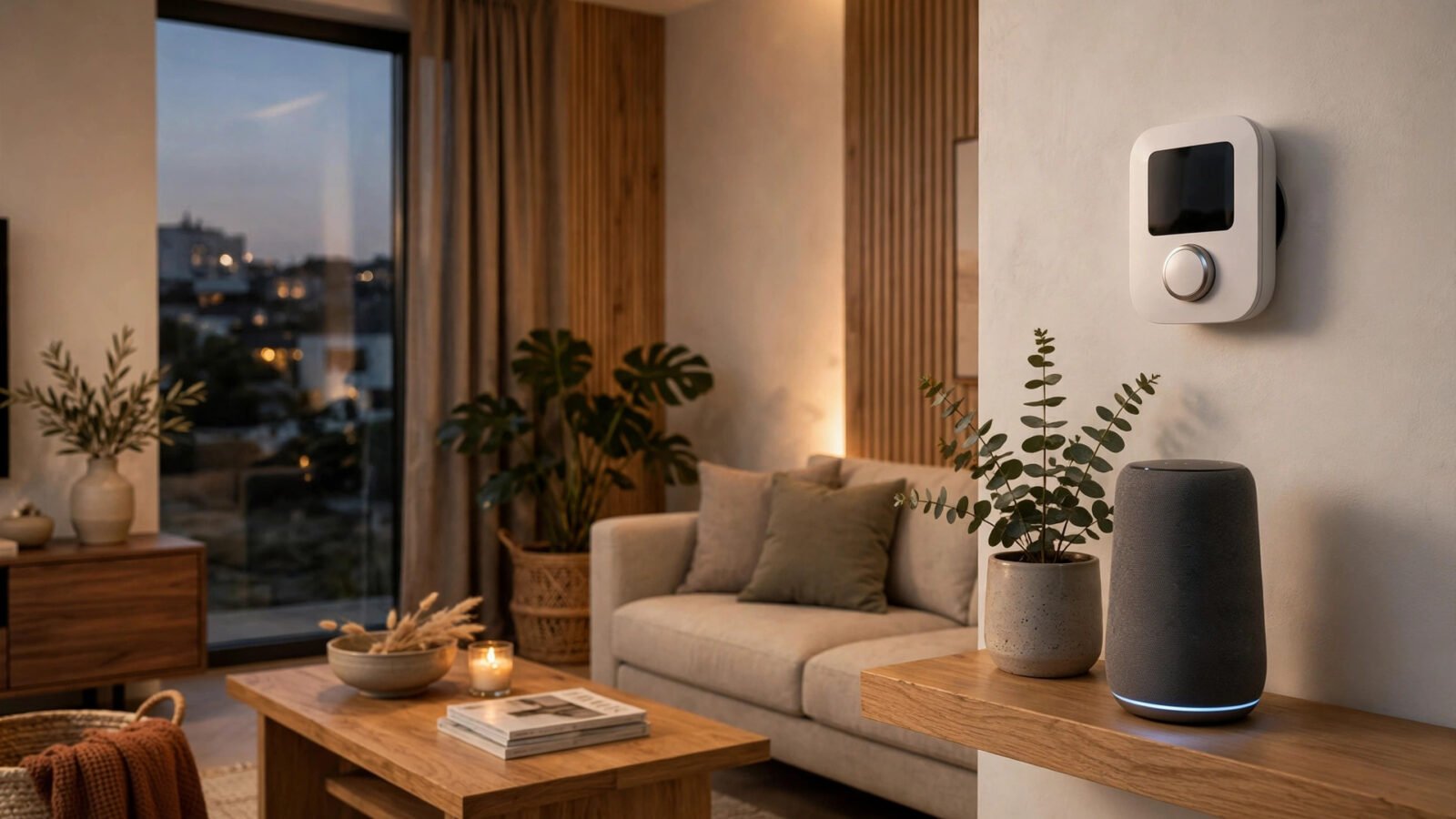
There was a time when “smart home” meant a single voice assistant on the kitchen counter that could set timers and tell jokes. In 2026, buyers touring new homes expect something far more comprehensive: integrated systems that manage energy, security, air quality, and daily routines — mostly invisibly. Smart-home tech has crossed from gadget enthusiast territory into baseline buyer expectation, and it’s reshaping what “move-in ready” means.
But not all smart features are equal. Some genuinely add value and sell homes; others are expensive novelties that date faster than avocado appliances. Here’s what buyers actually expect now, what’s worth the investment, and what’s hype.
The New Baseline: What Buyers Assume Is Included
The expectation floor has risen dramatically. In new construction especially, buyers now assume: a smart thermostat (learning schedules, room sensors, energy reports), video doorbell and smart locks (keyless entry is rapidly becoming standard), integrated security (cameras, sensors, professional-monitoring options), and robust Wi-Fi infrastructure (wired backhaul, mesh coverage — the unsexy foundation everything else depends on).
Listings increasingly call these out explicitly, and their absence gets noticed. A new home without a smart thermostat in 2026 reads the way a new home without a dishwasher would have in 1990 — technically functional, but signaling a builder who isn’t paying attention. The Consumer Reports smart-home testing consistently finds that buyers rank these basics above flashier features when asked what they’d pay for.
Energy Intelligence: The Features That Pay for Themselves
The smart-home features with the clearest ROI are energy-related — and with utility costs elevated, buyers do the math. Smart thermostats with room-level sensing and learning algorithms cut heating/cooling waste substantially; Department of Energy analyses support meaningful savings from intelligent climate control. Smart electrical panels (monitoring every circuit, enabling load management) are moving from enthusiast installs to builder options, especially as homes add EVs, heat pumps, and solar.
Water intelligence is the emerging category: leak-detection sensors with automatic shutoff valves (which also earn insurance discounts), smart irrigation that adjusts to weather, and water-use monitoring. Given that water damage is among the most common and costly home-insurance claims, these features sell on both savings and peace of mind.
Solar-plus-storage integration has matured into a genuine expectation in sunny markets: buyers ask about panel capacity, battery backup, and whether the home’s systems coordinate (EV charging timed to solar production, for instance). Even renters feel the energy angle — reducing home energy bills starts with the same intelligence, whatever the housing type.
Security and Access: The Non-Negotiables
Smart security has standardized around an expected package: video doorbells with package detection, smart locks with unique guest codes (huge for Airbnb-capable properties and dog walkers), garage-door monitoring, and integrated camera systems with local storage options. The key shift: buyers expect these to work as a system — one app, unified alerts — not a pile of incompatible gadgets.
Matter, the industry interoperability standard, finally delivered on the long-promised “everything works together” vision — mostly. Buyers in 2026 are savvier about checking compatibility, and builders who standardize on coherent ecosystems (rather than whatever was cheapest that quarter) earn trust. The security expectation extends to data: buyers increasingly ask where camera footage goes and who can access it.
Health and Comfort: The Quiet Premium Features
The features commanding real premiums are health-adjacent: whole-home air-quality monitoring with integrated filtration and ventilation (post-pandemic awareness made IAQ a selling point), circadian lighting systems (tunable white light that shifts through the day), and water filtration. These don’t demo as dramatically as a voice-controlled theater, but they affect daily life more — and wellness-focused buyers pay for them.
Voice and app control have matured from novelty to utility: the expectation isn’t shouting at a speaker, it’s routines that just happen — lights, shades, temperature, and music adjusting to time of day and occupancy without commands. The best smart homes in 2026 are the ones you barely notice.
What Sellers and Builders Should Actually Install
The investment calculus differs by situation. For builders: standardize the baseline package (thermostat, doorbell, locks, mesh Wi-Fi, EV-ready panel) and offer tiered upgrades — buyers expect the basics included and will pay for meaningful additions. For sellers of existing homes: the highest-ROI moves are cheap and visible — a smart thermostat, video doorbell, and smart locks cost a few hundred dollars total and signal “updated” to buyers touring the home. Many of the best upgrades are genuinely affordable — smart-home upgrades under $100 can transform how a listing shows.
What not to install: hyper-specific ecosystems that lock buyers in, gimmicky single-purpose gadgets, and anything requiring a subscription to function basically. Buyers discount homes burdened with tech they’ll have to rip out or pay monthly to keep.
The Retrofit Opportunity: Smartening Existing Homes
New construction gets the attention, but the bigger market is retrofitting America’s 140 million existing homes. The good news: the highest-impact upgrades are renter-friendly and inexpensive — smart thermostats, video doorbells, smart locks, and leak sensors install in minutes without rewiring. The harder retrofits (smart panels, whole-home audio, integrated lighting) suit renovations, when walls are open anyway.
The retrofit wave matters for buyers of older homes: a 1970s ranch with a thoughtful smart layer — modern thermostat, keyless entry, leak detection, mesh Wi-Fi — shows as “updated” and commands a real showing advantage over an identical home without it. For a few hundred dollars and a weekend, sellers can buy the perception (and much of the reality) of a modern home. The technology democratized faster than anyone expected: the smart home is no longer a luxury category but a maintenance category, like paint.
The Skeptic’s Corner: What Could Go Wrong
Honest accounting includes the risks. Obsolescence: today’s cutting-edge hub is tomorrow’s unsupported brick — buyers are right to prefer open standards and local control. Privacy: microphones, cameras, and behavioral data in the home deserve genuine scrutiny, and the industry’s record is mixed. Complexity: the number-one smart-home complaint remains “it stopped working and I don’t know why” — reliability matters more than features.
And the equity note: smart-home expectations raise the cost of adequate housing at the margin, and renters often can’t modify their spaces. The features are genuinely useful, but they’re also another way housing sorts by income.
The smart-home features buyers now expect tell a story of technology maturing from toys to infrastructure. The voice assistant that told jokes became the nervous system of the home — managing energy, guarding security, protecting health, mostly invisibly. Buyers don’t want gadgets anymore. They want a home that’s quietly competent. The builders and sellers who understand that distinction are the ones closing deals.
Frequently Asked Questions
What smart-home features do buyers expect in 2026?
The baseline: smart thermostat, video doorbell, smart locks, integrated security cameras/sensors, and robust mesh Wi-Fi. Energy-management, air-quality, and EV-ready electrical features are increasingly expected in new construction.
Do smart-home features increase home value?
Modestly — appraisers rarely add direct value, but smart features improve marketability and can justify premiums in competitive markets. The highest ROI comes from inexpensive, visible upgrades (thermostat, doorbell, locks).
What’s the most important smart-home investment?
Robust Wi-Fi infrastructure (wired backhaul, mesh coverage) — everything else depends on it. After that, energy-management features offer the clearest financial payback.
Are smart homes a privacy risk?
They can be. Prefer devices with local processing/storage options, open standards (Matter), no required subscriptions for basic function, and clear data policies. Disable features you don’t use.