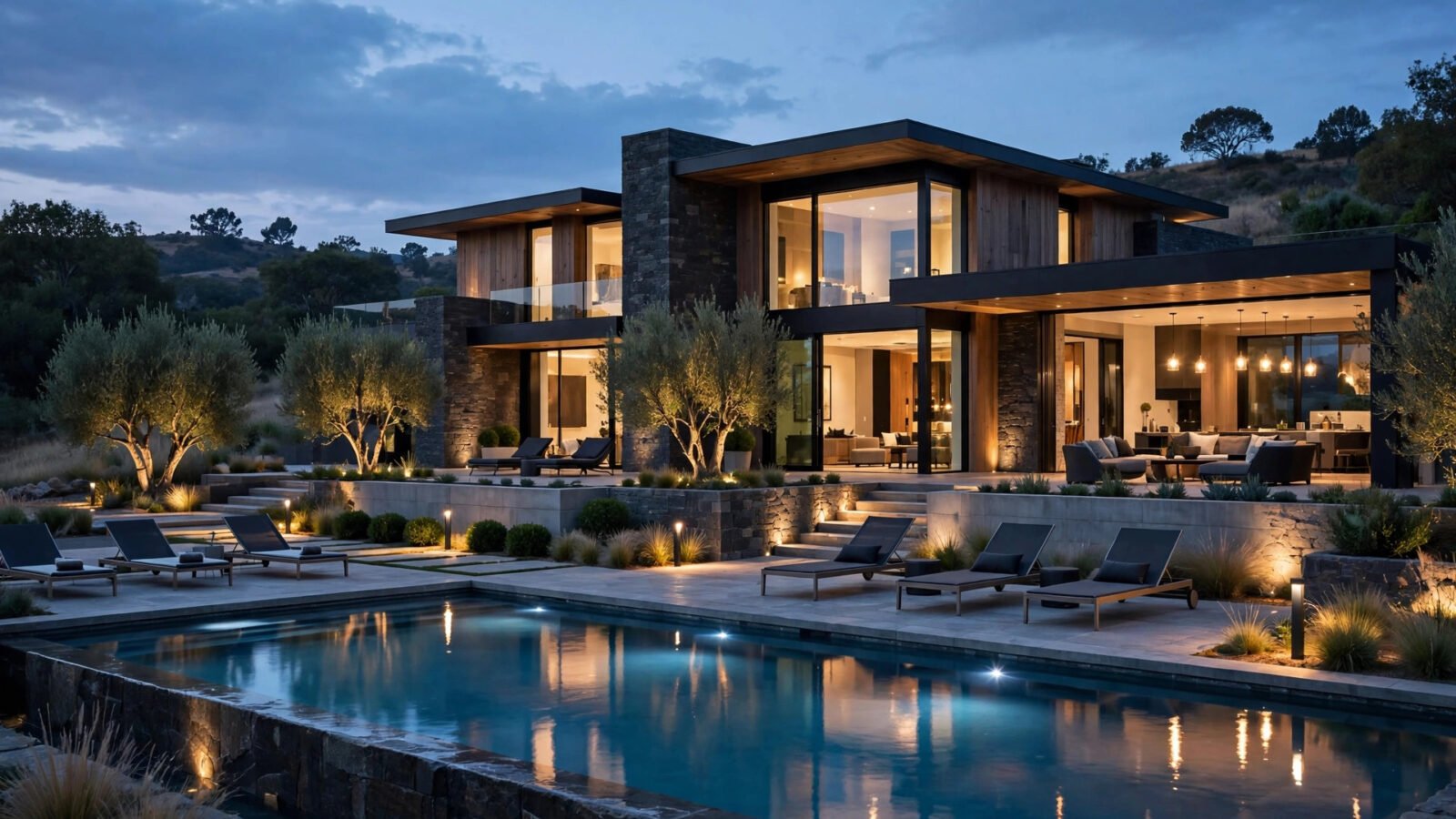
The luxury housing market has always danced to its own music — less sensitive to interest rates, more sensitive to stock portfolios and global capital flows, driven by desires that have little to do with shelter. But in 2026, the high end is changing in ways that reveal broader shifts: what wealth wants from a home, where it wants it, and what “luxury” even means anymore.
Spotting luxury market trends matters beyond the 1% — the high end is where housing innovations debut (smart systems, wellness amenities, architectural ideas) before filtering down, and where global economic currents hit the housing market first. Here’s what’s moving at the top.
The New Geography of Luxury
The pandemic-era luxury migration — out of dense cities into resort and suburban markets — partially reversed, then settled into a new equilibrium: the wealthy now want both. The dominant pattern is multi-home ownership as standard: a primary residence in a tax-friendly job center plus a lifestyle property (mountain, beach, desert) plus, increasingly, an urban pied-à-terre for the return to city life. The single-mansion model gave way to the portfolio.
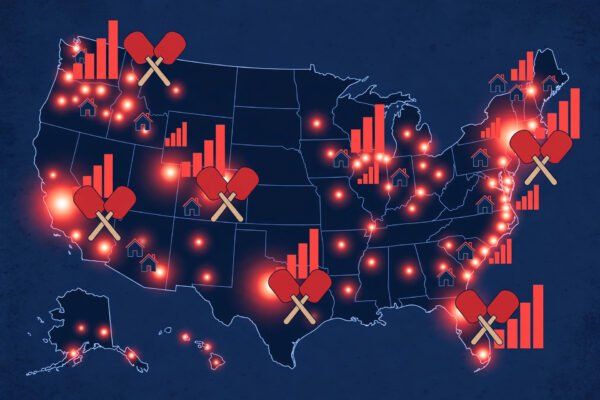
The hot markets tell the story: South Florida’s continued ascent (tax policy + lifestyle + finance-industry migration), the Mountain West’s resort corridors (Jackson Hole, Aspen, Bozeman — scarcity plus outdoor amenity), Southern California’s enduring premium despite its challenges, and the surprising strength of secondary luxury markets (Charleston, Santa Fe, the Hudson Valley) as wealth disperses. Internationally, American luxury markets compete with Dubai, London, and Singapore for footloose global capital — and US markets’ relative stability keeps winning share.
Forbes’ luxury-market reporting tracks the flows: the high end follows wealth migration, tax policy, and lifestyle preference in roughly that order.
What “Luxury” Means Now: The Amenity Evolution
The amenity arms race entered a new phase: wellness. The luxury must-haves of 2026 center on health — spa-level primary suites, cold plunges and saunas, gym spaces designed by actual trainers, air and water purification throughout, circadian lighting, and outdoor living spaces elaborate enough to function as second homes. The Redfin luxury analyses note wellness amenities now appearing in listings at rates that would have been startling five years ago.
Privacy and security moved up the hierarchy: gated entries, smart security perimeters, safe rooms (no longer just a celebrity eccentricity), and — post-pandemic — genuine self-sufficiency (generators, water security, food-production capability). The wealthy aren’t preppers, exactly, but resilience became a luxury feature.
Smart-home integration went from bragging right to expectation: whole-home automation, invisible tech, professional-grade networks. Even at the top, though, the principle holds that the best upgrades are thoughtful, not just expensive — the discernment behind smart budget upgrades scales up, not down.
The Cash Buyer Phenomenon
Luxury’s defining financial trait in 2026: the dominance of cash. High-end purchases are overwhelmingly all-cash or large-down-payment deals, making the luxury market largely immune to interest-rate fluctuations that paralyze the middle market. This creates the market’s characteristic two-speed behavior — luxury transacting briskly while entry-level stalls — and explains why luxury price indices often diverge from overall market trends.
The cash dominance also means luxury is more correlated with asset markets (stocks, crypto, business sales) than with mortgage rates. When equity markets surge, luxury follows within quarters; when they correct, the high end feels it first. Bankrate’s market analyses note this decoupling as a key feature of the current cycle.
New Construction vs. Trophy Resale
The luxury new-development pipeline — ultra-prime condos in Miami, Manhattan, and Los Angeles; architectural spec homes in resort markets — continues at pace, but the more interesting dynamic is the trophy-resale market: architecturally significant, historically notable, or uniquely positioned properties that trade like art. These transact on their own logic — scarcity, provenance, irreplaceability — and their prices often defy broader market gravity.
Sustainability entered the luxury conversation seriously: high-end buyers increasingly demand (and pay premiums for) genuine green credentials — net-zero construction, passive-house standards, sustainable materials. The performative phase is ending; the wealthy now hire sustainability consultants the way they hire interior designers. Climate resilience factors too — the luxury buyer of 2026 asks about flood maps, fire risk, and insurance availability before falling in love with the view.
The Quiet-Luxury Aesthetic
Design trends at the high end mirror the broader cultural shift: quiet luxury over ostentation. The nouveau-riche signifiers (gold fixtures, ostentatious square footage) gave way to understated quality — natural materials, craftsmanship, architectural integrity, spaces that feel considered rather than expensive. The most coveted luxury homes in 2026 photograph beautifully but whisper rather than shout.
This extends to the sensory: sophisticated approaches to home ambiance — whole-home scenting systems, acoustic design, curated natural light — differentiate true luxury from merely expensive. The details, as always, are the difference.
The Rise of Branded Residences
One of the luxury market’s most distinctive trends is the branded residence — condos and homes carrying hotel or lifestyle brands (Aman, Four Seasons, Ritz-Carlton, and now fashion and automotive brands). Buyers pay significant premiums for the brand promise: hotel-grade services, vetted neighbors, and the status of the name on the building. The model has expanded from resort markets into primary cities, and developers keep launching new ones because the premium persists.
The appeal reveals what luxury buyers actually purchase: not just space, but curation — the assurance that every detail, from the lobby scent to the concierge training, meets a standard. Critics note the premiums often exceed the service value, and resale can underperform unbranded equivalents if the brand fades. But as long as wealth seeks turnkey certainty, branded residences will keep selling.
What Luxury Signals for Everyone Else
The high end is housing’s R&D lab: today’s luxury wellness amenities become tomorrow’s mid-market expectations (as smart thermostats and quartz counters did before them). Watching luxury trends is watching the mainstream’s future on a 5–10 year delay. The current signals: wellness integration, resilience features, genuine sustainability, and invisible technology — all filtering down already.
The caution: luxury’s immunity to rates and its cash-driven dynamics mean its trends don’t always translate. What’s rational at $10 million (a safe room, a staff wing) is absurd at $500,000. Filter the signals through the economics of the segment you actually care about.
Luxury market trends to watch in 2026 distill to a few currents: wealth wants optionality (multiple homes, multiple geographies), wellness (health as the ultimate amenity), resilience (climate, security, self-sufficiency), and quiet quality over loud opulence. The high end isn’t just spending more — it’s expressing, in architectural form, what the affluent believe the future holds. Read the mansions, and you read the moment.
Frequently Asked Questions
How is the luxury housing market performing in 2026?
Resiliently — cash-buyer dominance insulates the high end from interest-rate pressures affecting the middle market. Performance correlates more with equity markets and wealth migration than with mortgage rates.
What features define luxury homes now?
Wellness amenities (spas, saunas, cold plunges, air/water purification), privacy and security, smart-home integration, sustainability credentials, and understated “quiet luxury” design over ostentation.
Where are luxury buyers purchasing?
South Florida, Mountain West resort markets, Southern California, and emerging secondary luxury markets (Charleston, Santa Fe, Hudson Valley) — with multi-home portfolios (city + lifestyle property) as the dominant pattern.
Do luxury trends affect regular homebuyers?
Yes, with a delay — today’s luxury amenities (smart systems, wellness features, sustainability) become tomorrow’s mainstream expectations, typically filtering down over 5–10 years.