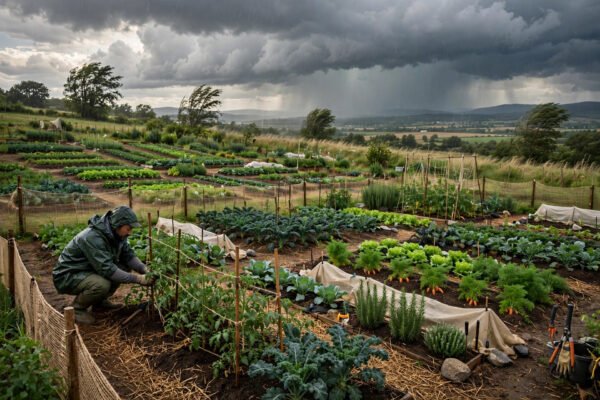
Gardening in 2026 looks different from the hobby your grandparents knew — and in some ways, it looks exactly like it. The year’s trends blend cutting-edge thinking (climate-adapted planting, food forests, sensor-driven watering) with a return to fundamentals (compost, native plants, patience). These are the gardening trends on the radar for 2026, whether you tend acres or a fire escape.
Climate-Adaptive Gardening Goes Mainstream
The defining shift of 2026 is gardeners designing for the climate they have, not the one they remember. Hardiness zones have shifted, rainfall patterns changed, and extreme weather — the floods, heat domes, and late frosts — punishes gardens planned for a stable past. The response is a new discipline: climate-adaptive gardening, choosing plants, layouts, and techniques for volatility.
In practice this means heat-tolerant varieties, deeper mulching, rain gardens that handle deluges, and shade structures as standard equipment. Gardeners are also diversifying — planting across microclimates in the yard rather than betting everything on one bed. The Old Farmer’s Almanac’s growing guides remain the essential reference, now updated for the shifting zones that 2026 gardeners actually face.
Our companion piece on how 2026’s weather challenged gardeners documents the season that made adaptation non-optional — worth reading before you plan next spring.
The Food Garden Boom Continues
Vegetable gardening’s pandemic-era surge never faded — it professionalized. In 2026, home food production is less about survivalist fantasy and more about quality, flavor, and the simple economics of a $6 tomato. Raised beds dominate because they work: better drainage, fewer weeds, earlier springs. If you are starting out, our guide to building a simple raised garden bed for vegetables covers the construction that underpins half the food gardens in America.
The 2026 sophistication is in the planning: succession planting for continuous harvests, season extenders (cold frames, row covers) that add months to the calendar, and seed-saving networks that preserve locally adapted varieties. Community gardens report waitlists in 2026 — the social side of food growing, the shared tools and traded seedlings, turns out to be as nourishing as the harvest.
Native Plants: From Niche to Norm
The native-plant movement crossed into the mainstream in 2026. What was once the domain of ecology enthusiasts is now standard advice: plant species evolved for your region, support local pollinators and birds, slash water and fertilizer needs, and look effortlessly right. Nurseries expanded native selections dramatically, and “nativars” (native cultivars) bridged the gap for gardeners wanting tidier habits.
The pollinator angle drives adoption — gardeners who plant for bees and butterflies get a front-row show all summer. But the practical benefits seal it: natives survive the neglect, the heat waves, and the weird weather that kill fussy ornamentals. In 2026’s climate, planting native is not ideology; it is insurance.
Small-Space and Indoor Growing Matures
Not everyone has a yard, and 2026’s trends honor that. Balcony and container gardening got serious: self-watering planters, dwarf vegetable varieties bred for pots, vertical systems that turn a wall into a salad bar. Indoor growing matured past the gimmicky countertop pods into genuinely productive setups — full-spectrum LEDs, automated hydroponics, and herbs-to-greens systems that actually feed a household’s salad habit.
Houseplants remain the gateway drug, and the 2026 houseplant scene favors the achievable over the rare — the days of $500 variegated monstera cuttings are mercifully over. Our roundup of the best low-maintenance houseplants for beginners is the right starting point if your thumb is still more brown than green.
Compost: The Mainstream Moment
Composting’s breakout — detailed in our feature on why composting hit the mainstream in 2026 — deserves mention here because it changed what gardeners expect. Municipal curbside composting expanded to millions more households, countertop electric composters made apartment composting odorless, and gardeners discovered what farmers always knew: compost is the single highest-ROI input in the garden. Free fertility, better soil structure, less waste — the pitch sells itself.
The Lawn Rethink
No 2026 gardening trend is more culturally loaded than the great lawn rethink. The manicured turf lawn — America’s default landscape — is being questioned on every front: water use, chemical runoff, biodiversity dead zones, and the sheer hours of maintenance. The alternatives went mainstream in 2026: clover lawns that stay green without fertilizer, meadow plantings that buzz with life, and “no-mow” zones that trade uniformity for ecology.
The shift is not about shame; it is about options. The 2026 consensus among landscape designers is the “right lawn” approach: keep turf where it serves a purpose (play areas, gathering spaces) and convert the rest to plantings that earn their keep. Municipal rebate programs for lawn conversion expanded in 2026, paying homeowners to rip out thirsty grass — the economics now favor the meadow.
Seed Libraries and the Commons
One of 2026’s most heartening developments is the explosion of seed libraries — free seed exchanges run through public libraries, community centers, and garden clubs. Borrow seeds in spring, return harvested seeds in fall. The model preserves locally adapted varieties, lowers the cost barrier for new gardeners, and builds community around the most ancient technology there is.
Seed swaps and plant exchanges extended the commons idea: gardeners trading divisions, cuttings, and seedlings through neighborhood networks and apps. In an era of supply-chain anxiety, the informal seed economy is both practical resilience and quiet rebellion — proof that the most important gardening infrastructure is other gardeners.
Gardening as Wellness
The least surprising 2026 trend is also the most important: gardening explicitly embraced as mental-health practice. Research keeps confirming what gardeners feel — time in the garden reduces cortisol, improves mood, and builds the kind of gentle routine that modern life erodes. Therapeutic horticulture programs expanded in hospitals, schools, and senior centers; “garden prescriptions” moved from pilot to practice in some health systems.
The National Gardening Association’s resources now include wellness-oriented programming alongside the growing advice — a sign of how completely the hobby’s identity has expanded. In 2026, the garden is not just where food grows. It is where people recover.
Frequently Asked Questions
What is the biggest gardening trend of 2026?
Climate-adaptive gardening — designing plantings for weather volatility rather than historical norms. Heat-tolerant varieties, water-wise design, native plants, and diversified plantings that survive the extremes are the practical core of the year’s trends.
Is it too late to start a garden in 2026?
Never — every season has something to plant. Summer is for warm-season crops and fall-garden planning; fall is for garlic, cover crops, and perennials; winter is for planning and indoor seed-starting. Start with a raised bed or containers and expand as you learn.
Are native plants really better?
For most regions, yes: natives support local wildlife, need less water and fertilizer once established, and tolerate local weather extremes better than exotic ornamentals. They are not maintenance-free, but they are far more forgiving — which in 2026’s climate is a decisive advantage.
How do I garden without a yard?
Containers, vertical systems, and indoor growing all work — dwarf vegetable varieties, self-watering planters, and full-spectrum LED setups make small-space growing genuinely productive. Start with herbs and salad greens (fast, forgiving, useful) before expanding.
Does gardening actually help mental health?
Research consistently shows gardening reduces stress hormones and improves mood — the combination of gentle physical activity, nature exposure, and nurturing routine. Therapeutic horticulture is now used clinically in hospitals and senior care, which tells you how seriously the evidence is taken.