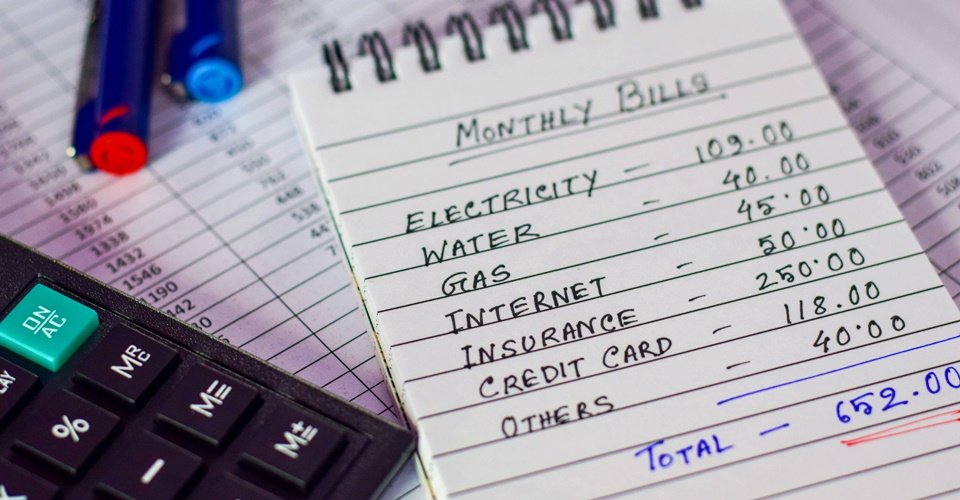
Here’s a beautiful fact: most households can cut $200 or more from their monthly bills without changing their lifestyle one bit. Not by giving up lattes or canceling everything fun — but by paying less for the exact same services they already use. Bills are negotiable, plans are downgradable, and loyalty is usually punished with higher prices. Let’s fix that.
Work through this list one bill at a time. Each takes 15–30 minutes, and the savings repeat every single month.
How Can I Reduce My Monthly Bills Without Changing My Lifestyle? The Big Four
1. Cell phone: switch to an MVNO. This is the single biggest painless win. MVNOs (Mint, Visible, Cricket, Google Fi) run on the same major networks but cost $15–40/month instead of $70–100+. Same coverage, same phone, a fraction of the price. A family of four switching routinely saves $150+/month. Check the the FCC’s consumer guides on phone and broadband bills if you want to understand your options before switching — the guides are genuinely helpful.
2. Internet: call and threaten (politely) to leave. Call your provider, say you’re considering switching to a competitor, and ask for the retention department. They have discounts the regular reps can’t offer. Typical result: $15–30/month off for 12 months. Set a calendar reminder to call again when it expires. Alternatively, check if you actually need your speed tier — most households are fine on 200 Mbps, and downgrading from gigabit saves $20+/month with zero noticeable difference.
3. Insurance: shop it annually. Auto and home insurance prices creep up every renewal, counting on your inertia. Get quotes from 3–4 competitors once a year — 20 minutes on comparison sites — and watch your current insurer suddenly find discounts when you mention leaving. Average savings: $300–500/year per policy. Bundle home and auto with one carrier for another 10–25% off.
4. Energy: the silent budget killer. Heating and cooling are typically half your energy bill. A programmable thermostat ($25, pays for itself in a month), sealing obvious drafts, LED bulbs everywhere, and washing in cold water cut 10–20% with no comfort change. The the Department of Energy’s home energy saving tips has a room-by-room breakdown worth an hour of your time — most people find $30–50/month hiding in there.
The Subscription Audit (Do This Quarterly)
- List every recurring charge. Bank statement, line by line. The average household finds 2–3 forgotten subscriptions worth $30–60/month.
- Rotate, don’t stack. One streaming service at a time. Finish what you’re watching, cancel, switch. Saves $40+/month versus subscribing to everything.
- Kill the “free trials” that converted. Search your email for “trial” and “receipt” — you’ll find at least one zombie subscription.
- Downgrade tiers you don’t use. Cloud storage, music plans, app subscriptions — the mid tier is usually plenty.
- Annual vs. monthly math. For services you’ll keep all year, annual billing typically saves 15–20% — but only switch after the audit proves you’ll actually use it.
The Bills People Forget Are Bills
Bank fees. Monthly maintenance fees, overdraft fees, ATM fees — switch to a no-fee bank or credit union and keep $50–100/year. It takes one afternoon.
Credit card interest. Not technically a “bill,” but the most expensive one most people pay. A balance transfer to a 0% card, or just one focused payoff sprint, can save hundreds monthly. This is the highest-ROI financial move most households can make.
Gym and memberships. The $50/month gym you visit twice — cancel it and walk outside. Warehouse club memberships: do the math on whether you actually save versus a regular store. Most families do; singles often don’t.
Property tax assessment. Check your home’s assessed value against comparable sales. If it’s high, appealing takes a few hours and routinely saves $200–1,000/year. Most people never check.
Automate the Wins
One-time savings are great; permanent systems are better. After each win, redirect the saved amount: increase your auto-transfer to savings by the exact amount you cut. Bill down $40? Savings up $40. This converts “found money” (which evaporates into lifestyle) into wealth (which compounds). It’s the practical engine behind habits for saving money every month — and it turns bill-cutting from a chore into a game the whole family can play, which is also a natural way to teach my kids good money habits early about trade-offs and smart spending.
And don’t stop at bills: the same audit mindset applied to food spending — learning to make grocery shopping faster and cheaper — typically finds another $100–200/month. Combined, most households free up $300–500 monthly without feeling deprived of anything.
Negotiation Scripts That Actually Work
Most people never call because they don’t know what to say. Steal these:
Internet/cable: “Hi, I’ve been a customer for [X] years and my bill just went up to [$X]. [Competitor] is offering [speed] for [$Y]. I’d prefer to stay — is there anything you can do on the price?” Then be quiet. Silence is your best negotiating tool; let them fill it with offers. If the first rep can’t help, ask for the retention or loyalty department — they have the real discounts.
Insurance: “I’m reviewing my policies and got a quote from [competitor] that’s [$X] less per year for the same coverage. Before I switch, can you check if there are discounts I’m missing — bundling, safe driver, home security, anything?” Mentioning a specific competing quote (get a real one first — 15 minutes online) transforms the conversation.
Cell phone: “My contract is up and I’m looking at [MVNO] for [$X]/month. What can you do to keep me?” If they can’t match it, switching is easy now — your number ports in a day and your phone probably works on the new network.
Medical bills: “I received a bill for [$X] that I can’t pay in full. Do you offer financial assistance, a prompt-pay discount, or a payment plan?” Hospitals routinely cut 20–40% for prompt payment or offer interest-free plans — but only if you ask. Never pay the first bill without calling.
The pattern: be polite, mention a specific alternative, ask an open question, then stop talking. It works because retention is cheaper than acquisition — companies will pay to keep you, but only if you make them.
The Practical Takeaway
This weekend, tackle just two: call your internet provider’s retention line (15 minutes, ~$20/month saved) and run the subscription audit (20 minutes, ~$40/month found). That’s potentially $720/year for 35 minutes of work — an hourly rate of over $1,200. Next month, do insurance and cell phone. In 90 days, you’ll have cut hundreds monthly, changed nothing about your lifestyle, and automated the savings. Bills are negotiable. Now you know.