Here’s a secret the fashion industry doesn’t want you to know: nobody is tracking your outfits. Not your coworkers, not your friends, not the acquaintances whose opinions you fear most. Studies on the ‘spotlight effect’ show we wildly overestimate how much others notice about us — including our clothes. I once wore the same blazer three days in a week during a busy period, braced for comments that never came. If you’re asking how to wear the same outfit twice without anyone noticing, the liberating first truth is: you could often wear it identically and still nobody would notice. But let’s make it artful anyway.
Outfit repeating is also just smart: it maximizes cost-per-wear, simplifies mornings, reduces laundry, and aligns with the capsule wardrobe and sustainable fashion philosophies. The goal isn’t deception — it’s versatility. Here’s the restyling playbook.
How Do I Wear the Same Outfit Twice Without Anyone Noticing? Change the Third Piece
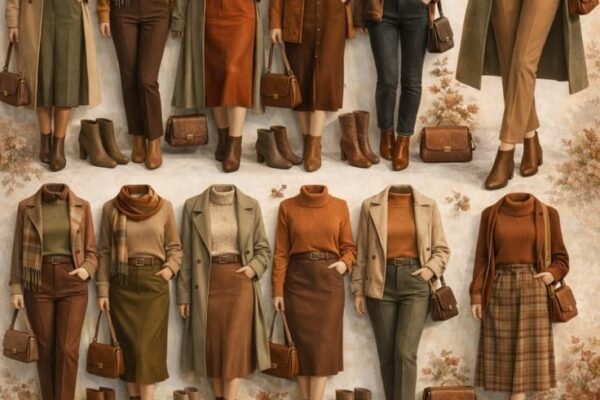
The fastest transformation: keep the base, swap the layer. Same jeans-and-tee becomes three different outfits with a blazer (polished), a denim jacket (casual), or a cardigan (soft) — see blazer styling for the hardest-working swap. Same dress reads completely differently with a leather jacket versus a blazer versus a chunky cardigan. The third piece dominates the outfit’s impression; changing it changes the outfit’s identity while the base stays constant. This is the highest-leverage repeat trick in existence.
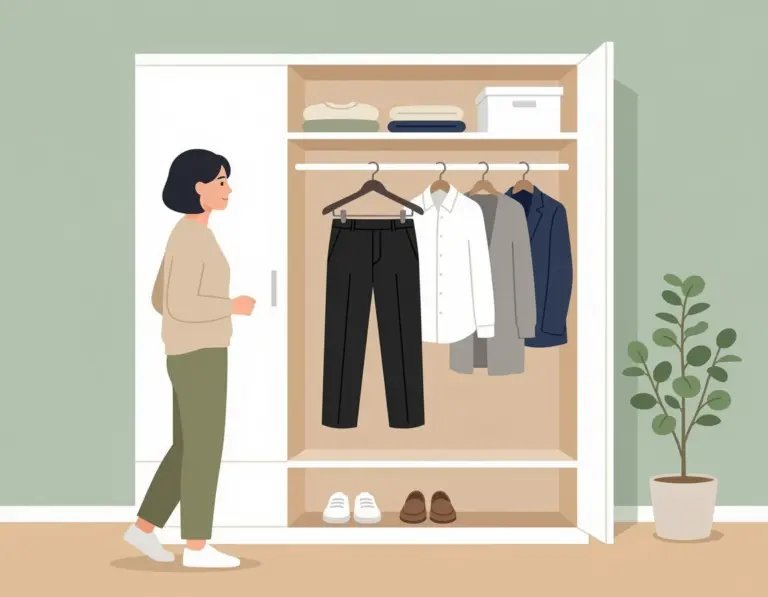
Same logic for two-piece bases: navy trousers + white shirt is ‘Monday’ with a blazer and loafers, ‘Thursday’ with a sweater and boots, ‘Saturday’ with sneakers and a denim jacket. Photograph your variations once and you’ll see — they genuinely look like different outfits because the eye registers the outer layer and overall silhouette first. Build your wardrobe around versatile bases (the capsule principle) and a rotation of third pieces, and repeating becomes invisible by design rather than by effort.
Accessories, Shoes, and the Detail Swap
When the clothes stay identical, change everything around them. Shoes transform outfits most dramatically after layers: the same dress with sneakers (casual day), block heels (dinner), and ankle boots (fall edge) is three outfits by any reasonable measure. Jewelry swaps the register: delicate studs versus statement earrings, no necklace versus layered pendants (black dress jewelry logic applies to every dress). Bags, belts, scarves, watches (affordable watches) — each swap shifts the outfit’s character.
Hair and styling matter more than people credit: the same outfit with hair up versus down, tucked versus untucked shirt, sleeves rolled versus straight — these micro-changes alter the silhouette enough to register as ‘different look.’ A tucked white shirt and an untucked white shirt are, visually, different garments. Lipstick shade changes, glasses on versus off, scarf added — the details compound. Two identical base outfits with different shoes, jewelry, tuck, and hair are, for all practical purposes, different outfits. Nobody’s comparing fabric content across days.
- Swap the third piece: blazer ↔ jacket ↔ cardigan transforms any base
- Change shoes: sneakers ↔ heels ↔ boots = three outfits, one dress
- Rotate jewelry, bags, belts, scarves — details compound
- Alter styling: tuck/untuck, sleeves rolled/straight, hair up/down
Spacing, Hygiene, and the Practicalities
Spacing strategy: separate repeats by at least 2–3 days (different audiences each day helps — Monday’s coworkers overlap less with Saturday’s friends), and vary the context (work versus weekend repeats are invisible to everyone). The ‘someone saw me’ anxiety fades when you realize people see hundreds of outfits weekly and retain almost none. Photograph-a-day social media is the exception — if you post daily outfit content, repeats are more visible; for normal life, they’re not.
Hygiene is the real constraint, not perception: underwear and socks are single-wear always; shirts and blouses get 1–2 wears (sniff test and pit check — deodorant marks mean wash); trousers, jeans, and skirts get 3–5+ wears (spot clean, air between wears); blazers and jackets get many wears (they barely touch skin). Air garments between wears — hang, don’t crumple — and steam refresh (clothing care). Merino and synthetics extend rewears through odor resistance. Wash when dirty, not by schedule — overwashing destroys clothes faster than rewearing ever could. Keep a simple outfit log if repeats worry you — a notes file with dates and outfits. Within a month you’ll see the truth: the same pieces styled differently never raised an eyebrow, and the log itself becomes a styling resource showing your best combinations. Most people abandon the log after a few weeks because the anxiety was unfounded — which is rather the point. The sustainability bonus is real: fewer washes mean less water, less microfiber shedding, longer garment life.
The Mindset: Repeat Proudly
The deeper shift: stop treating repeats as shameful. The most stylish people I know have uniforms — signature combinations they wear constantly. Think of iconic dressers: their power comes from consistency, not novelty. A personal uniform (2–3 go-to formulas, per finding your style) worn confidently reads as signature style, not laziness. The fashion industry profits from novelty anxiety; your wallet and the planet profit from your resistance.
Practical uniform-building: identify your 3–5 best outfits (the ones that get compliments, that you reach for), ensure you have the pieces to rotate them, and wear them on repeat proudly. Track cost-per-wear if it motivates you — a $100 blazer worn 100 times is $1/wear; a $30 top worn twice is $15/wear. The ‘expensive’ piece is often the cheapest per wear. Repeat the winners, donate the one-hit wonders, and let your style be recognizable. Being known for your look is the goal — and you can’t be known for a look you never repeat.
Repeat Like You Mean It
Wearing the same outfit twice without anyone noticing: swap the third piece, change shoes and accessories, alter the styling details, space repeats a few days apart — and remember nobody was tracking anyway. Hygiene (not perception) sets the rewear limits.
The best-dressed people repeat constantly. They just style it like intention, because it is. Join them — and for inspiration, publications like Who What Wear regularly celebrate signature dressing and capsule approaches.