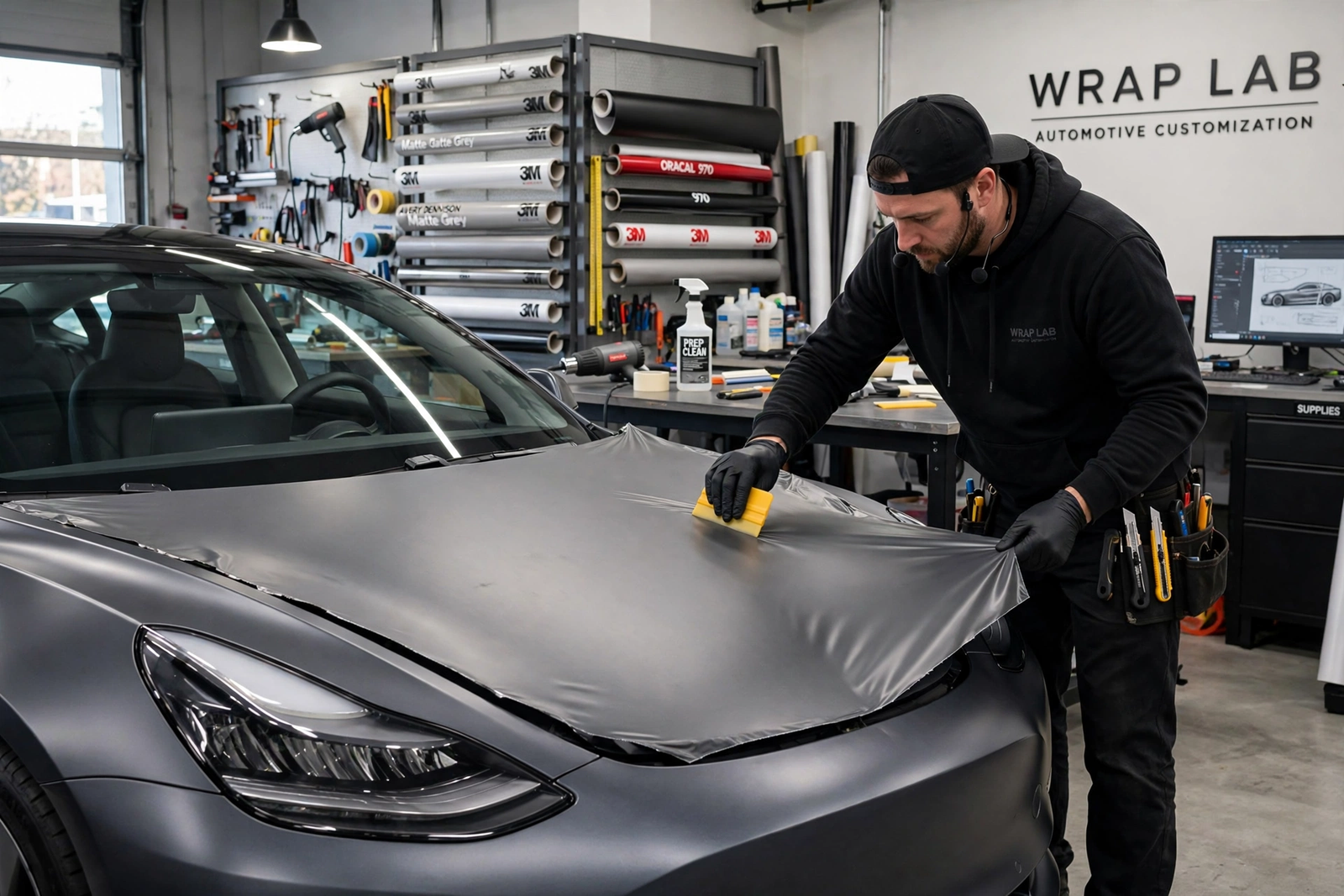
Vinyl Wrap Lifespan by Quality
- Premium cast vinyl (3M 2080, Avery SW900): 7–10 years — the industry standard for professional wraps
- Mid-range calendared vinyl: 4–6 years — fine for shorter-term use
- Budget/unknown-brand vinyl: 2–4 years — prone to fading, cracking, and adhesive failure
- Chrome and specialty finishes: 2–5 years — metallic and textured films degrade faster
The film brand matters enormously. A $3,000 wrap with 3M film will outlast a $1,500 wrap with no-name vinyl by years. Always ask your installer which film they’re using. For a related long-term protection option, see how long does ceramic coating last complete answer“>how long ceramic coating lasts.
What Shortens a Wrap’s Life?
1. Sun and UV exposure
UV is the #1 wrap killer. Cars parked outdoors in Arizona or Florida will see wraps fade and crack years sooner than garage-kept cars in milder climates. Horizontal surfaces (hood, roof, trunk) take the most punishment.
2. Climate extremes
Intense heat softens adhesive; freeze-thaw cycles stress the film. Road salt and harsh winters are tough on edges and seams.
3. Poor installation
Bubbles, lifted edges, and overstretched vinyl fail early. This is why installer reputation matters as much as film brand.
4. Neglect
Never-washed wraps accumulate contaminants that break down the film. Automatic car washes with brushes can lift edges.
5. Low-quality film
Cheap vinyl shrinks, fades to a different color, and can leave adhesive residue that’s miserable to remove.
How to Make Your Wrap Last Longer
- Hand wash only — no brush car washes, no pressure washers aimed at edges
- Wash regularly (every 1–2 weeks) — bird droppings, bug splatter, and tree sap damage vinyl fast
- Park in shade or a garage whenever possible
- Use wrap-safe sealants — ceramic coatings designed for vinyl add UV protection
- Fix lifted edges immediately — a small lift becomes a big peel if ignored
- Avoid wax on matte/satin wraps — it fills the texture and ruins the finish
Wrap vs. Paint: Cost Comparison
- Full vinyl wrap: $2,500–$5,000 (installed, quality film)
- Quality paint job: $5,000–$10,000+ for comparable quality
- Partial wrap (hood, roof, accents): $500–$1,500
Wraps are cheaper than quality paint, reversible, and protect the original paint underneath — which preserves resale value. The tradeoff: wraps don’t last as long as paint (5–7 years vs. 10–15+ for paint).
Signs Your Wrap Needs Replacing
- Fading or discoloration — especially on horizontal panels
- Cracking or crazing in the vinyl surface
- Peeling edges that won’t stay down
- Brittleness — the film tears instead of flexing
Don’t leave a failing wrap on too long — deteriorated vinyl becomes much harder (and more expensive) to remove. Removal of a healthy wrap runs $500–$1,000; removal of baked-on, cracked vinyl can double that. The 3M wrap film resources have detailed care guides for their specific products.
Wrap Finishes: What Are Your Options?
Modern vinyl comes in finishes paint can’t easily replicate:
- Gloss: looks like paint — the most popular choice for color changes
- Matte/satin: stealthy, modern; shows fingerprints more but hides minor imperfections
- Metallic/pearl: depth and sparkle that shifts in light
- Chrome: mirror finish — stunning but high-maintenance and the shortest-lived (2–3 years typical)
- Carbon fiber texture: popular for hoods, roofs, and accents
- Color-shift (chameleon): changes hue with viewing angle — expensive but head-turning
Partial wraps are worth considering: a roof, hood, or racing-stripe wrap ($500–$1,500) gives dramatic visual change for a fraction of full-wrap cost, and high-wear areas can be re-wrapped individually later. Check local regulations though — some jurisdictions restrict chrome or reflective finishes. The 3M graphics and wrap resources show the full range of current films with durability ratings.
Wrap + ceramic coating: the ultimate combo?
Yes — ceramic coatings formulated for vinyl add UV protection and hydrophobicity on top of the wrap, potentially extending its life by 1–2 years. It’s an extra $300–$600 well spent on a $4,000 wrap. And while you’re protecting the exterior, don’t forget mechanical health — how often should you service your car“>regular servicing keeps the parts you can’t see in equally good shape.
Frequently Asked Questions
Does a wrap damage the original paint?
No — a quality wrap protects paint from UV, chips, and scratches. Damage only occurs with cheap film, bad installation, or leaving a failed wrap on too long.
Can you wrap a car with damaged paint?
Not well. Vinyl conforms to the surface — rust, peeling clear coat, and deep scratches show through. Fix paint issues first.
Is a wrap cheaper than painting?
Yes, typically half the cost of a comparable-quality paint job, plus it’s reversible.
Can I wrap my car myself?
Small accents, maybe. A full wrap is genuinely difficult — pros train for months. DIY full wraps usually look it.
Does wrapping void the warranty?
No — wraps don’t void manufacturer warranties. They’re considered a removable cosmetic modification.
How much does it cost to remove a wrap?
$500–$1,000 for professional removal of a healthy wrap. Failed, baked-on vinyl costs more.