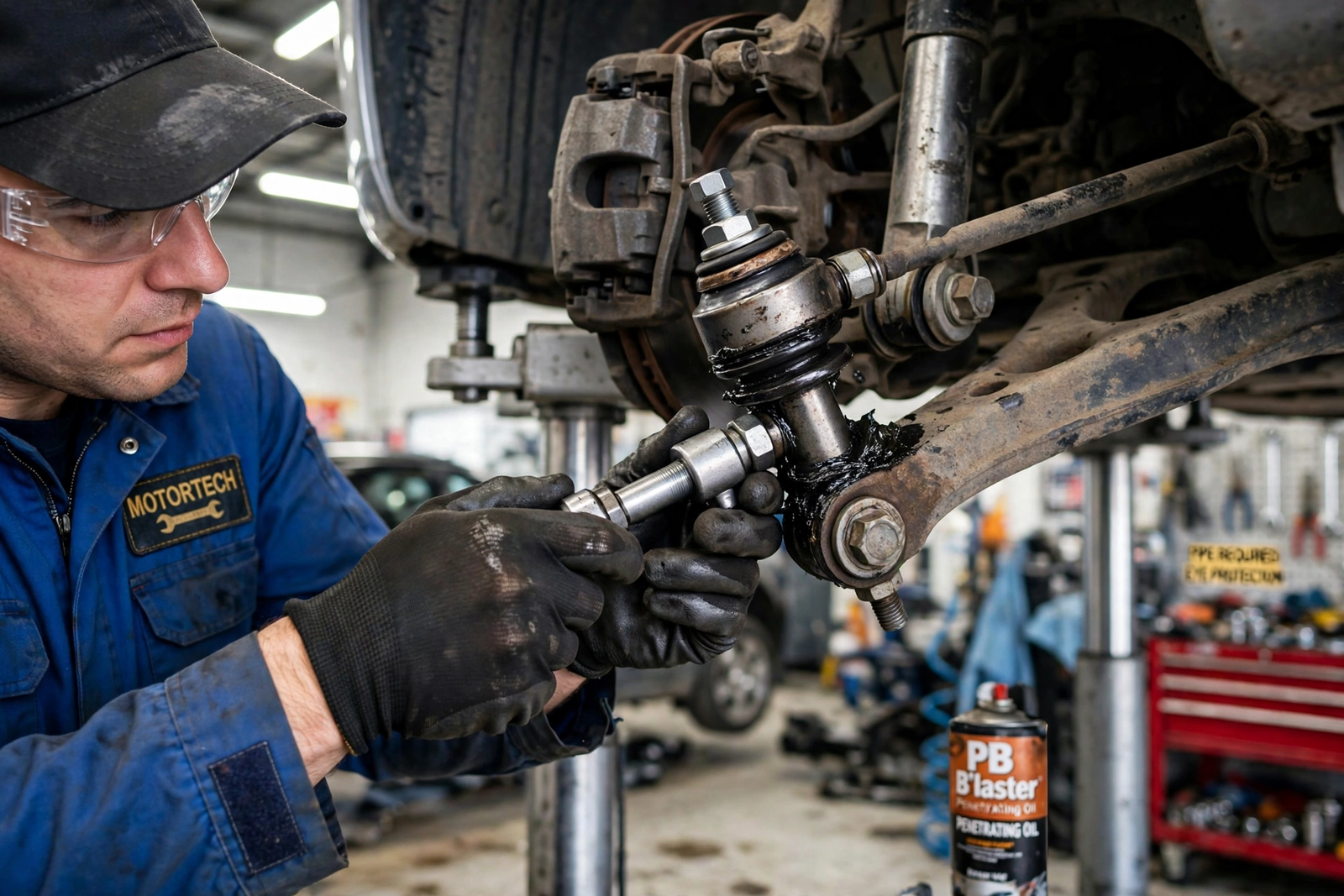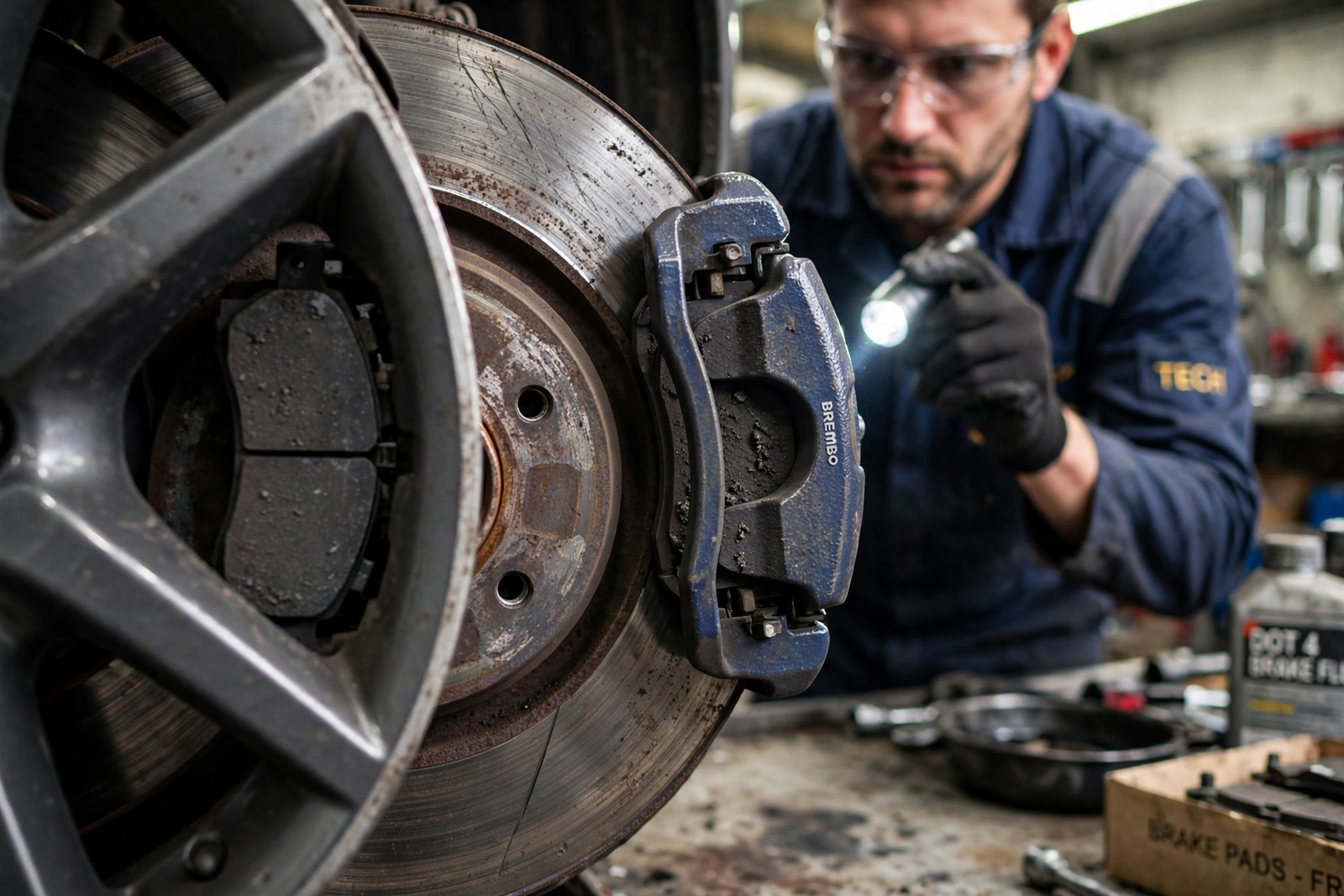
Brake Component Lifespans
- Brake pads: 30,000–70,000 miles. The friction material wears with every stop.
- Brake rotors: 50,000–70,000+ miles. Usually replaced every second pad change, or resurfaced once in between.
- Brake fluid: 2–3 years (not mileage-based — it absorbs moisture over time).
- Calipers: 75,000–100,000+ miles. Often last the life of the car unless seals fail.
- Brake lines/hoses: 100,000+ miles, but inspect for corrosion and cracking.
Rear brakes typically last 1.5–2x longer than fronts, since front brakes handle ~70% of stopping force.
What Affects Brake Life Most?
1. Driving style (biggest factor)
Hard, late braking generates enormous heat and wears pads fast. Anticipating stops and braking gently can double pad life. Riding the brakes downhill is especially destructive — downshift instead.
2. Driving environment
City stop-and-go driving wears brakes 2–3x faster than highway cruising. Mountain driving and towing are also hard on brakes.
3. Vehicle weight
Heavier vehicles (trucks, SUVs, EVs) wear brakes faster — more mass to stop. (EVs partially offset this with regenerative braking.)
4. Pad material
- Organic: quietest, cheapest, shortest life (25,000–40,000 miles)
- Semi-metallic: the common OEM choice — good balance (30,000–60,000 miles)
- Ceramic: longest-lasting, low dust, quiet (40,000–70,000+ miles) — worth the premium for most drivers
Warning Signs Your Brakes Need Attention
- Squealing: wear indicators — thin metal tabs designed to make noise when pads are low
- Grinding: pads worn to the metal backing — you’re damaging the rotors now
- Vibration/pulsation: warped rotors (or uneven pad deposits)
- Longer stopping distances
- Brake warning light on the dash
- Pulling to one side when braking — stuck caliper or uneven wear
- Spongy pedal: air or moisture in the brake lines — needs bleeding/fluid change
Don’t ignore squealing — it’s an early warning designed to save you money. Grinding means the cheap fix window has closed. Brake inspections are standard during how often should you service your car“>regular car servicing, so worn pads get caught before they damage rotors.
Brake Replacement Costs (2026)
- Pads only (per axle): $150–$300
- Pads + rotors (per axle): $300–$600
- Full brake job (all four wheels): $500–$1,000+
- Luxury/performance vehicles: $800–$1,500+
Ceramic pads cost $20–$50 more per axle than semi-metallic but last longer and keep wheels cleaner — usually worth it. The NHTSA vehicle safety resources are worth reviewing for understanding how brake performance relates to overall stopping safety.
How to Make Your Brakes Last Longer
- Anticipate stops — coast down early instead of braking late
- Don’t ride the brakes downhill — downshift to engine-brake
- Lighten your load — every 100 lbs of junk in the trunk wears brakes faster
- Choose ceramic pads at replacement time
- Flush brake fluid every 2–3 years — moisture corrodes calipers from the inside
- Break in new pads properly — follow the bedding procedure (series of moderate stops) for maximum life
Bedding In New Brakes: The Step Everyone Skips
New pads and rotors need a break-in (bedding) procedure to perform properly and last. Skipping it causes uneven pad deposits — the real cause of most “warped rotor” complaints.
- Find a safe, empty road. Accelerate to ~35 mph, then brake firmly (not slamming) to ~5 mph.
- Repeat 4–5 times, allowing ~30 seconds of driving between stops for cooling.
- Then do 2–3 harder stops from ~55 mph to ~5 mph.
- Drive for 5–10 minutes without heavy braking to let everything cool.
- Avoid hard stops for the first 200 miles when possible.
You’ll smell the pads during bedding — that’s normal. What you’re doing is transferring an even layer of pad material onto the rotor surface. Pads bedded properly last longer, stop better, and stay quiet. The Tire Rack brake tech center has excellent detail on bedding procedures for different pad compounds.
Why do my new brakes squeal?
Light squealing in the first 200 miles is usually bedding-related and resolves on its own. Persistent squeal after break-in can mean glazed pads, missing shims, or low-quality pad material. A thin layer of brake-specific anti-squeal compound on the pad backs (not the friction surface!) usually silences it.
Frequently Asked Questions
How do I know if I need new rotors or just pads?
If rotors are smooth, thick enough (above minimum spec stamped on the rotor), and not pulsating, pads alone are fine. Deep grooves, warping, or below-spec thickness mean replacement.
Can I drive with squeaky brakes?
Briefly — squealing is an early warning. But get them checked within a week or two; waiting turns a pad job into a pad-and-rotor job.
Why do my brakes grind in the morning?
Light surface rust forms overnight, especially in humidity — a few stops usually clears it. Persistent grinding is worn pads.
Do rear brakes wear faster than front?
No — fronts do most of the work and wear faster. If your rears are wearing oddly fast, have the proportioning valve and calipers checked.
How long does a brake job take?
About 1–2 hours per axle at a shop. Pads and rotors together on all four corners is typically a half-day job.
Are drilled/slotted rotors worth it?
For daily driving, no — quality blank rotors perform as well and last longer. Drilled/slotted rotors are for track use and aggressive driving; they can crack under street conditions. If you tow heavy loads, also review how long does a transmission last complete answer“>transmission care since towing stresses the whole drivetrain.