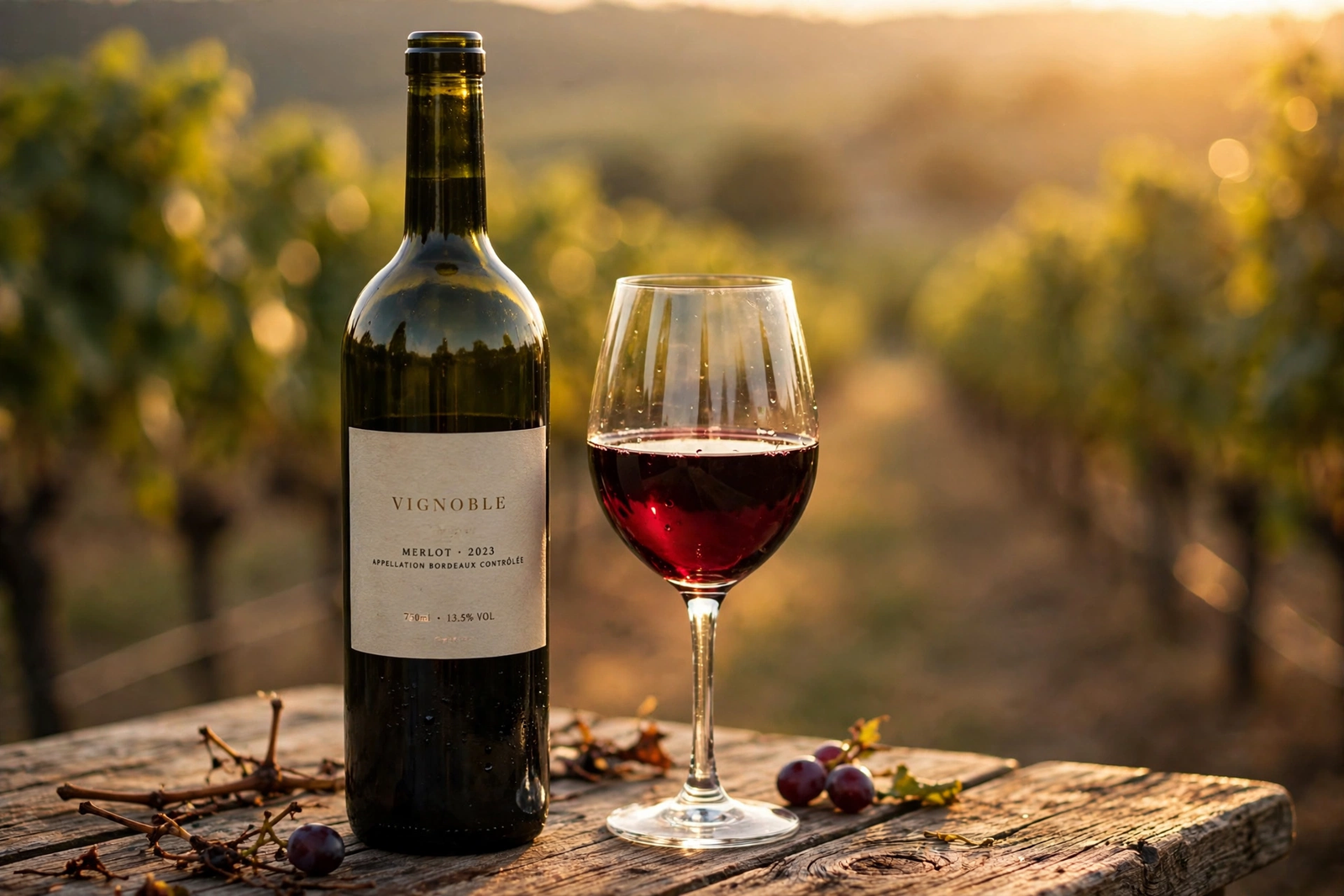
A standard 750 ml bottle of wine holds 25.4 fluid ounces. That works out to about five 5-ounce glasses, four generous 6-ounce pours, or roughly three and a third cups of wine. If you are converting a recipe or planning a dinner party, just remember the simple formula: 750 ml = 25.4 fl oz.
It is one of those questions that comes up at exactly the wrong moment — you are halfway through cooking, a recipe calls for half a cup of white wine, and you need to know whether opening that bottle makes sense. Or you are hosting friends and trying to figure out whether two bottles will stretch across the table. The answer is refreshingly simple, but the details around it are genuinely useful, especially once you start comparing bottle sizes, glass pours, and the difference between US and imperial ounces.
The Short Answer: 25.4 Fluid Ounces
A standard wine bottle contains 750 milliliters of wine. Since one US fluid ounce equals 29.5735 milliliters, the math is straightforward:
750 / 29.5735 = 25.36 fluid ounces, which rounds to 25.4 fl oz.
Most people round it even further and just say 25 ounces, which is close enough for pouring and party planning. But if you are doing precise recipe conversions, 25.4 is the number to use. It is worth noting that the fluid ounce is a measure of volume, not weight — 25.4 fluid ounces of wine weighs a little more than 25.4 ounces on a kitchen scale, because wine is slightly denser than water thanks to its alcohol and sugar content.
For context on how the fluid ounce fits into the broader system of US measurements, the fluid ounce’s definition and history make for interesting reading.
Why Wine Bottles Are 750 ml
The 750 ml standard was not chosen at random, though the exact origin is debated. One popular theory traces it to the glassblowers of 18th-century Bordeaux, whose lung capacity supposedly produced bottles in the 700-800 ml range. Another points to simple practicality: 750 ml is roughly the amount one person could comfortably share over dinner — about five glasses.
What is certain is that the size became an international norm. The European Union standardized the 750 ml bottle in the 1970s, and the United States followed: in 1979, the Bureau of Alcohol, Tobacco and Firearms (now the Alcohol and Tobacco Tax and Trade Bureau) adopted metric standards for wine, replacing the old American “fifth” (four-fifths of a quart, or 757 ml) with the 750 ml bottle. So if you ever wondered why a bottle holds that slightly awkward 25.4 ounces instead of a clean 25, now you know — it is a metric size living in an imperial-measurement world.
Wine Bottle Sizes and How Many Ounces They Hold
The standard bottle is only the beginning. Winemakers use a whole family of bottle sizes, and knowing their ounce counts helps whether you are buying for a wedding or just curious:
- Split / Piccolo (187.5 ml) — 6.3 fl oz. A single generous glass, common on airplanes and at events.
- Demi / Half bottle (375 ml) — 12.7 fl oz. About two and a half glasses; perfect for a quiet dinner for one.
- Standard (750 ml) — 25.4 fl oz. The everyday bottle, roughly five glasses.
- Magnum (1.5 L) — 50.7 fl oz. Two standard bottles; a dinner-party favorite that also ages wine more gracefully.
- Double magnum (3 L) — 101.4 fl oz. Four bottles; about twenty glasses.
- Jeroboam (3 L still / 4.5 L sparkling) — 101.4 to 152.2 fl oz, depending on the wine style.
- Imperial / Methuselah (6 L) — 202.9 fl oz. Eight standard bottles.
- Salmanazar (9 L) — 304.3 fl oz. Twelve bottles — a full case in a single vessel.
- Balthazar (12 L) — 405.8 fl oz. Sixteen bottles.
- Nebuchadnezzar (15 L) — 507.2 fl oz. Twenty bottles, and you will need help lifting it.
For a deeper look at these formats and their colorful names, see the overview of wine bottle sizes on Wikipedia.
How Many Glasses in a Bottle of Wine?
This is the question people actually care about when they ask about ounces. The answer depends entirely on your pour:
- 5-ounce pour (US standard drink): exactly 5 glasses per bottle. This is the restaurant standard and the size US dietary guidelines use when defining a standard drink of wine.
- 6-ounce pour (generous restaurant serving): about 4 glasses per bottle.
- 3-ounce tasting pour: 8 to 9 glasses — ideal for wine tastings where everyone samples several bottles.
- 8-ounce casual home pour: about 3 glasses. Be honest — this is what most of us pour at home.
For a dinner party of eight people having two glasses each, you will need a little more than three bottles. Round up to four and nobody goes thirsty.
US Fluid Ounces vs Imperial Fluid Ounces
Here is a wrinkle that trips up international readers. The US fluid ounce (29.57 ml) and the British imperial fluid ounce (28.41 ml) are not the same. In imperial ounces, a 750 ml bottle holds about 26.4 imperial fl oz. The UK uses the same 750 ml bottle — the metric volume is universal — so the difference only matters when you are converting into ounces for a recipe or calculation. Always check which ounce your source means.
Common Wine Measurements and Conversions
A few conversions worth keeping in your back pocket:
- 25.4 fl oz = 3.17 US cups
- 25.4 fl oz = 1.58 US pints
- 25.4 fl oz = 0.75 liters
- Half a bottle (375 ml) = 12.7 fl oz = about 1.6 cups
- A 5-ounce glass = 147.9 ml
- A 187.5 ml split = 6.3 fl oz = about 0.8 cups
If you find yourself converting drink measurements often, our pint to ounce conversion guide covers the US pint in detail, and the ounce and gram conversion guide is useful when recipes switch between volume and weight.
Frequently Asked Questions
How many oz in a bottle of wine exactly?
Exactly 25.3605 US fluid ounces, rounded to 25.4 fl oz. In imperial fluid ounces, it is about 26.4 fl oz.
How many 5 oz glasses are in a bottle of wine?
Five. A 750 ml bottle divided by a 5-ounce standard pour gives you exactly five glasses, which is why five is the number restaurants and nutrition labels use.
How many ounces are in a magnum of wine?
A magnum holds 1.5 liters, which equals 50.7 US fluid ounces — exactly twice a standard bottle, or about ten 5-ounce glasses.
Is a bottle of wine 25 or 26 ounces?
In US fluid ounces it is 25.4; in imperial fluid ounces it is about 26.4. Both are correct — it depends on which ounce system you are using.
How many cups of wine are in a bottle?
About 3.17 US cups. So a recipe calling for one cup of wine uses just under a third of a standard bottle.
Why is a wine bottle 750 ml and not 1 liter?
The 750 ml size became the international standard through European regulation in the 1970s and US adoption in 1979. Tradition, glassblowing history, and the convenience of a five-glass bottle all played a role.