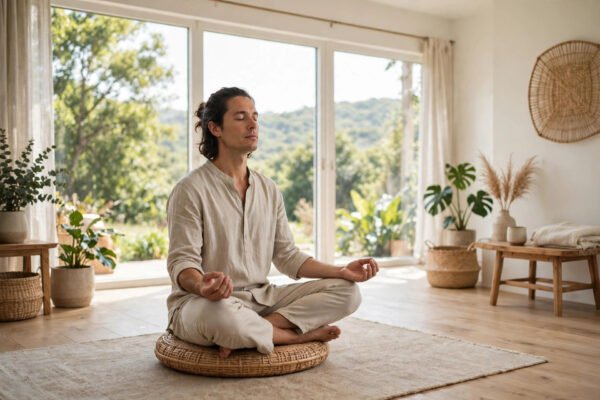
Personal growth in 2026 looks different from the hustle-culture self-improvement of five years ago. The 5 a.m. cold-plunge grindset has given way to something more sustainable — and, the research suggests, more effective. This year’s defining personal growth trends share a common thread: working with human psychology instead of against it. Rest is productive. Failure is data. Identity beats willpower. Breathwork went mainstream, 75 Hard got a thoughtful reboot, and the best mindset books of the year read more like field guides than pep talks. Here’s what’s actually trending in personal growth — and what deserves a place in your life.
The philosophical shift: from optimization to alignment
The old model treated humans as machines to optimize: more output, less sleep, relentless discipline. The 2026 model treats humans as organisms to align: energy management over time management, systems over goals, identity over outcomes. The science backs the shift — American Psychological Association research consistently shows that sustainable behavior change comes from environment design and identity shifts, not white-knuckled willpower. The trends below all reflect this deeper understanding: growth that fits real life beats growth that requires a different life.
Trend 1: Breathwork goes mainstream
What was once the domain of yogis and Navy SEALs is now a boardroom and bedroom staple. Breathwork’s 2026 mainstreaming rode several waves: wearable data showing real-time HRV (heart-rate variability) improvements, short-form video making techniques teachable in 60 seconds, and a stressed-out culture desperate for free, immediate calm. The core practices: box breathing (4-4-4-4) for focus, physiological sighs (double inhale, long exhale) for rapid calm — Stanford research shows it’s among the fastest known stress interventions — and longer sessions (holotropic-style, Wim Hof method) for deeper experiences.
The honest assessment: breathwork’s acute effects (calm, focus, energy) are well-supported; the grander claims (trauma healing, disease treatment) outrun the evidence. Use it as what it is — the fastest, freest nervous-system tool available. Five minutes of deliberate breathing beats five minutes of doomscrolling by every measure that matters. Start with the physiological sigh: two short inhales through the nose, one long exhale through the mouth, repeat three times. That’s it — you’ve begun.
Trend 2: The 75 Hard evolution — sustainable challenge culture
75 Hard (75 days of two workouts, strict diet, reading, progress photos — zero compromise) built a devoted following and a trail of burnout. 2026’s evolution keeps the challenge-culture appeal while fixing the flaws: flexible frameworks (75 Soft, 75 Medium) that preserve consistency without rigidity, an emphasis on which habits rather than just compliance theater, and — most importantly — planned integration afterward. The insight the reboot captured: challenges are great ignition systems and terrible engines. Use the 75 days to install identity (“I’m someone who works out daily”), then transition to sustainable rhythms.
The meta-lesson for any self-challenge: design the exit before you start. What does day 76 look like? If the answer is “collapse,” the challenge taught compliance, not growth. The 2026 versions that work end with a maintenance protocol, not a finish line.
Trend 3: Failure reframed as data
“Fail fast” was startup jargon; in 2026 it’s personal operating system. The reframe: every failed attempt is an experiment with results — what did you learn about the approach, the timing, yourself? This isn’t participation-trophy thinking; it’s the scientific method applied to life. People keeping “failure resumes” (documenting rejections, flops, and lessons) report less fear of trying and faster iteration. The practice: after any setback, write three sentences — what happened, what it taught, what you’ll try differently. The NIH’s behavioral research supports the mechanism: reframing reduces threat response, freeing cognitive resources for problem-solving.
Applied to daily life, this pairs naturally with building a daily routine that sticks — routines are hypotheses, and the data (did it stick? why not?) improves the next iteration. And when the data says you’re avoiding the work, strategies to stop procrastinating address the avoidance directly rather than shaming it.
Trend 4: Rest as a radical practice
The most countercultural 2026 trend: deliberate rest. Not collapse-on-the-couch exhaustion rest — chosen, protected recovery: real lunch breaks, phone-free evenings, actual vacations where work stays off, and the radical act of doing nothing without guilt. The performance case is airtight: sleep consolidates learning, rest prevents the burnout that destroys years of progress, and every elite performer — athletes, musicians, chess grandmasters — builds training around recovery. The cultural shift: rest is no longer the reward for productivity but its prerequisite. Schedule it with the same seriousness as work, defend it the same way, and watch output improve.
Trend 5: The best mindset books of 2026 — what they’re actually saying
This year’s standout titles converge on a few themes: identity-based habits (change who you believe you are, and behavior follows — the research on identity and adherence is strong); environment design (you don’t rise to your goals, you fall to your systems — arrange your world so the right choice is easy); self-compassion as performance tool (harsh self-criticism impairs learning; kind, honest self-assessment accelerates it); and attention as the master resource (in an economy engineered to harvest focus, protecting it is the growth move). The best books share a trait: fewer anecdotes about CEOs, more actionable protocols for normal lives. Judge any mindset book by one test — does it change what you do Tuesday morning?
Making it stick: the 2026 personal growth stack
Trends are entertainment; implementation is growth. The minimalist stack that captures 2026’s best insights: one breathwork practice (3 minutes daily — the physiological sigh is enough to start), one identity shift (not “I’ll work out” but “I’m an exerciser” — then prove it in small daily votes), one system (a routine designed around your energy, reviewed monthly as data), protected rest (scheduled, defended, guilt-free), and a failure log (three sentences per setback). That’s it — five elements, maybe 20 minutes a day. Personal growth in 2026 isn’t about becoming someone else. It’s about becoming more deliberately yourself.
Conclusion
Personal growth trends in 2026 — breathwork’s mainstreaming, challenge culture’s maturation, failure-as-data, rest as strategy, and a wiser bookshelf — point in one direction: sustainable over spectacular, alignment over optimization, identity over willpower. The 5 a.m. grindset asked you to become a machine. The 2026 approach asks something harder and better: to understand the human you actually are and design growth that fits. Start small, track honestly, rest deliberately, and let compound interest — the only real growth hack — do its work.
Frequently Asked Questions
What is breathwork and does it actually work?
Deliberate breathing techniques (box breathing, physiological sighs, extended exhales) that regulate the nervous system. Acute effects on calm and focus are well-supported by research; it’s among the fastest, freest stress interventions available.
Is 75 Hard worth doing?
It builds discipline and identity effectively, but the rigid version causes burnout for many. The 2026 evolved versions (flexible frameworks with planned maintenance afterward) capture the benefits more sustainably. Design your exit before you start.
What are the best personal growth books of 2026?
Look for titles emphasizing identity-based habits, environment design, self-compassion, and attention management — with actionable protocols over CEO anecdotes. The test: does it change what you do Tuesday morning?
How do I actually stick to personal growth habits?
Start absurdly small, tie habits to identity (“I’m a reader” + 10 pages nightly), design your environment to make good choices easy, track simply, and treat lapses as data rather than failure.
Is rest really productive?
Yes — sleep consolidates learning, recovery prevents burnout, and rest restores the cognitive resources that willpower and creativity draw on. Scheduled, protected rest is a performance strategy, not laziness.