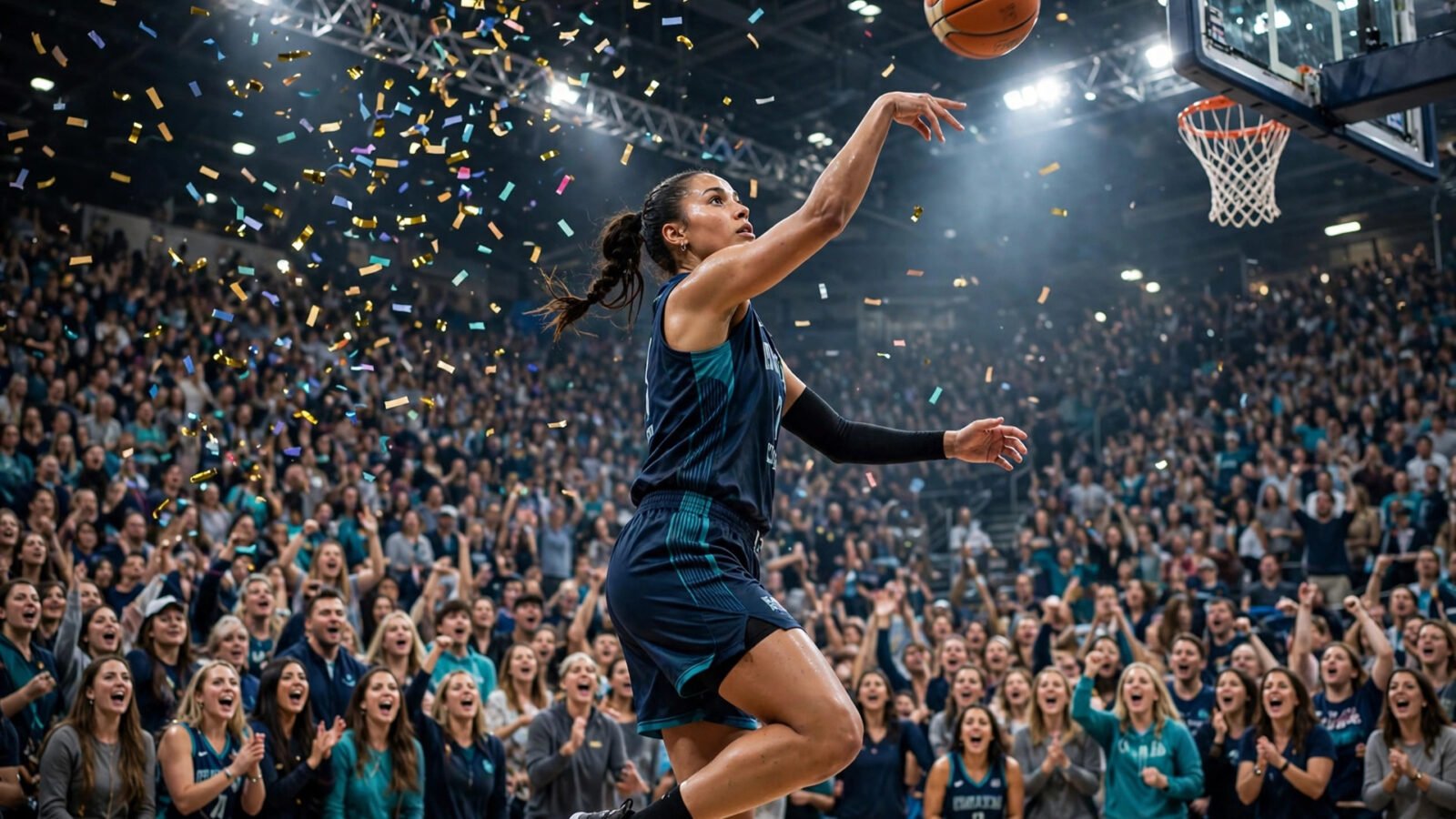
For decades, the sports industry treated women’s sports as a charity case — nice to have, impossible to monetize, destined for the margins. Then the numbers started breaking records, and kept breaking them: the Women’s World Cup, the WNBA, women’s college basketball, the NWSL, Olympic women’s events — viewership climbing year after year, sponsorship flooding in, media rights deals multiplying. The question changed from “will anyone watch?” to “how fast can we build the infrastructure?”
Why does women’s sports viewership keep climbing, what’s driving it, and where does it go from here? Here’s the full story.
The numbers: records keep falling
The trajectory is unmistakable. The Women’s World Cup draws audiences rivaling the men’s in key markets; the NCAA women’s basketball championship outdrew the men’s final — a symbolic earthquake; WNBA viewership multiplied with triple-digit growth seasons; the NWSL’s media rights went from giveaway to a nine-figure deal; women’s Olympic events routinely top US primetime ratings. Each record was supposed to be the peak. Each was a floor.
The NCAA’s championship viewership data documents the college inflection, and the WNBA’s growth — attendance, ratings, merchandise, expansion franchises with record valuations — shows a league crossing from subsidized to self-sustaining. The Deloitte sports industry analyses now project women’s sports revenue past the billion-dollar mark — the number that ends every “but can it make money?” conversation.
Why now: the drivers
Investment followed by product: the oldest story in sports — put the games where people can watch, market them properly, and audiences appear. For decades women’s sports got terrible time slots, minimal marketing, and production values that signaled “minor league.” The current boom correlates precisely with professional presentation: primetime slots, real marketing budgets, quality broadcasting. The audience was always there; the product finally showed up.
Stars with stories: every ratings leap has a face — the generational talents whose excellence is undeniable and whose personalities transcend sport. Women’s sports benefited from a concentration of charismatic superstars arriving as media infrastructure matured — the right talent at the right moment.
The highlight economy: social media demolished the distribution bottleneck. A spectacular play reaches millions in minutes regardless of broadcast slot — women’s sports, rich in highlight-reel moments, thrived in the clip economy. The old gatekeepers (who decided what was “worth” televising) lost their veto.
Values alignment: younger audiences — the demographic every advertiser wants — over-index on women’s sports viewership, drawn by authenticity, athlete advocacy, and the sense of participating in a movement. Sponsors followed the demographics, and sponsor money bought better production, completing the virtuous cycle.
The media-rights revolution
The business story is the rights story. NWSL’s landmark deal, WNBA’s escalating valuations, the Women’s World Cup’s standalone rights sales — each reset the market’s assumptions about what women’s sports are worth. The pattern: rights bought cheap on old assumptions, audiences exceeding projections, renewals at multiples. The undervaluation was the opportunity, and the smart money noticed.
Streaming accelerated everything: platforms hungry for live content (the last DVR-proof programming) found women’s sports undervalued and available. The fragmentation that hurt some men’s properties helped women’s — more buyers, more slots, more visibility. For viewers, the expanded access changed habits: fans who can watch live sports without expensive cable discovered women’s leagues alongside everything else — and stayed.
What’s still broken
Honesty requires the gaps. Pay equity: the ratios improved dramatically but remain stark in most sports — the USWNT’s landmark equal-pay deal is the exception proving the rule. Coverage share: women’s sports still receive a small fraction of total sports media coverage despite the ratings — the allocation lags the audience. Investment depth: training facilities, youth pipelines, and coaching infrastructure trail decades of men’s investment; the product is succeeding despite the infrastructure gap. The commentary problem: coverage quality — knowledgeable commentators, serious analysis rather than human-interest framing — still catches up in places.
The structural point: every remaining gap is also headroom. The viewership records are being set with one hand tied — imagine the numbers with equal investment.
The youth pipeline: where the future audience comes from
The ultimate leading indicator isn’t TV ratings — it’s participation. Girls’ sports participation keeps rising, and every girl who plays becomes a potential lifelong fan, ticket buyer, and merchandise customer. The pipeline economics are straightforward: today’s youth players are tomorrow’s season-ticket holders. Title IX built the foundation decades ago; the current boom is its compounding interest.
The pipeline also feeds the product: bigger talent pools mean better play, which means better television, which means more young fans. It’s the virtuous cycle men’s sports enjoyed for a century, finally spinning for women’s. Investment in youth infrastructure — facilities, coaching, visibility of role models — is the highest-leverage spending in the entire ecosystem.
Where it goes from here
The next phase: expansion franchises (the WNBA’s record expansion fees signal owner confidence), global league development (Europe’s women’s soccer, cricket’s women’s leagues), the Olympics as accelerant, and the youth pipeline — girls’ participation rates, the ultimate leading indicator, keep rising. The Olympics’ gender-parity programming made the Games a showcase; the professional leagues convert the inspiration into fandom.
The cultural shift may be the biggest story: women’s sports moving from “cause” to “content” — watched for the sport, not the statement. That’s the maturation marker. When the audience tunes in for the game itself, the movement becomes the mainstream. (The same dynamics reshaping sports media — from what’s winning on streaming to live sports’ cord-cutting economics — all favor properties with momentum.)
Conclusion
Women’s sports viewership keeps climbing because the product was always good and the presentation finally caught up: primetime slots, real marketing, streaming access, and generational stars arriving together. The records aren’t anomalies; they’re the market correcting decades of underinvestment.
The trajectory points one way: more rights deals, more expansion, more investment, more records. The industry spent decades asking whether anyone would watch women’s sports. The audience answered — loudly, repeatedly, and in record numbers. The only remaining question is how fast the infrastructure can catch up to the demand.
Frequently Asked Questions
Why is women’s sports viewership growing so fast?
Better time slots, real marketing budgets, streaming access, social-media highlights bypassing old gatekeepers, generational star talent, and younger audiences drawn to the authenticity. The audience existed; professional presentation unlocked it.
Do women’s sports make money now?
Increasingly yes — media rights deals multiplied into nine figures, sponsorship surged, expansion franchises command record fees, and analysts project billion-dollar-plus industry revenue. Individual league economics vary, but the trajectory is decisively toward sustainability.
What’s the most-watched women’s sporting event?
The FIFA Women’s World Cup final holds the global records; in the US, the NCAA women’s basketball championship’s recent numbers (outdrawing the men’s final) marked the symbolic high point. Olympic women’s events routinely lead primetime.
How can I watch more women’s sports?
More easily than ever: NWSL and WNBA have broad streaming and broadcast deals, the Women’s World Cup and Olympics air on major networks, and league apps centralize schedules. The expanded access is itself a driver of the viewership boom.
Is the growth sustainable, or a bubble?
The fundamentals look structural, not bubbly: audiences compound (each season’s fans return plus new ones), rights deals lock in revenue for years, and the youth pipeline keeps widening. Bubbles pop when speculation outruns reality; here, investment is still catching up to demonstrated demand.