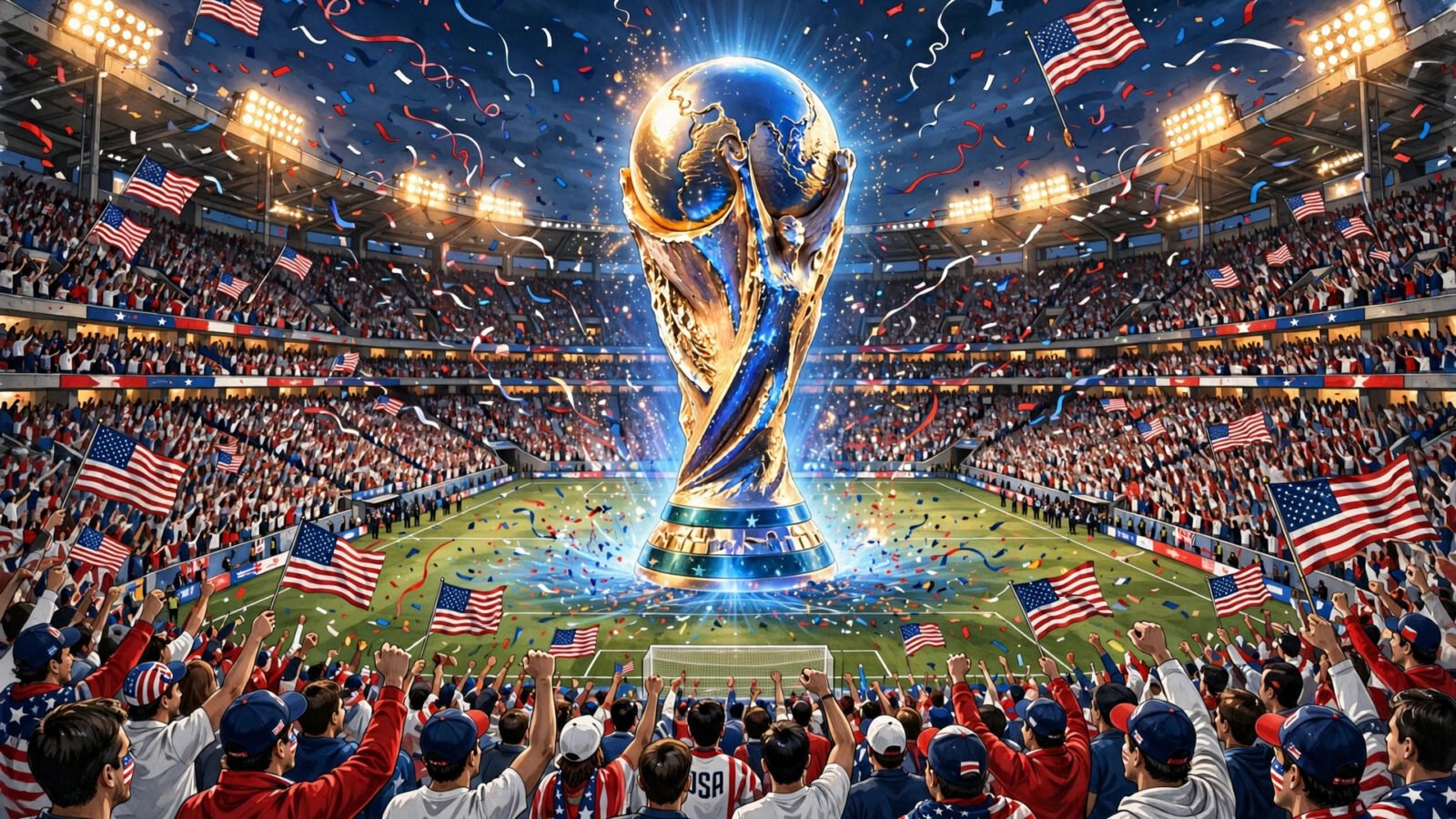
The 2026 FIFA World Cup isn’t just coming to America — it’s colliding with an American soccer culture that’s already transformed beyond recognition. When the US last hosted in 1994, soccer was a curiosity most Americans ignored; the tournament’s legacy seeded MLS, youth soccer’s explosion, and eventually a generation of world-class players. Thirty-two years later, the sport arrives as a genuine mainstream force: MLS draws millions, the US women’s national team are global icons, European leagues air every weekend morning, and soccer is the most-played youth team sport in the country. The 2026 tournament — the biggest ever, on home soil — is about to pour gasoline on all of it. Here’s the World Cup effect: what changes, what lasts, and what it means for fans, players, and the business of American soccer.
Where American soccer stands on the eve of 2026
The numbers tell a remarkable story. MLS attendance has climbed year after year, with expansion clubs drawing 30,000+ crowds that rival any American league’s atmosphere. The league’s media deal with Apple made every match globally accessible — a bet on streaming-first sports consumption that looks smarter each season. Youth participation remains massive: roughly 3 million kids play organized soccer, and the pay-to-play pipeline, for all its flaws, produces elite talent that now fills top European rosters — Americans starting in the Premier League, Serie A, and Bundesliga is routine, not remarkable.
The women’s game is arguably America’s greatest soccer success story. The USWNT’s World Cup triumphs built a cultural footprint no marketing budget could buy, and the NWSL’s growth — record attendance, rising valuations, new franchises — reflects genuine commercial momentum. Meanwhile, soccer’s demographic tailwinds are undeniable: the sport’s core audience skews young and diverse, exactly the demographics every other league covets. The foundation for a World Cup boom isn’t hypothetical — it’s poured and curing.
The tournament effect: what history teaches
Sporting mega-events reliably supercharge host nations’ sports cultures — with caveats. France 1998 catalyzed a golden generation that won the World Cup on home soil and reshaped French soccer’s infrastructure. Germany 2006’s “summer fairy tale” revived domestic enthusiasm and accelerated stadium modernization. Japan/Korea 2002 professionalized Asian soccer’s ambitions. The pattern: hosting creates a permission structure — for kids to choose soccer, for cities to invest in facilities, for broadcasters to commit airtime, for sponsors to open wallets.
But the effect isn’t automatic. Brazil 2014’s legacy is debated — magnificent stadiums, but the 7–1 semifinal trauma and underused venues complicate the story. South Africa 2010 left beautiful arenas and real grassroots programs, but professional soccer there didn’t transform. The difference-maker is what happens after: sustained investment in youth development, coaching education, and accessible facilities. America’s advantage in 2026 is that the infrastructure and professional leagues already exist — the World Cup amplifies rather than inaugurates.
Youth soccer: the participation wave
Expect the classic post-World Cup enrollment surge — youth leagues braced for it after 1994, 2010, and 2014, and 2026’s home tournament should produce the biggest wave yet. The opportunity and the risk arrive together: more kids discovering soccer is wonderful; the pay-to-play system’s costs (often $3,000–$5,000+ annually for competitive travel ball) excluding talented low-income players is the sport’s original sin. The most important legacy question of 2026 isn’t how many kids sign up — it’s whether the boom funds scholarships, free inner-city programs, and coaching development that keep them playing. Watch for MLS clubs expanding academy free-to-play models and US Soccer directing new revenues toward access; that’s where lasting change lives.
The professional game: MLS, NWSL, and the spotlight
For MLS, 2026 is the culmination of a 30-year plan. The league strategically aligned its calendar and expansion so the World Cup arrives with momentum: new stadiums, star designated players, and a product that’s genuinely entertaining. Expect attendance and viewership bumps during and after the tournament — the “World Cup hangover effect” reliably lifts domestic leagues as casual fans seek their soccer fix. The NWSL, riding the women’s game’s surge, gets a parallel boost; a strong USWNT showing at the 2027 Women’s World Cup (already in qualifying cycles) would compound it.
The trickier question is talent retention. A spectacular home World Cup raises every young American star’s profile — and European transfer fees. MLS has evolved from selling league to deliberate stepping-stone model, and that’s healthy: Americans starring in top European leagues raises the national team’s ceiling, which raises the sport’s profile, which fills MLS stadiums. The virtuous cycle is already spinning; 2026 accelerates it.
Culture and community: soccer’s American moment
Beyond economics, World Cups reshape how a sport feels in a country. In 2026, expect soccer to dominate the American summer conversation the way the Olympics does — watch parties in parks, bars packed at 9 a.m. for group-stage games, kids wearing Pulisic and Sophia Smith jerseys instead of just basketball ones. The tournament’s 16 host cities become soccer capitals for a month, and the fan-fest culture (free public viewing parties FIFA organizes) makes the event accessible beyond ticket holders. If you want to experience it live, plan early — finding last-minute hotel deals that are actually good is a skill worth having when host cities sell out, and sorting how to watch live sports without expensive cable ensures you catch every match that matters.
The business explosion
Follow the money: FIFA projects record revenues from 2026, American sponsors are paying premiums for World Cup association, and host-city economic impact estimates run into billions. Youth soccer’s economy — already a multi-billion-dollar machine of clubs, tournaments, and gear — gets its biggest marketing event ever. Soccer-specific infrastructure (training facilities, futsal courts, stadium districts) attracts investment. And media: with the tournament on home soil in friendly time zones, expect record US viewership that resets what networks will pay for soccer rights afterward. The official FIFA World Cup 2026 hub and U.S. Soccer are the authoritative sources for tickets, schedules, and news.
Conclusion
The 2026 World Cup effect on American soccer won’t be a single moment but a decade-long compounding: more kids playing, fuller stadiums, bigger media deals, better players, deeper culture. The 1994 tournament planted seeds that took 30 years to mature; 2026 harvests that crop while planting the next one. For fans, it’s the sporting event of a generation on home soil — savor it. For the sport, it’s the moment American soccer stops being the future and becomes the present. The world is coming to watch. America’s ready to show what three decades of building looks like.
Frequently Asked Questions
When is the 2026 World Cup in the USA?
June 11–July 19, 2026, hosted jointly by the USA, Canada, and Mexico. Eleven US cities host matches, with the final on July 19 at MetLife Stadium in New Jersey.
How will the World Cup affect MLS?
Historically, home World Cups boost domestic league attendance and viewership afterward as casual fans seek more soccer. MLS has positioned its growth — expansion, stadiums, media deals — to capture exactly this wave.
Will youth soccer participation increase after 2026?
Almost certainly — every World Cup produces an enrollment surge. The key question is retention and access: whether the boom funds scholarships and free programs that keep lower-income kids playing beyond the initial excitement.
How can I get tickets to World Cup 2026 matches?
Through FIFA’s official ticket sales phases — register on FIFA’s website. Demand will vastly exceed supply for US matches and knockouts; hospitality packages offer guaranteed (expensive) alternatives. Avoid unofficial resellers.
Is soccer now mainstream in America?
By most measures, yes: massive youth participation, strong MLS attendance, record women’s game growth, and a young, diverse fanbase. The 2026 World Cup is expected to cement rather than create that status.