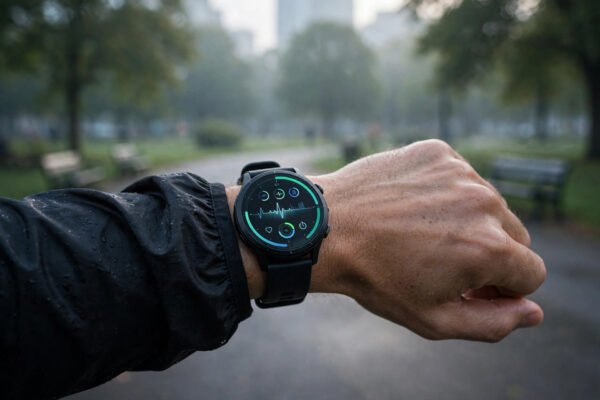
The weekend 5K used to be run on feel. Now it’s run on data: heart-rate zones, HRV trends, sleep scores, VO2 max estimates, recovery recommendations — all from the watch on your wrist. Wearable tech didn’t just give amateurs professional tools; it changed what amateur training is, from art to science, from guessing to measuring. The transformation is profound, ongoing, and not without trade-offs — and it’s only accelerating.
How are wearables changing amateur training, what does the science say about the data, and where’s the line between insight and obsession? Here’s the full picture.
What amateurs can measure now
The modern sports watch tracks what once required a lab: continuous heart rate, heart-rate variability (HRV), blood-oxygen saturation, sleep stages, GPS pace and distance, power (cycling/running), cadence, stride metrics, and recovery estimates. The American College of Sports Medicine’s guidelines provide the framework — 150 minutes of moderate cardio weekly, strength twice weekly — and wearables translate those abstractions into daily targets and live feedback.
The NIH’s indexed exercise research validates the core premise: self-monitoring measurably increases physical activity — the feedback loop works. People who track move more. That single finding underwrites the entire industry.
How training changed: the five shifts
1. Zone training democratized. Heart-rate zones — once the province of coached athletes — are now automatic: the watch tells you when you’re in Zone 2 (aerobic base) versus Zone 5 (redline). Amateurs finally train the fabled 80/20 split (mostly easy, occasionally hard) instead of the amateur classic: everything medium-hard.
2. Recovery became data. HRV trends, resting heart rate, and sleep scores turned recovery from “take a day off when tired” into a quantified readiness metric. Overtraining — the amateur’s chronic disease — is now visible before it bites.
3. The long game got visible. VO2 max estimates, training load, and fitness-age calculations show progress over months — the timescale where real adaptation happens. Motivation survives plateaus when the data shows the trend beneath the noise.
4. Personalization replaced templates. Adaptive training plans (Garmin Coach, Apple, Whoop, and others) adjust daily based on your data — the closest thing to a personal coach most amateurs will ever have. The generic 12-week plan is obsolete.
5. Social accountability scaled. Strava segments, challenges, and kudos turned solitary training social — the leaderboard as motivation engine. For many, the social layer matters more than the metrics.
The science: what the data gets right (and wrong)
Wrist-based heart rate is good (not perfect — cadence lock and tattoos cause errors); HRV trends are meaningful (single readings are noise); sleep staging is approximate (good for duration and consistency, weak on precise stages); calorie estimates are notoriously inflated (don’t eat back your “burn”). The American Heart Association’s activity guidance reminds us the fundamentals haven’t changed — the wearables just measure them.
The deeper limitation: data isn’t coaching. A watch can tell you HRV is down; it can’t tell you whether that’s overtraining, illness, stress, or a bad night — interpretation remains human. The amateurs improving most pair data with knowledge: understanding why Zone 2 matters beats owning the fanciest watch. The device is the instrument; the training understanding is the music.
The dark side: orthosomnia, anxiety, and data dependence
The pathologies have names now. Orthosomnia: obsessive pursuit of perfect sleep scores, where the tracker causes the insomnia it’s measuring. Readiness anxiety: skipping workouts because the recovery score is yellow — outsourcing bodily intuition to an algorithm. Data dependence: the runner who can’t enjoy an untracked run, the workout that “doesn’t count” without the watch.
Sports psychologists’ advice: the data serves the training, not the reverse. Scheduled untracked sessions, periodic device breaks, and the rule that how you feel outranks what the watch says — these guardrails separate the athletes wearables create from the anxieties they enable. The healthiest users check trends weekly, not scores hourly.
The data frontier: what’s coming next
The next wave is already visible: continuous glucose monitors crossing from diabetes care to athletic fueling (controversial — the science for non-diabetics is thin, but the trend is massive), hydration and sweat-composition sensors, non-invasive lactate estimates, and AI coaches that synthesize all streams into genuinely personalized guidance. The regulatory frontier matters too — as wearables make more health claims, the FDA’s oversight of “wellness” versus “medical” devices will shape what they can promise.
The through line: measurement keeps getting cheaper, more continuous, and more integrated — the amateur of 2030 will train with insight today’s pros would envy. The challenge stays human: turning information into consistent action, which no sensor has ever done for anyone.
Getting started: the practical stack
You don’t need the flagship $800 watch. The 80/20 of wearable training: any reliable heart-rate tracking (even a chest strap with a phone), consistency over features, and one metric learned deeply (start with heart-rate zones). Pair the data with training structure — a workout routine you’ll actually stick to matters more than the device monitoring it — and time your sessions wisely (the best time of day to exercise is the time you’ll actually do). Master the basics first; the advanced metrics will wait.
Conclusion
Wearable tech changed amateur training by making the invisible visible: effort zones, recovery state, long-term adaptation — all quantified, all actionable. The amateurs training smartest today have better data than Olympians had a generation ago, and the performance and health results show it.
The wisdom is in the balance: data as instrument, not master. The watch can measure the training, but only you can do it — and the best metric remains the oldest one: showing up, consistently, for years. Everything else is commentary. Useful, fascinating, occasionally obsessive commentary — worth having, as long as you remember who’s in charge. The future of amateur training is bright, measured, and still deeply human — the data lights the path, but only consistent effort walks it, one workout at a time, week after week.
Frequently Asked Questions
Are fitness trackers accurate?
Good enough for training: wrist heart rate is solid for steady efforts (less so for intervals), HRV trends are meaningful, sleep duration tracking is decent while sleep staging is approximate, and calorie estimates run high. Chest straps beat wrists for precision.
What wearable metrics matter most for beginners?
Heart-rate zones (train mostly easy), resting heart rate trends (fitness proxy), and consistency metrics (days active). Ignore the exotic scores until the basics are habitual — complexity is the enemy of adherence.
Can wearables replace a coach?
For structure and accountability, largely yes — adaptive plans are excellent. For technique, injury issues, and the human elements (motivation, life context), no. The best results pair data with occasional human expertise.
How do I avoid becoming obsessed with the data?
Schedule untracked workouts, treat single readings as noise (trends only), let perceived effort override the watch, and take periodic device breaks. If the data causes anxiety rather than insight, it’s hurting your training — simplify.
Do I need a smartwatch, or is a phone enough?
A phone with a chest-strap heart-rate monitor covers the essentials (zones, trends) for most beginners at a fraction of the cost. Upgrade to a watch when you want 24/7 data (sleep, HRV, recovery) and wrist convenience — not before the habit exists.