A torn window screen is one of those small annoyances that quietly drives you crazy all summer: the bugs getting in, the unsightly rip you see every time you look outside. I ignored mine for two summers before learning the fix takes 30 minutes and costs less than lunch.
Here’s how to replace a broken window screen yourself. It’s genuinely one of the easiest home repairs there is, and once you’ve done one, you’ll wonder why anyone pays a handyman $50 per screen.
Replace a Broken Window Screen Myself: What You Need
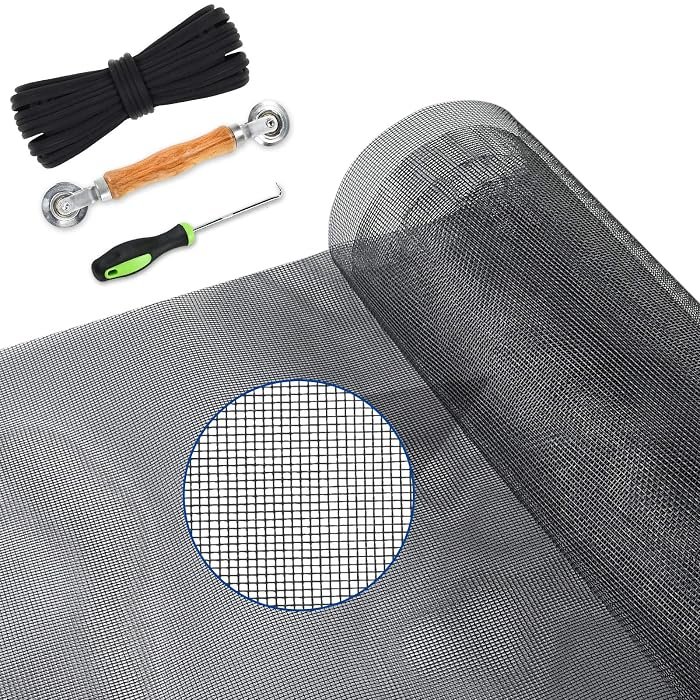
The materials list is short and cheap: replacement screen mesh ($8-$12 for a roll that does several windows), spline (the rubber cord that holds the mesh in, $4), and a spline roller tool ($5-$8). That’s under $20 total, and the tools last forever. A utility knife and scissors round out the kit.
Choose your mesh wisely. Standard fiberglass mesh is fine for most windows and the easiest to work with. Pet-resistant mesh costs a bit more but survives claws; solar/insect screen blocks more sun and tiny insects. Measure your frame and buy mesh a few inches larger on each side than the frame dimensions.
- Screen mesh roll. $8-$12. Fiberglass for standard use; pet-resistant or solar mesh for special needs.
- Spline. $4. Match the diameter to your old spline; bring a piece to the store to compare.
- Spline roller. $5-$8. The convex wheel pushes spline in; the concave side seats it. Worth every penny.
- Utility knife. For trimming excess mesh cleanly after installation.
- Scissors. For cutting mesh to rough size before installing.
- Flat workspace. A table or sawhorses. Working flat makes the job dramatically easier.
Step-by-Step Screen Replacement
Remove the screen frame from the window (most pop out with tabs or plungers on the sides) and lay it flat. Pry out the old spline with a flathead screwdriver or awl, pulling the torn mesh away as you go. Clean the spline groove thoroughly; debris in the channel prevents the new spline from seating properly.
Lay the new mesh over the frame, leaving 2-3 inches of overhang on all sides. Starting at one corner, use the convex wheel of the spline roller to press the spline and mesh into the groove, working along one side, then the adjacent side, keeping the mesh taut but not drum-tight. Over-stretching warps the frame. Continue around all four sides, then trim the excess mesh with a utility knife held at an angle against the outside of the spline.
- Remove the frame. Release the tabs or plungers and lift the screen out. Note how it mounts for reinstallation.
- Pull out old spline and mesh. Pry up an end with a screwdriver and pull. Discard the old mesh; reuse spline only if it’s still flexible.
- Clean the groove. Wipe out the spline channel completely. Debris causes lumps and poor seating.
- Lay new mesh with overhang. Center the mesh with 2-3 inches extra on every side.
- Roll in the spline. Start at a corner, work two adjacent sides first, keeping mesh taut. Then complete the remaining sides.
- Trim excess mesh. Utility knife angled outward along the spline. Reinstall the frame and admire your work.
When to Repair vs. Replace (and Pro Tips)
Small tears under 3 inches can be patched with a screen repair kit ($5): adhesive mesh patches that stick over the damage. They’re not invisible but they’re functional and take two minutes. Larger tears, brittle mesh that tears when touched, or bent frames warrant full replacement.
If the frame itself is bent, you can often straighten aluminum frames by hand on a flat surface. For rotted wood frames or badly kinked aluminum, replacement frames ($15-$25 pre-made, or cut-to-fit kits) are the answer. And here’s a pro tip: do all your damaged screens in one session. The setup is the annoying part; each additional screen takes 15 minutes once you’re rolling.
- Patch small tears. Under 3 inches: adhesive screen patches, $5, two minutes. Good enough for low-visibility windows.
- Replace brittle mesh entirely. If the mesh tears when you touch it, UV has destroyed it. Full replacement is the only fix.
- Straighten bent frames. Aluminum frames often bend back on a flat surface. Check corners are square before rescreening.
- Batch the job. Do every damaged screen in one session. Setup once, then each screen takes 15 minutes.
- Label frames. Screens look identical but fit specific windows. A piece of tape with the room name prevents confusion.
- Consider upgrading mesh. While you’re at it, pet-resistant or solar mesh in high-abuse or high-sun windows is cheap insurance.
Frequently Asked Questions
How much does it cost to replace a window screen yourself?
Under $15 for the first screen (mesh roll, spline, roller tool), and under $5 per additional screen since the tools are reusable. A handyman charges $40-$75 per screen.
What size spline do I need?
Match your old spline’s diameter; common sizes are .125, .140, .155, and .160 inch. Bring a piece of the old spline to the hardware store to compare.
Can I replace a screen without removing the frame?
It’s much harder and the results are worse. Removing the frame takes seconds on most windows and lets you work flat, which is the key to a tight, professional result.
Tools That Make This Job Easier
The right tool doesn’t just make a job faster; it makes the result better. I’ve done projects the hard way and the equipped way, and the difference in both enjoyment and outcome is enormous. You don’t need a workshop, just the right few items.
- Borrow before buying. Specialty tools you’ll use once are perfect borrows. Neighbors, friends, and tool libraries exist for exactly this.
- Rent the big stuff. Anything over $100 that you’ll use for one weekend is a rental. $40/day beats $200 gathering dust.
- Sharp beats expensive. A sharp $15 utility knife outperforms a dull $40 one. Fresh blades, sharp bits, and honed edges matter more than brands.
- Safety gear is a tool. Glasses, gloves, mask, ear protection. The project isn’t done right if you got hurt doing it.
- Go deeper: Screens keep pests out; the CDC guidance on preventing mosquito bites for authoritative detail on this topic.
The bottom line: Replacing a broken window screen yourself is a 30-minute, $15 job that anyone can do: remove the frame, pull the old spline and mesh, roll in new mesh with fresh spline, trim, and reinstall. Batch all your damaged screens in one session and you’ll never pay a handyman for this again.