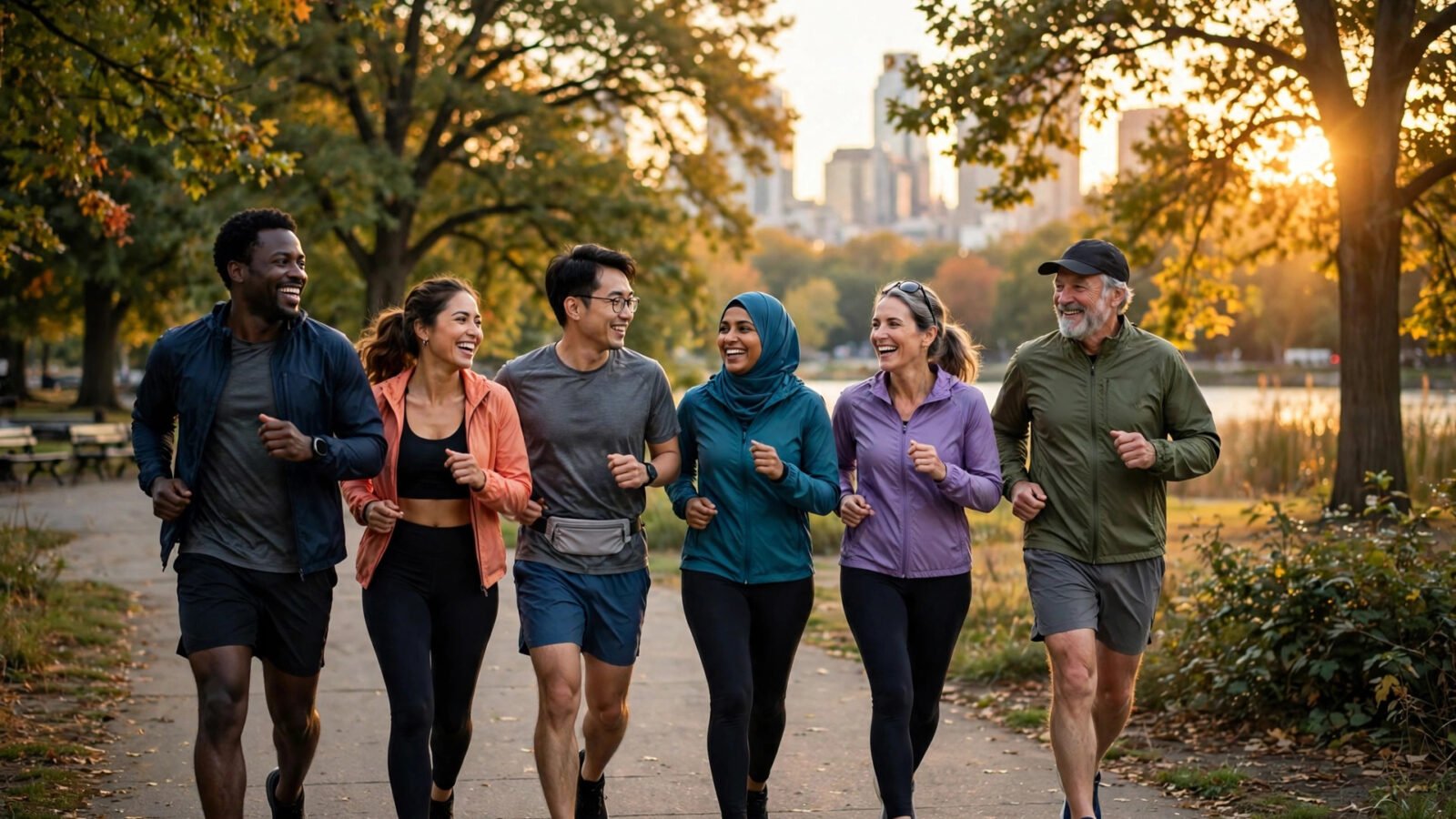
On any given weeknight in American cities, hundreds of strangers gather in parking lots and parks, lace up their shoes, and run a few miles together — then go for tacos. No membership fees, no pace requirements, no coaching certifications. Run clubs have exploded into one of the defining social phenomena of the decade, and their rise as social hubs says as much about modern loneliness as it does about fitness. In an era of dating apps and remote work, the humble group run became the third place a generation was missing.
The numbers are striking: run club participation has surged among 20- and 30-somethings, with some cities hosting dozens of weekly clubs catering to every niche — beginners, trail runners, queer runners, run-and-coffee crews, even run clubs organized around breweries and bookstores. What started as fitness became community infrastructure.
Why run clubs hit the cultural nerve
The timing was perfect. Remote work dissolved office social life. Dating apps left a generation exhausted by transactional romance. Religious and civic participation continued long declines. Into that vacuum stepped an activity with magical social properties: running side-by-side requires no sustained eye contact (conversations flow easier shoulder-to-shoulder), pace differences are gracefully accommodated (fast runners loop back, nobody is “bad”), and the shared mild suffering bonds people faster than any icebreaker. Exercise scientists call it “parallel play for adults”; participants call it the highlight of their week.
The low barrier is the genius. Unlike team sports requiring skill or gyms requiring money and confidence, run clubs ask only that you show up and move. Most clubs explicitly welcome walkers and run-walkers, post “no drop” policies (nobody gets left behind), and structure routes as out-and-backs so everyone finishes together. For newcomers to fitness, that welcome matters enormously — starting running when you’ve never exercised is far less intimidating with a supportive group than alone with an app.
The friendship mechanics
Run clubs solve the adult friendship problem structurally. Making friends as an adult requires repeated unplanned interaction — the sociological concept of “propinquity” — which modern life rarely supplies. A weekly club manufactures it: same time, same place, same people, week after week. Conversations deepen over months the way they never do in one-off social events. It is no coincidence that run clubs skew toward transplants and newcomers; they function as friendship accelerators for people building lives in new cities. The dynamic mirrors what researchers find about making new friends as an adult in a new city — consistency and shared activity beat apps and mixers every time.
The many flavors of run club
The scene has diversified wonderfully. Beginner-friendly clubs with run-walk intervals and patient pacers. Speed-oriented crews for competitive runners. Trail clubs escaping to parks and mountains. Identity-based clubs creating comfortable space for underrepresented runners. Social-first clubs where the run is frankly the pregame for the coffee shop or brewery afterward — some barely run at all, and nobody minds. Corporate run clubs, sober run clubs, dog-friendly runs, sunrise clubs for the 5 a.m. crowd.
This diversification is the movement’s strength: there is genuinely a club for every pace, personality, and priority. The Road Runners Club of America’s club finder lists thousands of organized groups, and social media overflows with informal ones. The best club for you is the one whose vibe matches yours — try three before judging the concept.
The business of run clubs
Follow the money and the cultural moment sharpens: athletic brands now sponsor clubs, host branded runs, and treat club leaders as grassroots influencers — a marketing channel more authentic than any ad campaign. Coffee shops and breweries court clubs as reliable weeknight traffic. Some clubs have spun off into businesses themselves: coaching services, apparel lines, race organizations. The commercialization worries purists, but it also funds the free weekly runs, the permits, and the post-run bagels. The healthiest clubs navigate it transparently — sponsorship disclosed, participation always free, community first. When a shoe brand funds your free Saturday run, everybody wins as long as nobody is being sold.
The brand involvement has an upside beyond funding: shoe demo runs let members test footwear free, and brand-sponsored beginner programs have introduced thousands to running who might never have started alone. Try three clubs before judging the concept — vibe varies enormously, and the right fit feels obvious within two visits.
What run clubs get right (and the caveats)
The fitness benefits compound socially: group accountability dramatically improves consistency, the number-one predictor of fitness results. The mental health benefits — routine, sunlight, community, endorphins — stack into something participants describe in near-therapeutic terms. And the inclusivity ethos, when genuine, creates rare mixed spaces across age, profession, and background.
Caveats exist. Popular clubs can develop cliquish inner circles; show up consistently and the circle opens. Safety matters — stick to well-lit routes, tell someone your plans, and prefer clubs with organized routes and sweeps. Pace pressure can creep in despite “all paces” branding; the right response is finding a club whose advertised inclusivity matches its practice. And the social scene around some clubs involves heavy post-run drinking — fine if that is your scene, but the sober-curious have their own thriving clubs now. The CDC’s physical activity guidance and NIH’s exercise resources affirm what club members feel: regular moderate activity transforms health, and social support transforms regularity.
How to find (or start) your club
Finding: search social media for your city plus “run club,” check local running stores (many host weekly runs), browse the RRCA directory, and ask at gyms and coffee shops. Attend as a guest two or three times before committing — vibe varies enormously. Starting: pick a consistent weekly time and visible meeting spot, post it on local social channels, plan a simple out-and-back route, designate a sweep so nobody gets dropped, and end somewhere social. The bar is delightfully low — the most beloved clubs started as three friends and a group chat.
The rise of run clubs as social hubs is ultimately a story about what people were hungry for: belonging, routine, movement, and each other. The running is almost incidental — it is the excuse that gets everyone in the same place at the same time, week after week, until strangers become the people you cannot imagine your week without.
Frequently Asked Questions
Do I need to be fast to join a run club?
No. Most clubs explicitly welcome all paces including walkers and run-walkers, with “no drop” policies ensuring nobody gets left behind. Out-and-back routes let everyone finish together regardless of speed.
Are run clubs free?
Most informal clubs are completely free — just show up. Some organized clubs charge nominal annual dues for insurance and permits, but the vast majority of the social run-club scene costs nothing.
How do I find a run club near me?
Search social media for “[your city] run club,” check local running stores (many host weekly group runs), browse the Road Runners Club of America directory, and ask at gyms, coffee shops, and community boards.
What should I bring to my first run club?
Comfortable running shoes, weather-appropriate layers, water, and a phone. Arrive ten minutes early, introduce yourself to the organizer, and do not worry about pace — everyone remembers being new.
Can I start my own run club?
Absolutely — most beloved clubs started as a few friends and a group chat. Pick a consistent time and meeting spot, plan a simple route, designate a sweep, post on local social channels, and end somewhere social.