For most of the last fifteen years, American homebuilding had a simple problem: it wasn’t building enough. The post-2008 construction bust left the industry cautious, skilled labor scattered, and annual housing starts far below demographic need — year after year, compounding into a shortage measured in millions of homes. Buyers felt it as bidding wars; renters felt it as relentless rent hikes.
Now, finally, the picture is changing. New construction is catching up — not everywhere, not completely, but measurably and meaningfully. Housing starts, completions, and builder sentiment all point the same direction. Here’s what’s driving the construction revival and what it means for the housing market.
The Scale of the Shortage (What “Catching Up” Means)
Context matters: the US underbuilt by millions of homes between 2008 and 2020, as household formation outpaced construction every single year. Estimates of the cumulative shortfall range from 2 to 6 million units depending on methodology — but everyone agrees on the direction and rough magnitude. “Catching up” doesn’t mean one good year; it means sustained above-trend construction long enough to close a decade-plus gap.
The Census Bureau’s new-residential-construction data tracks the recovery: single-family starts climbing back toward historical norms, multifamily construction hitting multi-decade highs (the apartment boom of the 2020s is real and historically significant), and completions finally accelerating as supply-chain and labor constraints eased.
What’s Driving the Revival
Demand visibility
Builders build when they’re confident buyers exist. The demographic demand — millennials aging into prime homebuying, household formation running hot, the structural shortage itself — gave builders unusual demand certainty. Unlike past cycles built on speculation, this construction wave rests on visible, pent-up need.
The rate-lock-in effect (paradoxically)
Existing homeowners with 3% mortgages won’t sell — which choked resale inventory and pushed buyers toward new construction. Builders found themselves competing against nobody: in many markets, new homes were the only game in town. Scarcity of resale listings became new construction’s greatest marketing asset.
Builder adaptations
The industry evolved. Production builders streamlined designs for efficiency, shifted toward smaller footprints and lower price points (the “affordability pivot”), offered aggressive rate buydowns to offset high mortgages, and invested in off-site construction techniques. The National Association of Home Builders data shows builder sentiment recovering as these adaptations took hold — and builders sitting on finished lots are motivated sellers.
Multifamily’s historic run
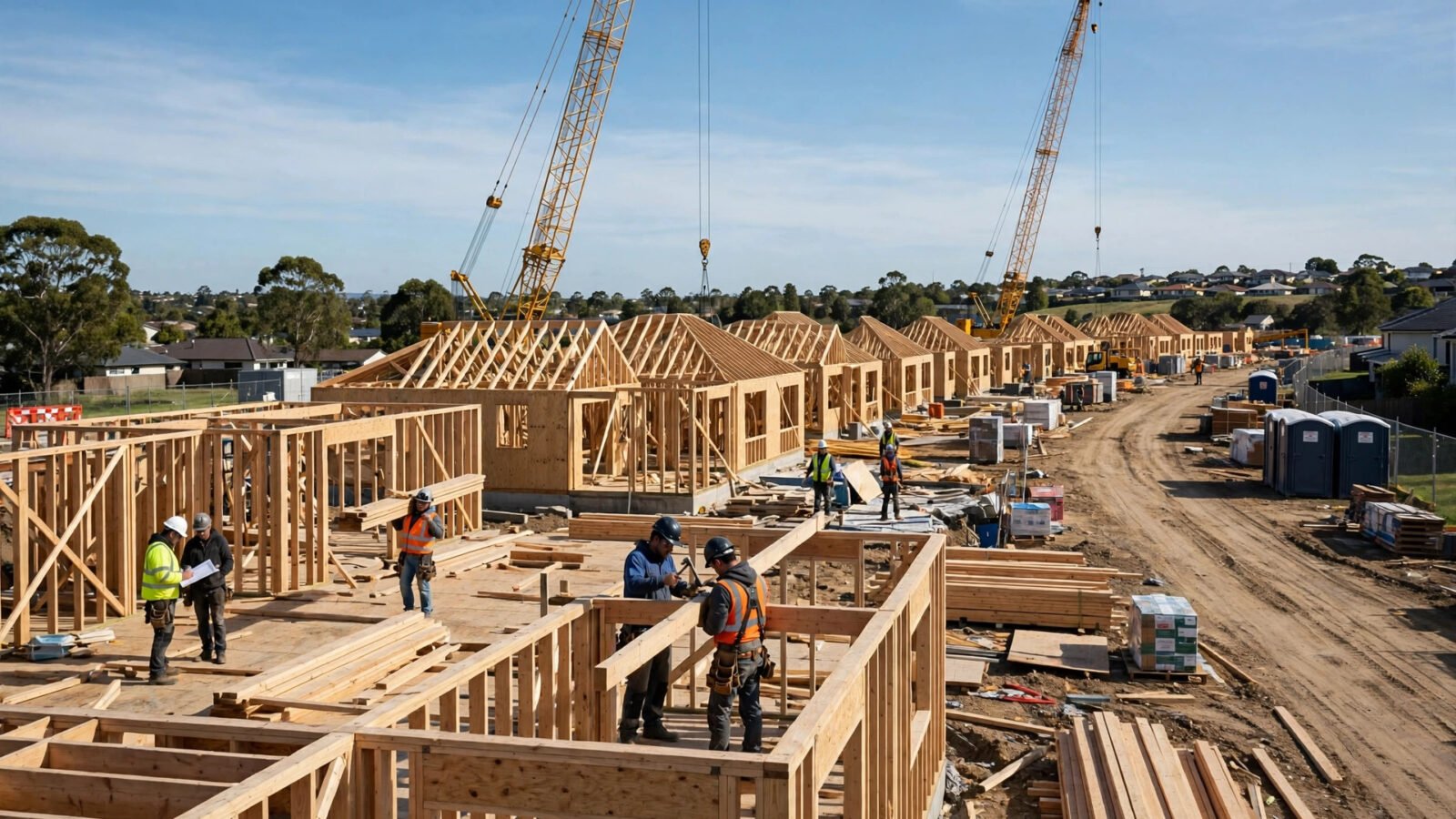
The apartment construction boom deserves emphasis: multifamily starts reached levels not seen since the 1970s–80s, concentrated in Sun Belt and Mountain West markets. This surge is already moderating rent growth in the most-supplied markets — the clearest real-world proof that supply works. The single-family rental (build-to-rent) segment added its own pipeline on top, with entire subdivisions of rental homes rising in growth corridors.
Where Construction Is (and Isn’t) Happening
Geography is everything. Construction concentrates where it’s allowed and economical: Texas, Florida, the Southeast, and the Mountain West dominate permit activity — states with available land, faster entitlements, and pro-growth policies. Coastal California, the urban Northeast, and other constrained markets build far less relative to demand, which is precisely why their affordability crises are worst.
The HUD’s housing supply analyses make the policy link explicit: the markets building the most are generally those with the fewest regulatory barriers — and they’re the markets where price growth has moderated most. Supply follows permission.
The Labor and Materials Story
Construction’s revival had to overcome real constraints. The skilled-labor shortage — carpenters, electricians, plumbers aging out faster than replacements arrive — remains the industry’s binding constraint, limiting how fast building can scale. Materials prices, after the pandemic’s lumber roller coaster, largely normalized, though volatility persists. Financing for development (acquisition, development, and construction loans) tightened with rates, favoring large production builders over small infill developers — a concentration trend with its own downsides.
Productivity is the long-term answer: off-site and modular construction, panelized framing, and (eventually) robotics promise to do more with fewer workers. Adoption is gradual — construction is famously resistant to productivity revolutions — but the labor math makes innovation inevitable, and the builders investing in it now will dominate the next cycle.
What It Means for Buyers
For buyers, more construction means: more choice (especially where resale inventory is frozen), negotiating leverage (builders with standing inventory deal — price cuts, upgrades, rate buydowns), and modern product (energy efficiency, smart-home infrastructure, current codes). New homes carry premiums over resale, but the effective cost gap narrows when builders buy down rates and resale bidding wars add premiums of their own.
Buyer diligence for new construction differs from resale: research the builder’s reputation and warranty history, understand what’s standard versus upgrade (the model-home mirage), get independent inspections at key phases, and scrutinize the HOA (new communities’ HOAs are developer-controlled initially — understand the transition). New-home buyers should also think about furnishing and settling smartly — affordable smart-home upgrades and essential homeowner tools top the move-in list.
How Far From “Caught Up”?
The honest assessment: progress, not victory. Current construction rates, sustained, close the shortage over many years — not months. The multifamily surge helps renters most; the single-family shortfall (the ownership ladder’s missing rungs) closes slower. And the geographic mismatch persists: building booms where it’s easy, not always where need is greatest. Closing a fifteen-year deficit takes a decade of discipline, not two good years — and everyone in the industry knows it by now.
The variables that accelerate catch-up: zoning reform (legalizing more homes where demand is), construction-workforce development (training the next generation of tradespeople), productivity breakthroughs (modular at scale), and financing normalization. The variables that slow it: rates staying high, labor shortages deepening, local opposition blocking entitled projects, and materials shocks. Which set dominates over the next five years will determine whether “catching up” becomes “caught up.”
New construction is finally catching up because the economics, demographics, and adaptations aligned: undeniable demand, frozen resale inventory pushing buyers to builders, and an industry that learned to build smarter and smaller. The shortage built over fifteen years won’t close in two — but for the first time in a generation, the trajectory points the right way. For buyers who’ve waited years for options, that trajectory is the most hopeful housing news in a long time.
Frequently Asked Questions
Is the US building enough homes now?
Construction has improved substantially — multifamily at multi-decade highs, single-family recovering — but the cumulative 2008–2020 shortfall (millions of units) requires sustained above-trend building for years to fully close.
Are new construction homes a good deal compared to resale?
Often yes in the current market: builder rate buydowns, negotiable upgrades, and frozen resale inventory (with bidding wars) can make new homes’ effective costs competitive — plus you get modern efficiency and warranties.
Why is construction concentrated in the Sun Belt?
Available land, faster permitting, pro-growth policies, and strong demand. Constrained coastal and Northeastern markets build far less relative to need — which is why their affordability crises are most severe.
Is new construction cheaper than resale?
Not always on sticker price, but often on effective cost: builder rate buydowns, included warranties, modern energy efficiency, and no bidding-war premiums can make new homes competitive with — or cheaper than — comparable resale.
What should I check when buying new construction?
Builder reputation and warranty history, what’s standard vs. upgrade, independent phase inspections, HOA terms (developer-controlled initially), lot premiums, upgrade pricing transparency, energy-efficiency specs, and the true total cost including upgrades and closing costs.