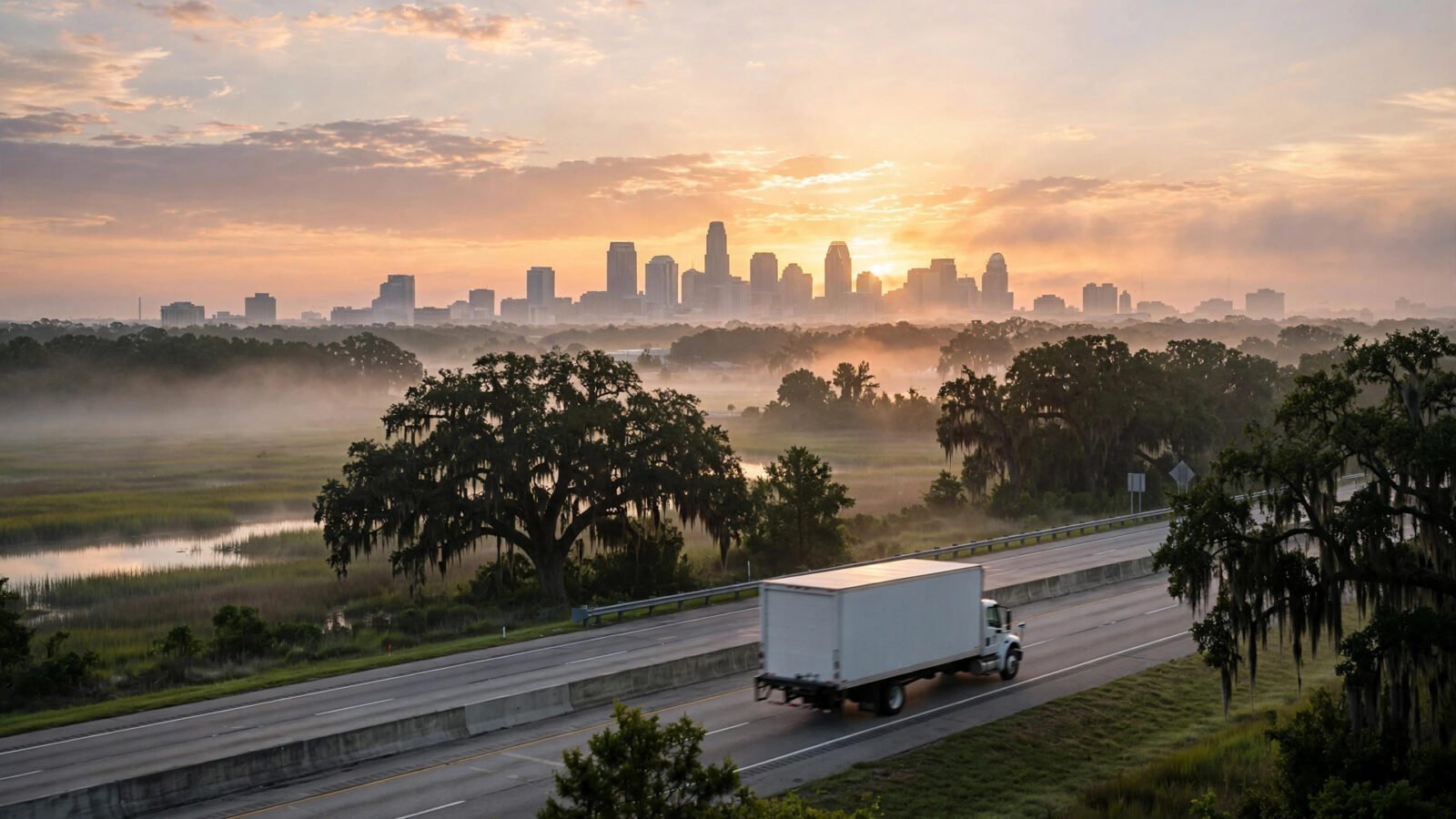
The U-Haul trucks tell the story before the data does: for over a decade, America’s domestic migration has flowed in one dominant direction — South and Southeast. The Census Bureau’s migration estimates confirm what anyone watching moving-truck prices already knows: the Southeast is gaining hundreds of thousands of residents annually from other regions, the largest sustained internal migration in modern American history.
This isn’t a blip. It’s a structural resorting of the American population driven by affordability, jobs, climate preferences, remote work, and policy differences. Here’s why migration patterns favor the Southeast — and what the influx means for the region’s housing, economy, and identity.
The Core Drivers: Why People Move Southeast
Affordability (relative, and shrinking)
The primary driver remains the cost gap. A family selling a modest home in New Jersey, California, or Massachusetts can buy substantially more house in North Carolina, Tennessee, Georgia, or South Carolina — often while banking six figures of equity. Even as Southeastern prices rose, the gap with coastal metros remained large enough to motivate moves. The arbitrage is the engine; everything else is commentary.
Jobs followed people, then people followed jobs
The migration started as people chasing affordability and became self-reinforcing as employers followed: corporate relocations to Texas, Florida, Georgia, and the Carolinas; manufacturing investments (EV batteries, semiconductors) across the Southeast; the finance industry’s expansion in Charlotte and Miami. Bureau of Labor Statistics employment data shows Southeastern metros consistently among national job-growth leaders — and employment growth is what converts a migration trickle into a flood.
Taxes and policy
Florida, Texas, and Tennessee levy no state income tax; the Carolinas and Georgia keep rates moderate. For high earners, the tax savings of moving South can reach tens of thousands annually — a powerful motivator that compounds with housing savings. Business-friendly regulation, faster permitting, and lower operating costs attract employers, which attract workers, in the classic agglomeration cycle.
Climate and lifestyle
Millions simply prefer warmth: milder winters, longer outdoor seasons, and (for retirees especially) the ability to stay active year-round. The lifestyle pitch — golf in January, beach weekends, porch culture — is real, even as newcomers discover the corollary: brutal summers, hurricane seasons, and humidity that redefines “hot.” Adapting the home helps — exterior paint for hot climates is just the start of Southern homeownership wisdom.
The Remote-Work Accelerant
Remote work poured fuel on the trend. Workers who once had to live near coastal offices could suddenly keep their salaries and move South — the “Zoom town” phenomenon writ large across an entire region. Even as return-to-office mandates clawed back some remote arrangements, hybrid work preserved much of the geographic flexibility, and the Southeast’s in-migration barely paused.
The remote-worker migrant is a distinctive economic actor: importing a coastal salary into a Southern housing market, bidding up prices while contributing spending power. This is the mechanism behind the region’s affordability paradox — migration driven by affordability gradually erodes the affordability that attracted it.
Where Exactly They’re Going
The migration isn’t uniform — it concentrates in specific corridors. Florida’s I-4 corridor and Gulf Coast; the Research Triangle and Charlotte metro in North Carolina; Nashville and the Tennessee multi-city surge; Atlanta’s seemingly endless expansion; Greenville-Spartanburg’s manufacturing boom; the Gulf Coast from Pensacola to Biloxi. Secondary cities outperform: the fastest growth rates belong to places like Myrtle Beach, Ocala, and Huntsville rather than the famous metros — the spillover pattern repeating at every scale.
Rural areas near growing metros benefit too, as remote workers seek space within striking distance of urban amenities. The classic exurban ring — 45–90 minutes from the job center — absorbed enormous demand, though lengthening commutes for hybrid workers are now testing its limits.
The Consequences: Housing, Infrastructure, Culture
Housing pressure
The influx strained housing markets designed for slower growth: prices surged, rents followed, and longtime residents found themselves priced out of their own cities. The Southeast’s historically light-touch planning — once a growth advantage — became a liability as infrastructure lagged development. The region is learning, painfully, that growth requires planning.
Infrastructure catch-up
Roads, schools, water systems, and healthcare capacity all strain under rapid population growth. The most successful Southeastern metros are those investing ahead of growth (water supply planning in Texas and Arizona’s orbit, school construction in the Carolinas); the struggling ones are discovering infrastructure deficits only when systems fail.
Cultural change
Large-scale migration changes places: newcomers bring different politics, expectations for services, and demands for amenities (walkability, transit, cultural institutions) that longtime residents didn’t prioritize. The tension between “keep it like it was” and “build what the newcomers expect” defines local politics across the region. Forbes’ demographic analyses note this cultural negotiation as the Southeast’s defining political dynamic.
The Pushback and the Limits
Every trend has countervailing forces, and the Southeast’s are strengthening. Insurance costs (Florida’s crisis, spreading inland) erode the affordability advantage. Extreme heat and hurricanes impose real costs and risks that newcomers sometimes underestimate. Some migrants are already “boomeranging” — returning North after discovering that cheap housing doesn’t compensate for distance from family, or that Southern summers are genuinely punishing.
The affordability gap itself is narrowing: the most popular Southeastern markets are no longer cheap by national standards, just cheaper than the coasts. As the gap compresses, the migration’s economic logic weakens — though network effects (everyone you know already moved) sustain momentum beyond pure economics.
New arrivals face the practical reality of settling in — making a new rental feel like home is step one for the many migrants who rent before buying.
What It Means Going Forward
The Southeast’s migration advantage will persist but evolve. The next phase favors: metros with water security and infrastructure investment, markets where the affordability gap remains meaningful, areas diversifying beyond single industries, and communities managing growth deliberately rather than reactively. The region’s challenge is graduating from growth-at-any-cost to growth-well-managed — the transition every boom region eventually faces.
For individuals, the lesson is to look past the averages: the Southeast contains multitudes — thriving and struggling markets, affordable pockets and overheated ones, welcoming communities and resentful ones. The migration pattern favors the region; wisdom still requires choosing the right spot within it.
Migration patterns favor the Southeast because the region offered what millions wanted: affordability, opportunity, warmth, and room to breathe. The influx reshaped the region’s economy, housing, and culture — and the region reshaped the migrants right back, in ways they’re still discovering. The great Southern migration isn’t ending. It’s maturing, with all the complexity maturity brings.
Frequently Asked Questions
Why are so many people moving to the Southeast?
Relative affordability, strong job growth, no/low state income taxes, warmer climate, and remote-work flexibility — a combination no other region currently matches at scale.
Which Southeastern states are gaining the most migrants?
Florida, Texas, North Carolina, South Carolina, Georgia, and Tennessee consistently lead domestic in-migration, with growth concentrating in metros like Charlotte, Nashville, Raleigh, Tampa, and Atlanta — plus fast-growing secondary cities.
Is the Southeast still affordable?
Less than it was — popular markets saw major price increases. But most Southeastern metros remain substantially more affordable than coastal alternatives, which sustains the migration logic even as the gap narrows.
What are the downsides of moving Southeast?
Extreme summer heat, hurricane and storm risks, rising insurance costs (especially Florida), infrastructure strain in fast-growing areas, and cultural adjustment. Some migrants return North after a few years.